
When you think of space missions, you probably picture rockets, rovers, or astronauts on the Moon. But a quieter revolution is happening up there: space manufacturing, the process of building or assembling objects in space rather than launching them from Earth. Also known as in-space production, it’s not science fiction anymore—it’s becoming essential for long-term space exploration. Launching everything from Earth is expensive and limiting. A satellite antenna that weighs 500 pounds on the ground might only need 50 pounds in space if it’s designed to unfold. A solar array that’s too big to fit in a rocket can be built piece by piece in orbit. That’s the core idea: build where you’re going, not where you came from.
Space manufacturing isn’t just about saving weight. It’s about making things you can’t make on Earth. In microgravity, fluids behave differently. Metals cool without gravity pulling them down, creating purer alloys. Fibers grow longer and stronger without sagging. These aren’t small improvements—they’re game-changers for optics, electronics, and even medicine. The microgravity manufacturing, the practice of producing materials and components in low-gravity environments to achieve superior properties is already being tested on the ISS. Companies are experimenting with fiber optics that transmit light better than anything made here, and bioprinted tissues that could one day help astronauts heal in deep space.
And it’s not just low Earth orbit. The Moon is becoming a factory floor. lunar manufacturing, the use of Moon soil and resources to construct infrastructure on the lunar surface is gaining momentum. Instead of hauling tons of concrete from Earth, engineers are testing ways to melt Moon dust into bricks using microwaves or lasers. These bricks can build landing pads, radiation shields, and even habitats. It’s called in-situ resource utilization—using what’s already there. That’s how you make space travel sustainable. You don’t bring everything. You make what you need.
Behind all this are the tools: robotic arms that weld in vacuum, 3D printers that work with powdered regolith, and autonomous systems that assemble structures without human hands. These aren’t just for the Moon or Mars. They’re also being tested for satellites. Imagine a satellite that launches as a compact bundle, then unfurls its own solar panels and antenna in orbit—built by itself. That’s the future. And it’s already being written in labs and on the ISS.
What you’ll find below are real stories of how this is happening now. From how NASA is testing water recycling systems that could one day be part of a space factory’s life support, to how reusable rockets cut the cost of sending materials up there, to how new materials and cooling tech make space-built devices more reliable. These aren’t just ideas. They’re working systems. You’ll see how space manufacturing isn’t a distant dream—it’s the next step in how we live, work, and survive beyond Earth.
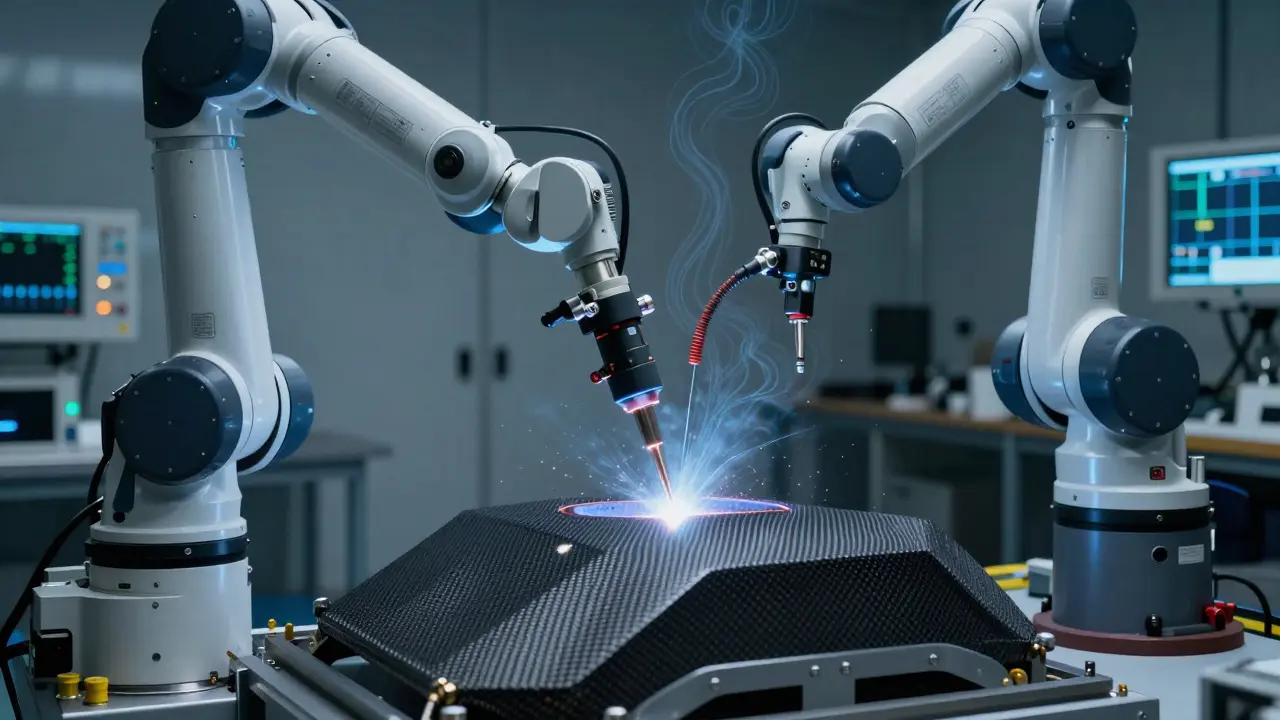
Ultrasonic and friction stir welding are revolutionizing space manufacturing by enabling strong, lightweight joins without melting or fasteners. Learn how NASA and private companies are using these techniques for lunar bases and in-orbit repairs.
Learn More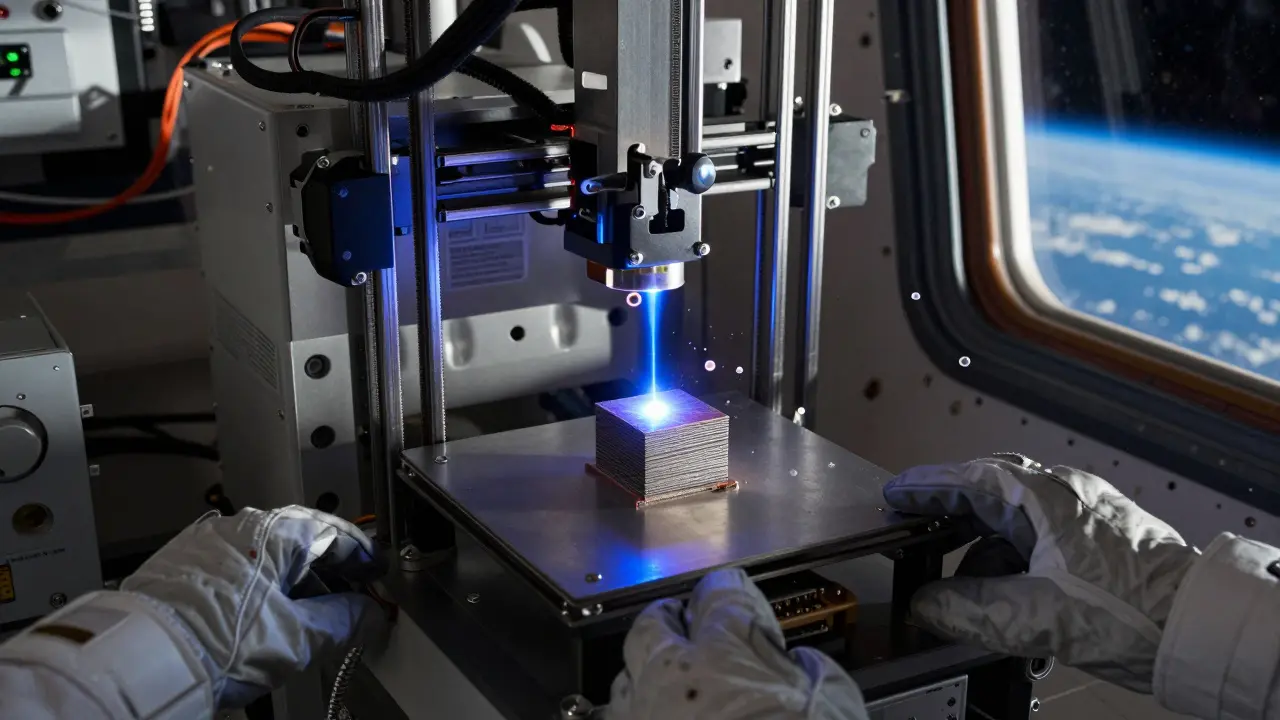
NASA and ESA successfully printed metal parts in microgravity aboard the ISS in 2024, marking a turning point in space manufacturing. This breakthrough enables on-demand creation of tools and components during deep space missions, reducing reliance on Earth resupply.
Learn More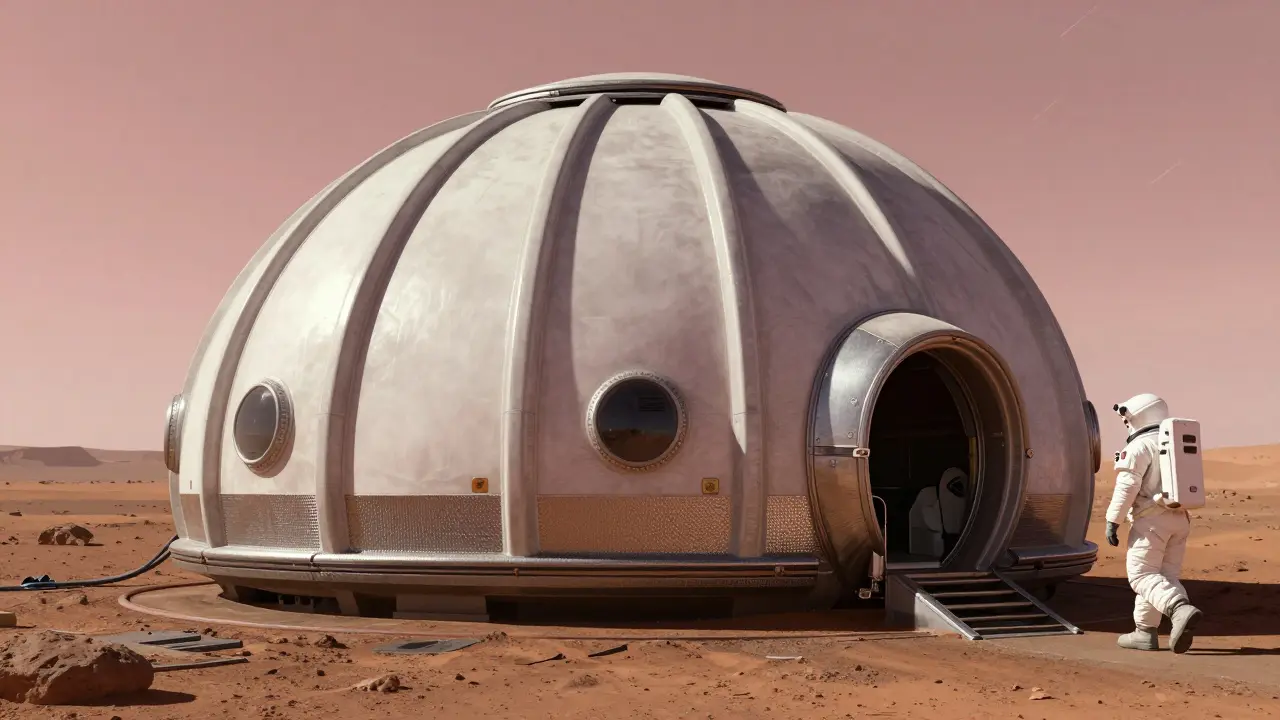
Novel polymer composites like tungsten carbide-epoxy and LDPE-cement blends are replacing lead in radiation shielding for space missions, offering 30-50% weight reduction without sacrificing protection against cosmic rays and neutrons.
Learn More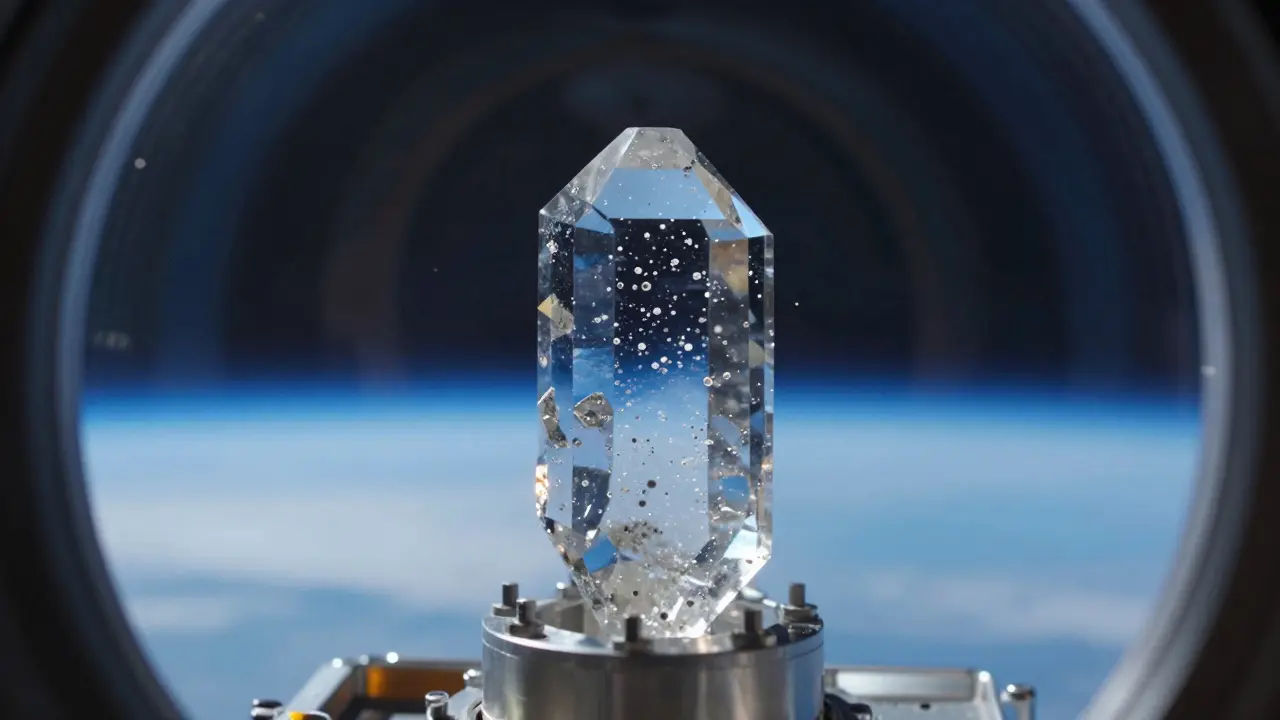
Crystal growth in space produces near-perfect crystals by eliminating gravity-driven flaws. These materials are revolutionizing semiconductors and pharmaceuticals, offering higher efficiency, fewer defects, and new molecular forms impossible on Earth.
Learn More
Microgravity changes how materials form-crystals grow purer, metals solidify more evenly, and fibers lose less signal. Discover how space manufacturing is creating breakthroughs in semiconductors, medicine, and optical fibers-with real results from the ISS.
Learn More