
Imagine building a massive decentralized protocol where thousands of people vote on upgrades, manage millions in treasury funds, and set the rules for users. Now imagine a regulator decides your code broke the law. Without a specific legal structure, every single person who ever cast a vote could be personally sued for the entire amount of damages. That is not a hypothetical nightmare; it happened to the founders and voters of bZeroX and Ooki DAO.
For years, many crypto projects operated as "unwrapped" entities-just code and community consensus. Courts have increasingly ruled that these groups are unincorporated associations, meaning members face joint and several liability. To survive in the current regulatory climate of 2026, you need more than just smart contracts. You need a legal wrapper that separates the organization’s liabilities from its individual participants. This article breaks down how modern DAO legal structures provide those critical shields and how to align your on-chain governance with real-world compliance.
The Risk of Operating Unwrapped
Before choosing a structure, you must understand what happens when you don’t have one. An unwrapped DAO exists only on the blockchain. It has no legal personality in the eyes of traditional courts. When regulators or plaintiffs sue an unwrapped DAO, they look past the code to the humans behind it.
The most famous example is the enforcement action against bZeroX and its successor, Ooki DAO. In 2022, the Commodity Futures Trading Commission (CFTC) fined the founders $250,000 for operating an illegal derivatives exchange. But the legal theory went further. In 2023, a federal judge ruled that Ooki DAO was an unincorporated association under California law. Under this classification, the DAO itself was considered a "person" liable under the Commodity Exchange Act. More importantly, the members-the token holders who voted on governance proposals-were found to be jointly and severally liable.
This means that if the DAO owes $10 million in penalties, a regulator can theoretically come after any single voter for the full $10 million, regardless of how many tokens they hold. The lack of a liability shield turned a decentralized experiment into a personal financial disaster for active participants. This precedent established that decentralization alone does not protect you from liability; you need a recognized legal entity.
What Is a DAO Legal Wrapper?
A DAO legal wrapper is a formal legal entity created to house the operations of a decentralized autonomous organization. Its primary job is to create a separation between the collective actions of the DAO and the personal assets of its members, contributors, and founders.
Think of it like a corporate veil. When you start a traditional company, the company signs contracts, owns property, and gets sued. If the company goes bankrupt, you generally lose your investment, but your house and car remain safe. A DAO wrapper attempts to replicate this protection for blockchain-based organizations. It allows the DAO to:
- Enter into binding contracts with service providers and vendors.
- Open bank accounts and interact with fiat systems.
- Hold intellectual property rights.
- Shield members from unlimited personal liability for organizational debts.
However, not all wrappers work the same way. Traditional structures like standard Limited Liability Companies (LLCs) or Foundations often only protect activities explicitly routed through them. If your DAO makes decisions on-chain that aren’t formally authorized by the wrapper, you might still be exposed. This is why specialized DAO statutes have emerged.

US Statutory Models for DAOs
As of 2026, three US states have passed specific laws recognizing DAOs as distinct legal entities. These laws provide clearer pathways for liability protection than generic corporate forms.
| Jurisdiction | Entity Type | Year Enacted | Key Feature | Liability Model |
|---|---|---|---|---|
| Wyoming | DAO LLC | 2021 | First bespoke DAO law; amends LLC act | Standard LLC limited liability |
| Tennessee | DAO LLC | 2022 | Distinguishes member-managed vs. smart contract-managed | Standard LLC limited liability |
| Utah | LLD (Limited Liability Decentralized Autonomous Organization) | 2023 | Ties liability to on-chain contributions and voting behavior | Proportional liability based on voting share |
Wyoming: The Pioneer
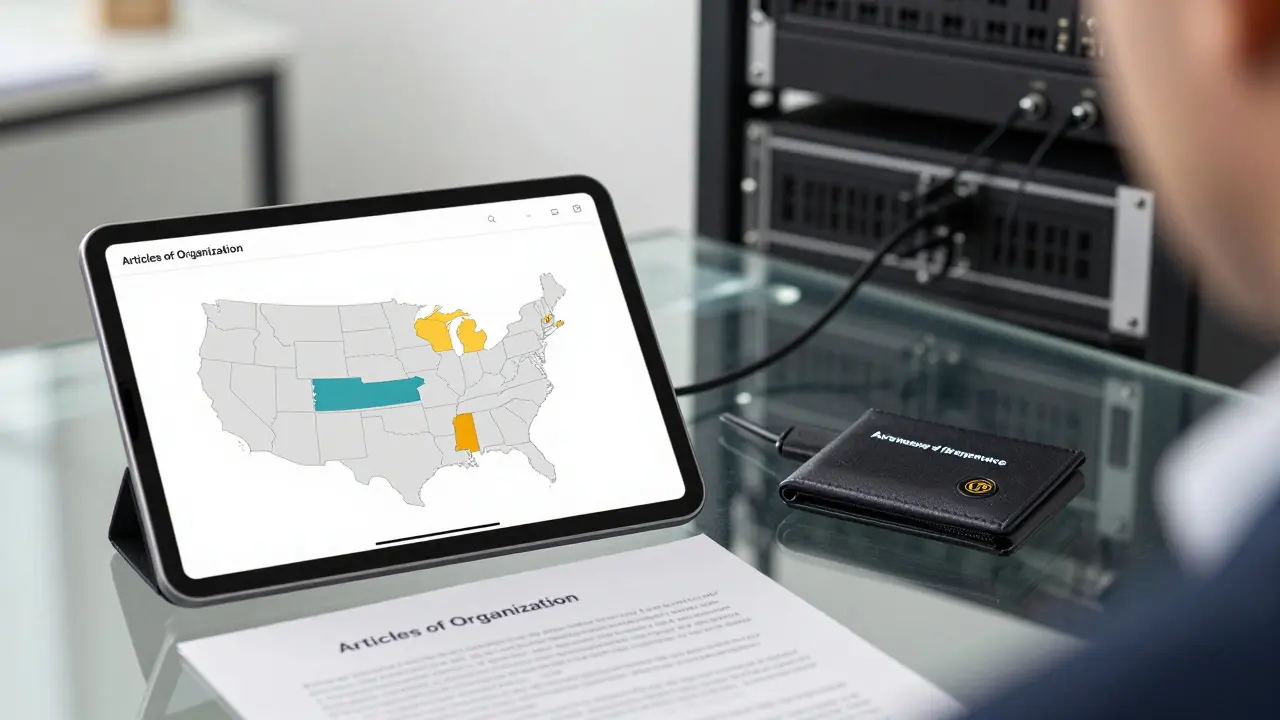
Wyoming was the first state to pass a dedicated DAO supplement to its Limited Liability Company Act. To form a Wyoming DAO LLC, you simply file articles of organization stating that the company is a decentralized autonomous organization. Once formed, it enjoys the same limited liability protections as any other LLC in the state.
The advantage here is simplicity and familiarity. Lawyers and accountants know how LLCs work. The downside is that it doesn’t specifically address the nuances of on-chain voting in its liability provisions. It treats the DAO as a standard business entity, which works well for many projects but may feel like a square peg in a round hole for highly decentralized protocols.
Tennessee: Management Clarity
Tennessee’s law requires the DAO’s articles to specify whether it is "member-managed" or "smart contract-managed." This distinction is crucial for governance compliance. It acknowledges that some DAOs rely heavily on automated code execution rather than human board decisions. Like Wyoming, Tennessee offers standard LLC liability protections, shielding members from personal debt obligations.
Utah: Proportional Liability
Utah introduced a novel concept with its LLD statute. Instead of blanket liability protection, Utah ties liability to participation. Members are generally only liable for the value they contribute on-chain. However, there is a catch: if the DAO receives a court order and votes to ignore it, members who vote against compliance may become personally liable for monetary payments proportional to their voting power.
This creates a direct link between governance compliance and financial risk. If you hold 10% of the governance tokens and vote to defy a regulator, you could be on the hook for 10% of the penalty. This model encourages responsible voting and aligns legal responsibility with actual influence in the protocol.
Governance Compliance: Linking Code to Law
Having a legal wrapper is step one. Step two is ensuring your governance processes respect that structure. Many DAOs fail here because they treat the legal entity as an afterthought. They register an LLC but then conduct all business purely through informal on-chain chats and votes without proper authorization.
To maintain your liability shield, you must integrate compliance into your governance workflow. This often involves:
- Multi-Signature Controls: Require that significant treasury movements or contract changes be approved by a multi-sig wallet controlled by designated directors of the legal wrapper.
- Compliance Committees: Establish a small group within the DAO responsible for reviewing proposals for regulatory red flags before they go to a full community vote.
- Explicit Authorization: Ensure that the DAO’s operating agreement or bylaws explicitly authorize the community to bind the legal entity through on-chain voting mechanisms.
If your smart contracts execute trades that violate securities or commodities laws, the legal wrapper won’t save you from criminal charges. But it will prevent regulators from seizing the personal assets of every voter. The goal is to contain the damage to the entity’s assets, not spread it to the individuals.
International Perspectives: The UK DAOLLP Model
Outside the US, the legal landscape is less defined but evolving. In the UK, scholars and practitioners have proposed the DAOLLP (Decentralized Autonomous Organization Limited Liability Partnership). This model draws on the UK’s existing LLP framework, which provides legal personhood and limited liability while allowing flexible internal governance.
The DAOLLP proposal argues that current partnership laws fail to recognize the unique nature of DAOs, leaving counterparties unsure of who they are contracting with. By granting DAOs distinct legal personhood similar to corporations, the DAOLLP would allow them to own property, enter contracts, and be sued in their own name. While not yet codified into legislation as of mid-2026, this model highlights a global trend toward adapting existing corporate forms to fit decentralized realities.
Practical Steps for Implementation
If you are launching a new project or restructuring an existing one, follow these steps to build a compliant foundation:
- Choose Your Jurisdiction: Evaluate Wyoming, Tennessee, or Utah based on your team’s location and operational needs. Wyoming remains the most popular due to its early adoption and clear precedent.
- File Correctly: Work with a lawyer familiar with web3 to draft your articles of organization. Include the specific statutory language required to designate the entity as a DAO.
- Update Your Smart Contracts: Ensure your governance contracts reference the legal entity where appropriate. For example, treasury withdrawals should ideally flow through the wrapper’s bank account or cold storage keys held by the entity.
- Educate Your Community: Make it clear to token holders that voting carries legal implications. Transparency about the legal structure builds trust and reduces the risk of accidental non-compliance.
Remember, a legal wrapper is not a magic bullet. It does not exempt you from taxes, securities regulations, or anti-money laundering laws. It simply gives you a recognized identity in the legal system, allowing you to operate with predictable risk boundaries.
Do I need a lawyer to form a DAO LLC in Wyoming?
While you can technically file the paperwork yourself, it is highly recommended to consult with a lawyer specializing in crypto law. The formation process is simple, but drafting the operating agreement to properly align on-chain governance with off-chain legal authority requires expertise. Mistakes here can pierce your liability shield later.
Can a DAO wrapper protect me from criminal liability?
No. A legal wrapper provides limited civil liability protection. It prevents creditors and regulators from seizing your personal assets for the DAO’s debts. However, if you personally commit fraud, money laundering, or other crimes, you can still be prosecuted individually. The wrapper protects against organizational liability, not personal misconduct.
What happens if my DAO is registered in Wyoming but operates globally?
Your Wyoming registration gives you a home base for legal recognition, but it does not exempt you from local laws in other countries. If you have users or contributors in the EU, UK, or Asia, you must still comply with their respective regulations regarding securities, data privacy, and taxation. The wrapper helps you navigate these issues by providing a clear entity to engage with foreign regulators.
Is the Ooki DAO case still relevant today?
Yes, absolutely. The Ooki DAO ruling remains the primary precedent for treating unwrapped DAOs as unincorporated associations with joint and several liability. As long as there is no federal US law superseding state statutes, this case serves as a warning that decentralization is not a defense against regulation. Proper structuring is essential to avoid this outcome.
How does Utah's proportional liability model affect voting?
In Utah, if the DAO is ordered by a court to take action and the community votes to refuse, members who vote against compliance may be personally liable for a portion of the resulting fines. The amount is proportional to their voting power. This incentivizes voters to consider legal risks carefully before rejecting regulatory orders, unlike in jurisdictions where liability is strictly limited to the entity’s assets.