
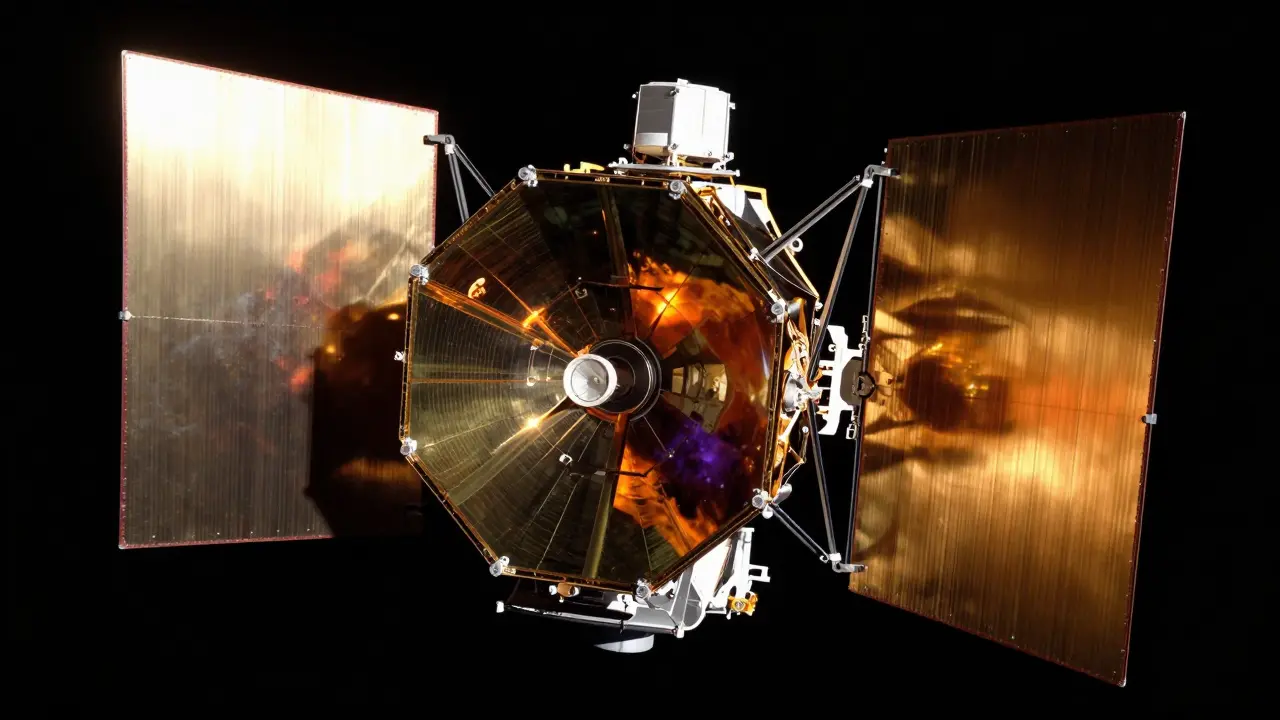
When you hear that the James Webb Space Telescope is a next-generation infrared observatory launched in 2021 with a total cost exceeding $8 billion (JWST) cost nearly $10 billion, it’s easy to assume the price tag comes from the rocket launch or years of administrative overhead. But the real money burns in three specific places: the giant mirror, the ultra-sensitive cameras, and the extreme freezing systems needed to keep them working. These subsystems are technically brutal to build, incredibly risky to test, and expensive to fix when things go wrong.
Understanding why these components drive up costs helps explain why new space telescopes take decades to develop. It also reveals where engineers are looking for shortcuts. From liquid mercury mirrors to standardized coolers, the industry is trying to break the cycle of billion-dollar overruns. Here is exactly what makes building an eye in space so prohibitively expensive.
The Mirror Problem: Size, Weight, and Precision
The primary mirror is the heart of any telescope. Its job is simple: catch light. But doing that in space is anything but simple. On Earth, we can build massive mirrors because gravity only pulls down in one direction, and we can use thick, heavy glass. In space, every kilogram costs thousands of dollars to launch. Plus, the mirror must survive violent rocket vibrations, then unfold perfectly in the vacuum of space without touching itself.
Take the Hubble Space Telescope is a 2.4-meter ultraviolet/optical/infrared space telescope launched in 1990 (HST). Its 2.4-meter mirror was made of Ultra-Low Expansion (ULE) glass. It weighed about 1,111 kilograms. While revolutionary for its time, Hubble’s mirror was small by today’s standards. To see further back into the universe, we need more light-collecting area. That means bigger mirrors.
JWST solved the size problem by breaking the mirror into 18 hexagonal segments made of beryllium. Beryllium is chosen because it is stiff and lightweight-it weighs roughly 15 kg per square meter, compared to Hubble’s ~180 kg per square meter. However, beryllium is toxic, difficult to machine, and requires gold coating to reflect infrared light effectively. Each segment has seven actuators to adjust its position and shape. That’s 126 moving parts just for the primary mirror. When you add the secondary mirror and other alignment tools, the system manages over 130 degrees of freedom. Getting all those pieces to work together as a single optical surface requires complex software and months of on-orbit calibration.
| Mission | Mirror Diameter | Material | Key Challenge | Est. Mirror System Cost Impact |
|---|---|---|---|---|
| Hubble | 2.4 m | ULE Glass | Surface accuracy error (fixed later) | ~$250-300 million (1980s dollars) |
| Spitzer | 0.85 m | Beryllium | Cryogenic stability | Included in ~$500M thermal system |
| JWST | 6.5 m (segmented) | Beryllium | Deployment complexity & phasing | ~$1 billion (development + testing) |
| Roman | 2.4 m | ULE Glass (repurposed) | Minimal development risk | Significantly reduced via reuse |
The cost doesn’t just come from the material. It comes from the testing. JWST’s mirror segments had to be polished to nanometer-level precision. Then they were tested in Chamber A at NASA’s Johnson Space Center, a facility large enough to fit the entire telescope. If a segment fails, you don’t just swap it out; you rework the whole assembly. This integration and test phase is where schedules slip and budgets balloon. A study by the University of Arizona in 2024 noted that space telescope mirrors are roughly 30 times more expensive than ground-based ones due to these stringent requirements.
Detecting the Faintest Light: The Detector Bottleneck
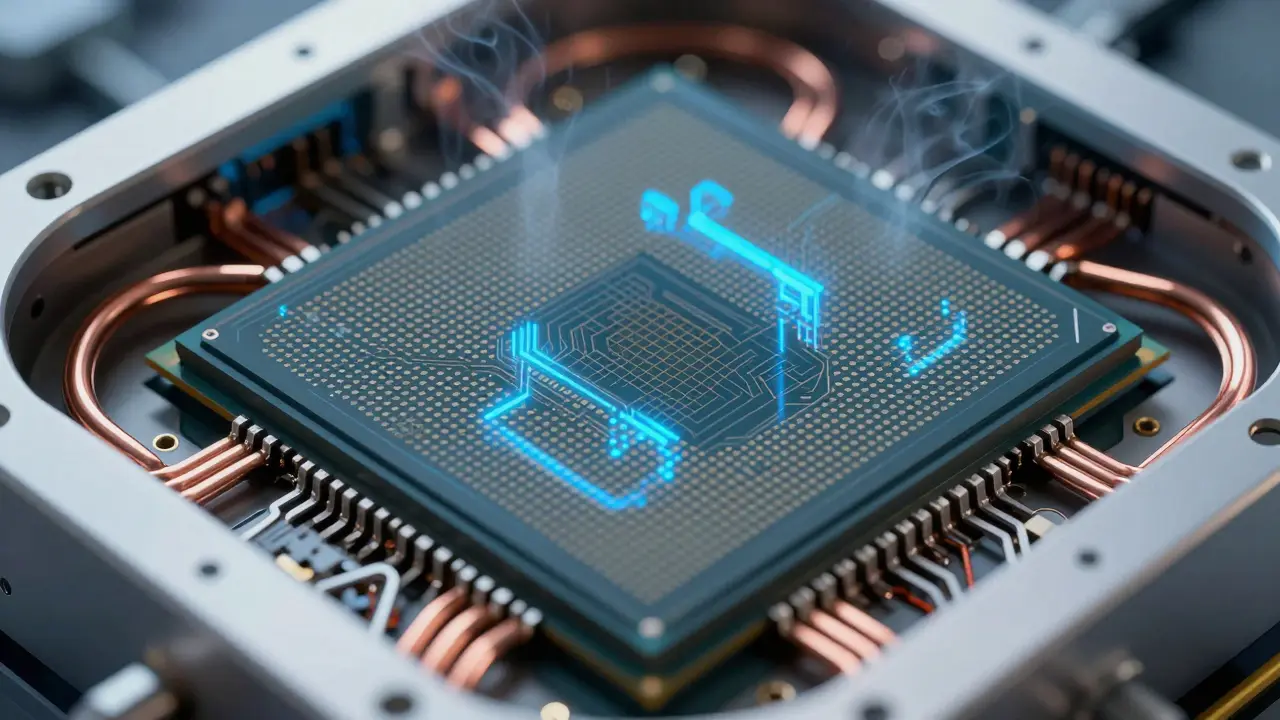
If the mirror is the eye, the detector is the retina. Without high-quality detectors, the light collected by the mirror is useless. Modern space telescopes rely on Charge-Coupled Devices (CCDs) for visible light and Mercury Cadmium Telluride (HgCdTe) arrays for infrared. These aren’t off-the-shelf camera sensors. They are custom-built scientific instruments designed to detect single photons with minimal noise.
Consider the Nancy Grace Roman Space Telescope is a wide-field infrared survey mission planned for mid-2020s launch. Its Wide Field Instrument uses 18 separate detector arrays, each containing 4,096 x 4,096 pixels. That’s 300 megapixels total. Each array costs well over $1 million to procure, screen, and qualify for space. Why so much? Because yield is low. Manufacturing these chips involves complex semiconductor processes. Many wafers fail radiation testing or have too much "dark current"-noise generated by heat even when no light hits the sensor.
JWST’s Near-Infrared Camera (NIRCam) uses H2RG detectors from Teledyne. These arrays must operate at temperatures below 40 Kelvin to function correctly. Even then, they require careful calibration to remove defects. The Mid-Infrared Instrument (MIRI) uses even more exotic Silicon-Arsenic (Si:As) impurity band conduction arrays, which must be cooled to under 7 Kelvin. The non-recurring engineering (NRE) costs for developing these detectors run into tens of millions of dollars before a single flight unit is produced.
There are very few suppliers for these specialized detectors. Teledyne Imaging and e2v dominate the market. When supply chains are tight, prices rise. Additionally, space qualification requires rigorous testing against cosmic rays and solar particle events. A detector that works perfectly in a lab might degrade after six months in orbit if not properly shielded or hardened. This risk forces missions to buy spares, further increasing costs.
The Cold War: Cryogenics and Thermal Control
Infrared astronomy faces a unique challenge: heat. Everything emits infrared radiation based on its temperature. If the telescope itself is warm, it glows brighter than the distant galaxies it’s trying to observe. To solve this, infrared telescopes must be kept extremely cold.
The Spitzer Space Telescope is an infrared space telescope that operated from 2003 to 2020 using liquid helium cooling used a straightforward approach: a tank of superfluid liquid helium. This kept the telescope at 5 Kelvin and the instruments at 1.4 Kelvin. It worked beautifully, but the helium eventually boiled off. Once the coolant was gone, Spitzer’s most sensitive instruments died. The mission lasted five years longer than planned, but the core science ended when the fuel ran out. The cryostat and helium acquisition accounted for a significant portion of Spitzer’s $720 million development budget.
JWST takes a different approach. Instead of carrying finite coolant, it uses a massive five-layer sunshield, the size of a tennis court, to block sunlight and Earth’s heat. This passive cooling brings the telescope side down to 40 Kelvin naturally. However, MIRI needs to be even colder-around 6 Kelvin. For this, JWST carries an active mechanical cryocooler. Developed by Northrop Grumman, this device uses a pulse-tube compressor and Joule-Thomson cooler to pump heat away. It’s complex, heavy, and prone to vibration issues that could shake the delicate optics.
Cryocoolers are among the most expensive single components on a spacecraft. A flight-qualified unit can cost several million dollars, with development costs exceeding $50-100 million. They must last for years without maintenance. If the cooler fails, the instrument goes blind. GAO reports repeatedly cited the MIRI cryocooler as a major source of schedule risk during JWST’s development, causing delays while engineers resolved integration problems.
Cost Trends and Future Solutions
So, how do we build cheaper telescopes? The answer lies in reducing risk and reusing technology. The Roman Space Telescope is a NASA mission leveraging heritage hardware to reduce costs is a prime example. By repurposing a 2.4-meter mirror originally built for a spy satellite, NASA avoided the multi-billion-dollar risk of designing a new large optic. Roman also operates at warmer temperatures than JWST, allowing it to use simpler radiators instead of complex cryocoolers for its main instruments.
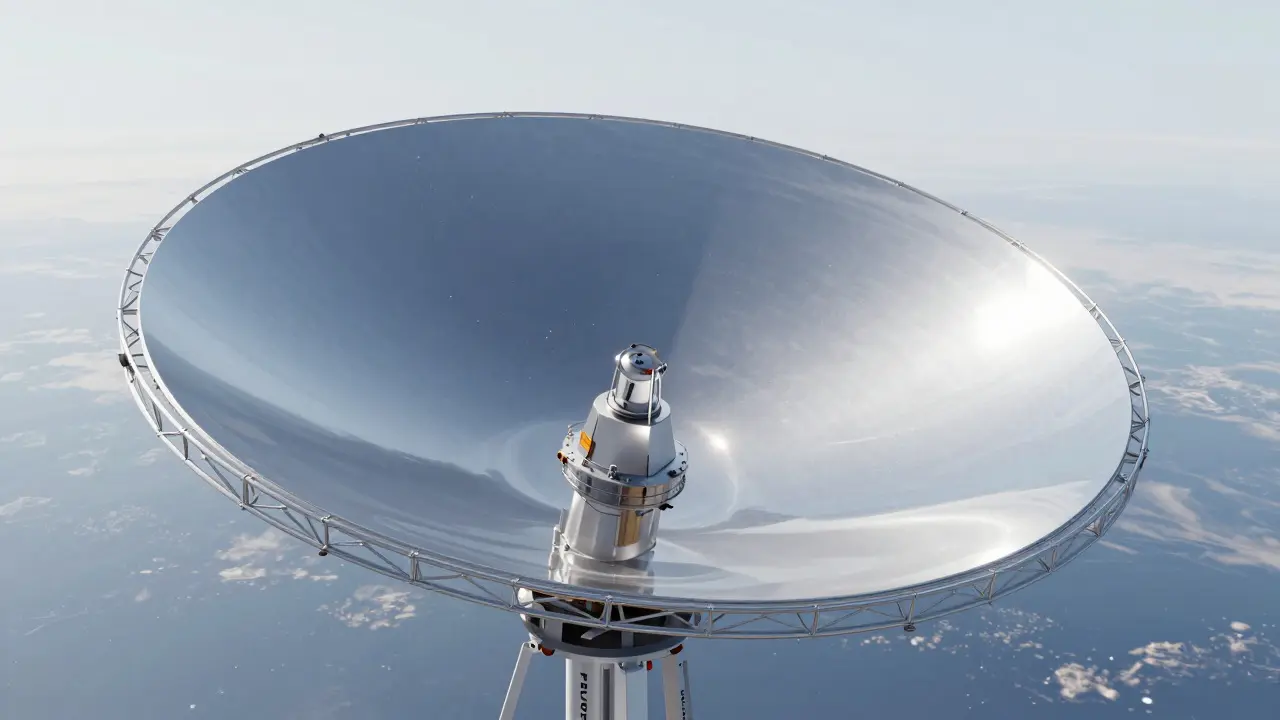
Looking further ahead, scientists are exploring radical concepts like liquid mirrors. The FLUTE (Fluidic Telescope) concept proposes deploying a frame in space and filling it with reflective liquid. Surface tension would naturally form a perfect parabolic mirror. Early tests suggest this could reduce mirror costs by orders of magnitude, though technical hurdles remain regarding stability and contamination.
Another trend is standardization. Just as consumer electronics benefit from mass-produced chips, space missions could save money by adopting common detector formats and cooler designs. The Astro2020 decadal survey recommended a dedicated technology maturation program to push these innovations from lab prototypes to flight-ready systems. Without such investment, future flagship missions will continue to face the same cost drivers: big mirrors, sensitive detectors, and extreme cold.
Why are space telescope mirrors so expensive?
Space telescope mirrors are expensive due to strict weight limits, requiring lightweight materials like beryllium or thin glass. They must also maintain nanometer-level surface accuracy to focus light correctly. Additionally, segmented mirrors require complex actuators and deployment mechanisms, adding significant engineering and testing costs.
What drives the cost of space telescope detectors?
Detectors are costly because they are custom-made semiconductor devices with low manufacturing yields. They must be highly sensitive to single photons, resistant to radiation damage, and operate with minimal noise. Specialized suppliers and extensive space-qualification testing further increase prices.
How does cooling affect space telescope budgets?
Infrared telescopes must be kept extremely cold to avoid detecting their own heat. Passive cooling requires large sunshields and precise thermal design. Active cooling uses mechanical cryocoolers, which are complex, heavy, and expensive to develop and qualify for long-term reliability in space.
Can liquid mirrors reduce space telescope costs?
Liquid mirrors offer potential cost savings by eliminating the need for heavy, precisely polished solid optics. Concepts like FLUTE propose using fluid dynamics to create smooth surfaces in microgravity. However, this technology is still experimental and faces challenges related to stability and contamination.
Why did JWST cost so much more than initially estimated?
JWST’s cost growth stemmed from technical risks in its three main subsystems: the segmented mirror’s deployment complexity, the sensitivity of its infrared detectors, and the reliability of its cryocooler. Delays in testing and integration pushed the timeline back, increasing labor and operational expenses significantly.