

The Hidden Risks of Commercial Space Travel
When you think about buying a ticket to orbit Earth, your mind probably drifts to the view-the curve of the planet, the endless black sky. But behind that dream lies a complex biological reality. Your body isn't built for weightlessness. Tourist Spaceflights are commercial missions designed to take private citizens into suborbital or orbital space for leisure or research purposes. Also known as Space Tourism Flights, they have become a reality with companies like SpaceX and Axiom Space leading the charge. Unlike professional astronauts who undergo years of medical vetting, tourists arrive with varied health baselines.
This creates a unique problem. How do you monitor someone whose biology might react unpredictably to zero gravity? That is where wearable technology comes in. In September 2024, during the Polaris Dawn mission, this wasn't just theoretical. We saw actual deployment of consumer-grade electronics adapted for the harsh environment of space. These aren't just gadgets; they are lifelines. They track vital signs when doctors aren't within arm's reach. If your heart rate spikes or oxygen saturation drops while floating 250 miles up, you need to know immediately.
Why the Human Body Struggles in Orbit
To understand why we need these devices, we first need to understand what space does to us. It sounds simple-floating around-but for your cardiovascular system, it's chaotic. On Earth, gravity pulls blood down toward your legs. In microgravity, that pull vanishes. Fluid shifts toward your head, increasing pressure in the skull and straining vision systems. You might feel puffy-faced initially, but the long-term effects can include muscle atrophy and bone density loss.
Radiation adds another layer of complexity. Without the atmosphere's protection, cosmic rays bombard your DNA. Heat regulation also becomes a puzzle; without air circulation, your body relies entirely on sweat evaporation, which works differently in pressurized environments. These stressors require constant surveillance. A simple cough could signal fluid buildup in the lungs (pulmonary edema). A slight change in sleep pattern could mean circadian rhythm failure, impacting cognitive performance. You cannot rely on manual checks alone in a cabin moving at 17,500 miles per hour.
What Devices Are Actually Used?
You might wonder if the equipment looks like something from the Star Trek franchise. It doesn't yet. Current solutions are surprisingly grounded in consumer technology. The Polaris Dawn crew, for instance, relied heavily on Garmin devices. Models like the Garmin Fenix 6 is a rugged GPS watch used for outdoor navigation and activity tracking in extreme environments. and Fenix 7 were strapped to wrists to monitor heart rate and SpO₂ (oxygen saturation).
| Device Type | Primary Function | Key Metrics Tracked | Mission Example |
|---|---|---|---|
| Smart Watch (Garmin) | Cardiovascular Tracking | Heart Rate, Sleep, Activity | Polaris Dawn |
| BioButton | Sensor Patch | Temperature, Respiratory Rate, HRV | Axiom Missions |
| Bio-Monitor Shirt | Smart Garment | Respiration, Blood Oxygen | Canadian Space Agency |
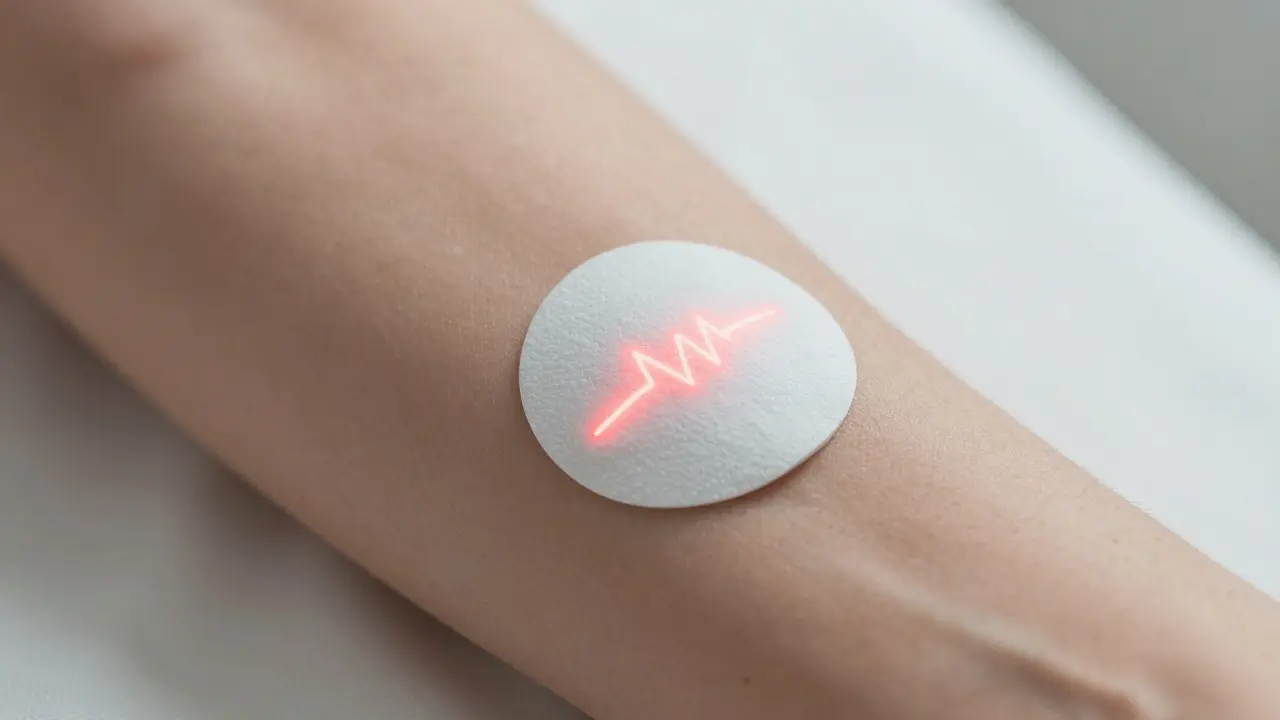
Beyond standard watches, specialized patches exist. The BioButton by BioIntelliSense Inc. acts as a single-electrode sensor. It stays attached to the skin, silently recording temperature and posture. This is crucial because knowing if a passenger is standing still or falling asleep helps interpret heart rate data. A spike in heart rate matters differently if they are exercising versus resting.
For deeper analysis, researchers use the Bio-Monitor smart shirt. This Canadian-made device records massive volumes of biometric data continuously. It feeds information into AI computing platforms that look for subtle trends human eyes miss. For example, it tracks respiratory rates over 48-hour cycles. If breathing becomes shallow at night due to fluid shifts in the chest, the system flags it before symptoms manifest visibly.
Case Study: The Polaris Dawn Mission
The Polaris Dawn mission represents a watershed moment for space wearables. Conducted in late 2024, it was the first commercial mission to perform a spacewalk. Alongside that historic feat came extensive testing of health monitoring gear. The TrialX organization supported six different missions, including Inspiration 4 and the Axiom-1 series. They acted as the bridge between medical teams and engineering groups.
During Polaris Dawn, crews wore Samsung Watches alongside other biometric tools. This redundancy ensures that even if one system fails, backup sensors continue logging. The objective wasn't just to survive the trip-it was to gather baseline data on how healthy humans handle short-duration exposure. Did the lack of gravity cause immediate dehydration? Did the psychological stress affect sleep quality? The watches answered those questions.
Data collection didn't stop at launch. Pre-flight measurements established individual baselines. Post-flight monitoring tracked recovery rates. This "before, during, after" framework is essential. Knowing how quickly a person returns to normal health dictates whether they can fly again safely. For commercial operators, this liability management is just as important as fuel calculations.
The Science Behind the Sensors
How do these devices actually function in space? Most consumer wearables rely on photoplethysmography (PPG). Basically, LEDs flash against your skin, measuring light absorption changes caused by blood flow. In space, this gets tricky. As fluid shifts to the face, capillaries swell. Light transmission changes. Algorithms developed by organizations like NASA and ESA have had to recalibrate readings to account for altitude and pressure differences.
We also see innovations in non-invasive thermometry. The European Space Agency (ESA) deployed the Thermo-Mini headband investigation on the International Space Station (ISS). Astronauts wore it for hours, allowing researchers to study core body temperature regulation without invasive probes. Environmental factors like humidity inside the station affect heat dissipation. By correlating internal temperature with external conditions, scientists refine thermal control protocols for future spacecraft.
Sleep tracking has become a major focus. The Actiwatch Spectrum measures motion via accelerometers and ambient light using photodetectors. Studies showed that crew members slept significantly less on missions compared to their time on Earth. Poor sleep impairs decision-making. If a tourist gets lightheaded or confused due to fatigue, the safety margin shrinks instantly. Monitoring sleep duration and quality provides a proxy for overall cognitive readiness.
Medical Digital Twins and AI Prediction
The most exciting frontier involves predictive modeling. Researchers at the Australian National University (ANU) are partnering with Axiom Space and AI provider Aqacia. Their goal is creating a "medical digital twin." Imagine a virtual replica of the passenger's physiology running on a server back in Adelaide or Houston. When real-time biometric data streams up from orbit, the digital twin simulates outcomes.
If the live data shows a dip in oxygen levels, the twin predicts what happens over the next four hours. Will the patient recover spontaneously, or is intervention needed? This reduces dependency on large medical equipment that is expensive and hard to launch. Instead, you carry lightweight sensors, transmit the data, and let powerful computers on Earth crunch the numbers. The feedback loop enables rapid diagnosis and intervention cycles.
These algorithms learn from every flight. Each tourist contributes to the global dataset of human adaptation. Over time, the system becomes smarter, distinguishing between normal fluctuation and genuine medical anomalies. It transforms passive monitoring into active prevention.
Challenges and Future Roadmap
Despite progress, challenges remain. Many devices tested in labs don't make it to regular ISS use. The environment demands reliability that off-the-shelf products rarely guarantee. Batteries degrade faster in certain radiation fields. Sweat can damage sensitive electronic contacts. Materials science is evolving to fix this; flexible electronics offer durability that rigid silicon lacks.
Comfort is another hurdle. Wearing a vest with embedded wires sounds like torture during exercise. The latest prototypes aim for invisibility-fabric that breathes and moves with you. The industry is moving toward "smart garments" rather than clunky attachments. This shift improves compliance; people won't remove uncomfortable devices mid-mission.
Looking ahead, integration is key. A single dashboard showing all vitals makes life easier for mission control. Currently, data lives in silos. One watch talks to Garmin Connect; another patch sends to a proprietary app. Unified standards will allow seamless transfer of health records between agencies and commercial providers. As the number of flights increases toward Mars and beyond, these systems will transition from experimental luxuries to mandatory safety equipment.
Are current smartwatches safe for space use?
Yes, modified versions of consumer smartwatches like the Garmin Fenix and Samsung Galaxy Watch have been successfully used on recent missions such as Polaris Dawn. They provide vital telemetry for heart rate and sleep, though rigorous validation occurs before flight to ensure electromagnetic compatibility with spacecraft systems.
What is a medical digital twin?
A medical digital twin is a virtual simulation of a patient's physiology. Developed by collaborations like ANU and Axiom Space, it uses real-time biometric data to predict health outcomes in microgravity, enabling early detection of potential issues before symptoms appear.
How does microgravity affect heart rate?
Microgravity causes fluid shifts from the legs to the upper body, increasing cardiac workload. Heart rate can drop due to lower resistance needed to pump blood, but variability may increase. Continuous monitoring via wearables tracks these adaptations to prevent strain.
Do tourists need pre-flight health screenings?
Absolutely. Baseline screening establishes how your body handles stress. It allows the wearable system to distinguish between normal variation and abnormal warning signs during flight, ensuring personalized safety thresholds are applied.
Can wearable devices replace doctors on board?
No, they act as support tools. While they reduce reliance on bulky medical kits by flagging issues early, onboard personnel or ground support remains essential for administering treatments once a problem is identified.
11 Responses
This approach ensures everyone gets monitored properly.
The general public lacks the requisite discipline for such environments. Most cannot handle the physiological shifts involved. Wealthy individuals buy tickets without understanding gravity rules. Safety relies on rigorous protocols they ignore. Medical teams remain distant observers. Technology bridges gaps but does not replace training. We see amateurs risking stability for views. Real astronauts endure years of preparation. Tourists expect leisure in extreme conditions. The distinction matters significantly.
Floating through the void brings terrifying risks. Bodies change in unpredictable ways when weightlessness hits. A simple heart spike could mean catastrophe overhead. Silence surrounds the capsule during critical moments. Fear lingers beneath the excitement of departure.
Consumer electronics struggle in high-radiation zones. Photoplethysmography fails when capillaries swell significantly. Signal noise corrupts vital readings quickly. Algorithms assume static baseline physiology. Microgravity disrupts hemodynamics constantly. Watchmakers do not account for fluid shifts. Heart rate variability becomes meaningless data points. Oxygen saturation drops trigger false alarms easily. Calibration errors propagate through downstream systems. Ground control receives garbage inputs regularly. Liability clauses cover sensor failures specifically. Insurance companies scrutinize raw telemetry logs. Redundant systems help mitigate single-point failures. Commercial operators prioritize marketing over engineering rigor. Data privacy remains a secondary concern entirely. Users accept terms without reading fine print details.
Polaris Dawn utilized specific modified hardware configurations. Standard retail units were replaced by flight-certified versions. Manufacturers collaborated closely with mission planners. Electromagnetic compatibility testing precedes every deployment. Claiming generic devices suffice ignores certification requirements. Precision instruments maintain accuracy under stress.
We never get told who owns the biometric stream. Corporations harvest health patterns silently. Your resting heart rate becomes proprietary intellectual property. Governments demand access to emergency data immediately. Trust in the system erodes when servers reside overseas.
the risk factor gets ignored too much by enthusiasts. nobody really talks about how sweat damages the contacts. we need more durability studies done before flying again
You stated telemetry incorrectly in the initial paragraph. Telemetry refers to remote measurement systems. Using it loosely undermines technical precision. Correct usage maintains professional discourse standards here. Spelling errors distract from the core message significantly.
I noticed the Garmin Fenix worked well in vacuum tests. Sleep tracking helps prevent fatigue related accidents. These features matter for commercial flights. The data seems reliable enough so far.
Indeed, the integration is key; obviously, unified standards are required. Therefore, the industry moves towards compliance. Furthermore, seamless transfers improve patient outcomes. Consequently, data silos become obsolete. In conclusion, we need collaboration.
The human element remains central despite automation. Sensors provide numbers but interpretation requires experience. Fatigue management dictates operational success. We cannot automate judgment calls fully. Human oversight remains essential for safety protocols.