
When you send Bitcoin, you’re not moving an account balance—you’re spending UTXO, an unspent transaction output that represents a specific amount of Bitcoin you can spend. Also known as unspent transaction output, it’s the core way Bitcoin keeps track of who owns what—no banks, no ledgers, just math and chains of transactions. Unlike traditional banking, where your balance lives in a central database, Bitcoin uses a pile of spent and unspent pieces. Each time you receive Bitcoin, it creates a new UTXO. When you spend it, that UTXO gets used up and replaced by new ones going to the recipient and your change.
This system relies on cryptographic signatures, digital proofs that prove you control the private key tied to a UTXO. Also known as digital signatures, they let you unlock and spend a UTXO without revealing your private key. The Merkle root, a cryptographic summary of all transactions in a block. Also known as transaction tree hash, ensures every UTXO is permanently recorded and verifiable by anyone. This design makes fraud nearly impossible—if a UTXO was already spent, the network rejects any attempt to reuse it. It’s why Bitcoin doesn’t need to check account balances; it just checks if the UTXO exists and hasn’t been used.
The UTXO model isn’t just for Bitcoin. It’s the foundation for how many blockchains handle money securely and transparently. It enables cross-chain interoperability, the ability to move assets between different blockchains using standardized protocols. Also known as interoperable asset transfer, because UTXOs can be wrapped and verified across chains without trusting a central party. This is why systems like Chainlink CCIP and Cosmos IBC work the way they do—they treat UTXOs as atomic, indivisible units of value that can be locked, released, or referenced across networks. The model also supports blockchain finality, the point at which a transaction is confirmed and irreversible. Also known as transaction irreversibility, because once a UTXO is spent and included in a block, it can’t be undone without rewriting history. That’s why Bitcoin transactions feel slow but are rock-solid.
What you’ll find here are deep dives into how UTXOs actually work under the hood—how they’re created, spent, and verified. You’ll see how they connect to hardware wallets, digital signatures, and even how they influence privacy and scalability in crypto. No fluff. Just the mechanics behind every Bitcoin transfer you’ve ever made.
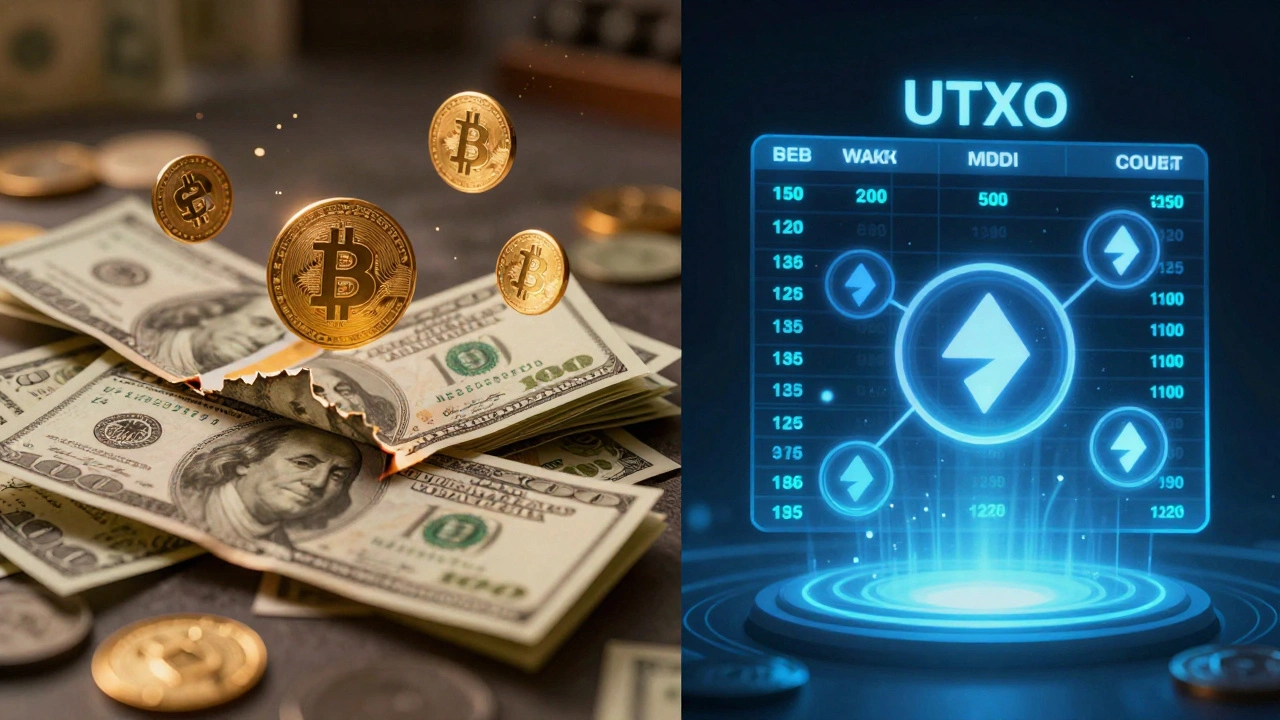
UTXO and account models are two foundational blockchain architectures. UTXO, used by Bitcoin, treats funds like cash with discrete outputs. Account model, used by Ethereum, tracks balances like bank accounts. Each has trade-offs in scalability, privacy, and smart contract support.
Learn More