
When you're walking down a busy city street, your phone’s map might jump around, lose signal, or show you wrong turns. That’s not a glitch—it’s the urban canyon GNSS, the phenomenon where tall buildings block and reflect satellite signals, disrupting global navigation systems. Also known as GNSS signal degradation in dense urban environments, it’s why your GPS works fine in the suburbs but turns into a guessing game in Manhattan or Tokyo.
This isn’t just a nuisance—it’s a safety issue for delivery drivers, emergency responders, and autonomous vehicles trying to navigate tight streets. The problem happens because GNSS satellites orbit high above Earth, and their signals are weak by the time they reach the ground. In open areas, your device picks up signals from multiple satellites. But in an urban canyon, a street flanked by tall buildings that traps and distorts satellite signals, those signals get blocked, bounced, or delayed. The result? Your phone thinks you’re on the wrong side of the street—or even inside a building. This is called multipath error, and it’s worse during rush hour when buildings cast long signal shadows.
Modern GNSS receivers now fight back using multi-constellation GNSS, systems that pull data from GPS, GLONASS, Galileo, and BeiDou satellites at once. Instead of relying on just the U.S. GPS network, your device grabs signals from 50+ satellites across four systems. That increases the chance of catching at least a few clean signals between buildings. Add in RTK corrections, real-time satellite signal adjustments that improve accuracy to within a few centimeters, and you’ve got a system that can track a delivery drone down a narrow alley. Some newer phones even use AI to predict signal loss based on building layouts—learning your city’s GPS blind spots over time.
It’s not perfect yet. Underground parking, tunnels, and narrow alleys still kill signals. But the fixes are getting smarter. Urban planners are starting to design cities with GNSS in mind—adding small signal boosters on rooftops, using fiber-optic networks to relay timing data, and even testing low-orbit satellites that fly lower and stronger than traditional ones. Meanwhile, companies building self-driving cars and delivery robots are pushing for better urban GNSS standards, because if your robot can’t tell left from right on 5th Avenue, it’s useless.
What you’ll find below are real-world stories of how engineers, scientists, and everyday users are tackling urban GNSS failures. From precision farming tech adapted for city navigation, to how space weather affects satellite signals in downtown cores, to the hidden math behind why your phone gets confused near skyscrapers—this collection cuts through the noise and shows you what’s actually working out there.
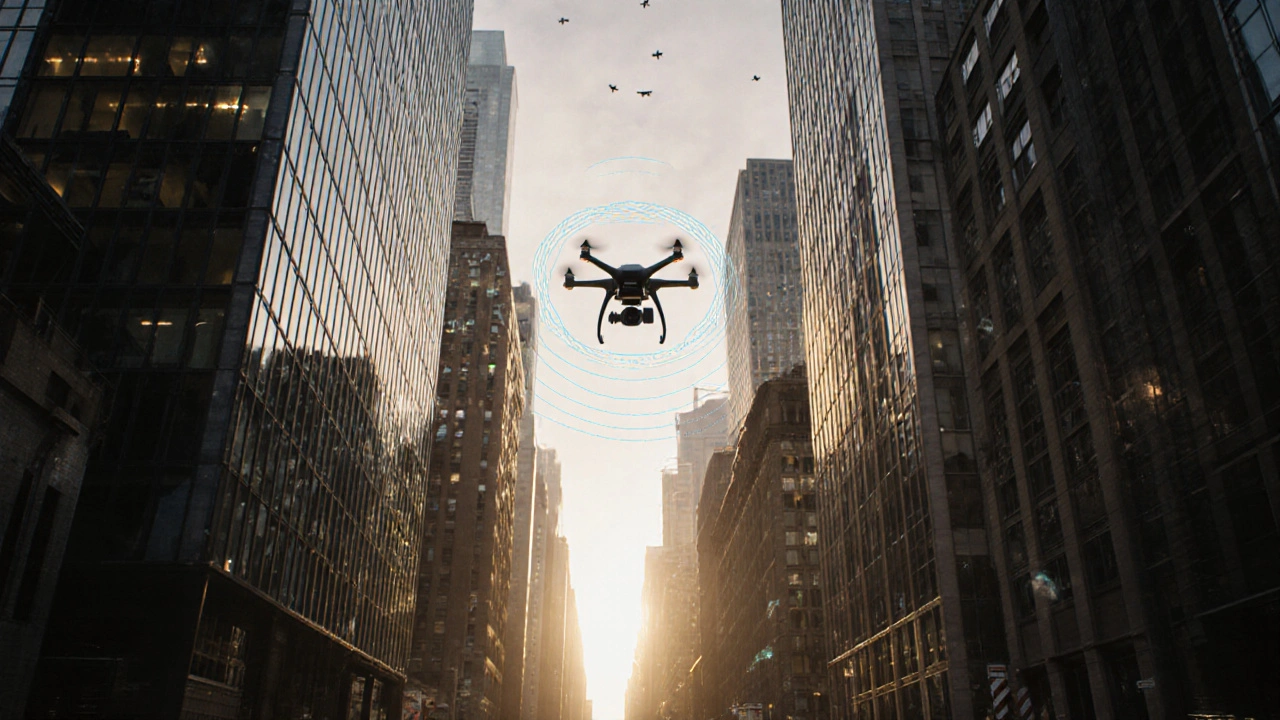
Urban canyons cripple GPS accuracy, but new software and sensor fusion techniques now deliver lane-level positioning in dense cities. Learn how HK model, SmartNav, and S-GNSS Auto are fixing satellite navigation for autonomous vehicles and smartphones.
Learn More