
When you buy a coffee, a smartphone, or a rocket engine, you have no idea where every part came from—or if it was made under fair conditions. Supply chain traceability, the ability to track every component and step in the production and delivery of a product from origin to consumer. It's not just about accountability—it's about survival. Without it, contaminated food slips through, conflict minerals fuel wars, and satellites crash because a single faulty sensor went unverified. Today, traceability isn’t a buzzword. It’s a system powered by blockchain, a distributed ledger that records transactions immutably and transparently, and satellite tracking, real-time monitoring of goods using orbital sensors and GPS networks. These aren’t separate tools—they work together. Blockchain records who handled what and when. Satellites tell you where it is, right now, even in the middle of the ocean or across a war zone.
Think about how the ISS stays connected. It doesn’t rely on guesswork—it uses a global network of ground stations and satellites to know its exact position, status, and communication links. That same precision is now being applied to cargo ships, warehouse pallets, and drone deliveries. Companies aren’t just scanning barcodes anymore. They’re using blockchain traceability, a system where every transfer of ownership is cryptographically signed and permanently recorded to prove a diamond is conflict-free, or that a vaccine stayed cold from factory to clinic. And when something goes wrong—like a satellite failure caused by a defective component—you need to know exactly which batch, which supplier, which shift produced it. That’s where traceability saves millions, and sometimes lives.
Space tech is quietly driving this change. The same satellite coordination, the global system managed by the ITU to assign orbital slots and radio frequencies that keeps the ISS from colliding with debris is now being used to track shipping containers. Companies are attaching low-power trackers to pallets that ping location data via satellite networks, bypassing dead zones where cellular signals vanish. Meanwhile, blockchain payments, secure, instant transfers verified by cryptographic signatures are automating payments between suppliers the moment goods are verified at each checkpoint. No more waiting weeks for invoices. No more disputes over delivery proof.
You’ll find posts here that show how this works in practice: how drag sails on dead satellites are part of a larger push for responsible logistics in orbit, how cryptographic signatures secure digital receipts for goods, and how the ITU’s filing system for orbital rights mirrors the need for clear, regulated ownership in global supply chains. This isn’t science fiction. It’s the new normal—and the people who understand it are the ones who’ll control the next decade of trade, safety, and innovation.
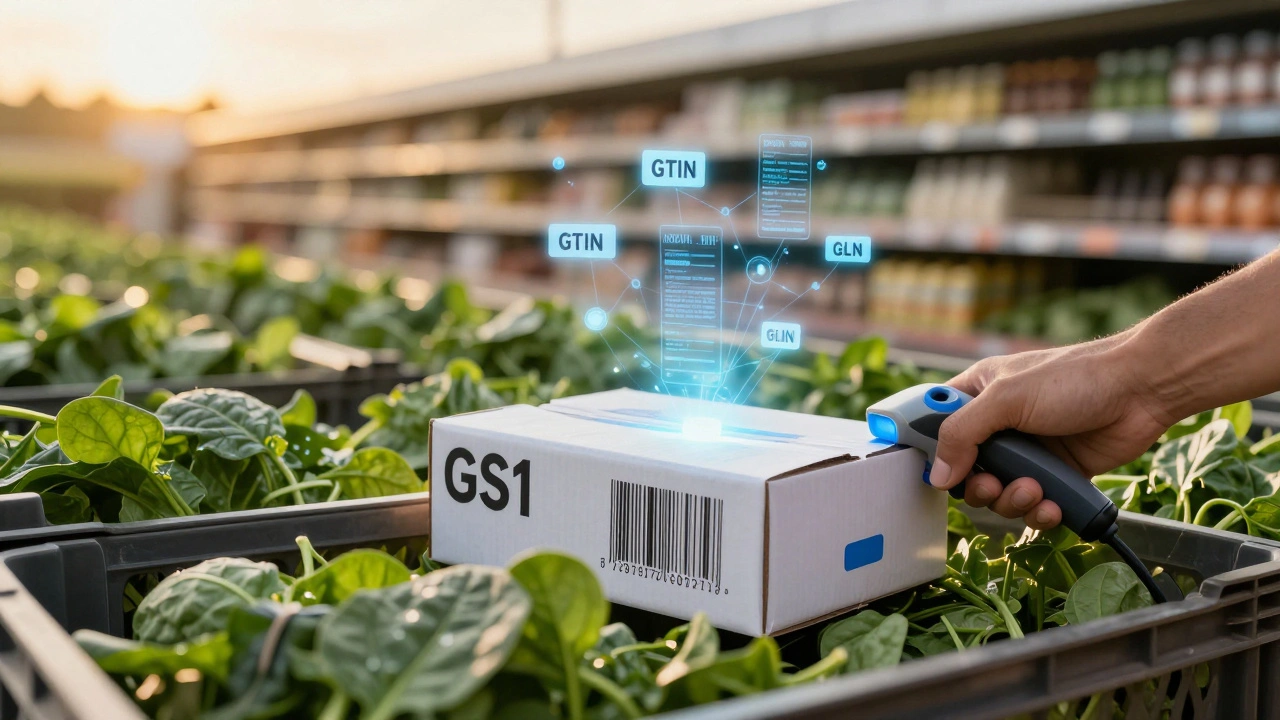
GS1 standards and blockchain work together to create trusted, real-time supply chain traceability. Learn how GTIN, GLN, and EPCIS enable compliance, reduce recalls, and meet global regulations by 2026.
Learn More