
When Starship landing, the controlled return and touchdown of SpaceX's fully reusable super-heavy rocket system. Also known as orbital booster recovery, it’s the moment that turns a multi-million-dollar launch into a repeatable process. This isn’t just a flashy stunt—it’s the core of SpaceX’s entire strategy to slash the cost of space travel. Before Starship, rockets were thrown away after one flight. Now, the first stage—called the Super Heavy booster—flies back from the edge of space, flips upside down, and lands upright on a launchpad or drone ship, all while firing engines in a precise, choreographed dance.
What makes this possible? It’s a mix of advanced methalox engines, liquid methane and oxygen propulsion systems used in SpaceX’s Raptor engines, real-time AI-guided flight control, and grid fins that steer the booster like a skydiver adjusting their fall. Unlike older rockets that used parachutes or small retrorockets, Starship’s booster uses its own powerful engines to slow down from orbital speeds—over 20,000 km/h—then reignites them in a "boost-back burn," "entry burn," and final "landing burn." Each burn is timed to the millisecond. A single mistake, and you lose a $100 million rocket. But when it works? You get a reusable booster back on the pad in hours, ready to fly again.
This isn’t just about saving money. in-space refueling, the process of refilling Starship’s tanks with cryogenic propellants while in orbit depends entirely on landing success. If you can’t get the booster back safely, you can’t launch enough fuel to send Starship to the Moon or Mars. That’s why every landing test—whether it’s a splashdown in the Gulf of Mexico or a touchdown at Starbase in Texas—is a step toward deep space missions. NASA’s Artemis program, future satellite constellations, and even space tourism all rely on this technology working reliably, over and over.
And it’s not just SpaceX doing this. Other companies are watching, learning, and building their own versions. But right now, Starship landing is the only system that’s landed a rocket taller than a 30-story building, heavier than 5,000 tons, and faster than any vehicle since the Apollo missions. The first successful catch of a booster with mechanical arms? That’s coming. The first landing on Mars? That’s the next goal.
Below, you’ll find real-world breakdowns of how Starship landing works, what’s changed since the first test flights, how it connects to other space tech like cryogenic depots and reusable spacecraft, and why this single maneuver might be the most important step in human spaceflight since the Moon landings.
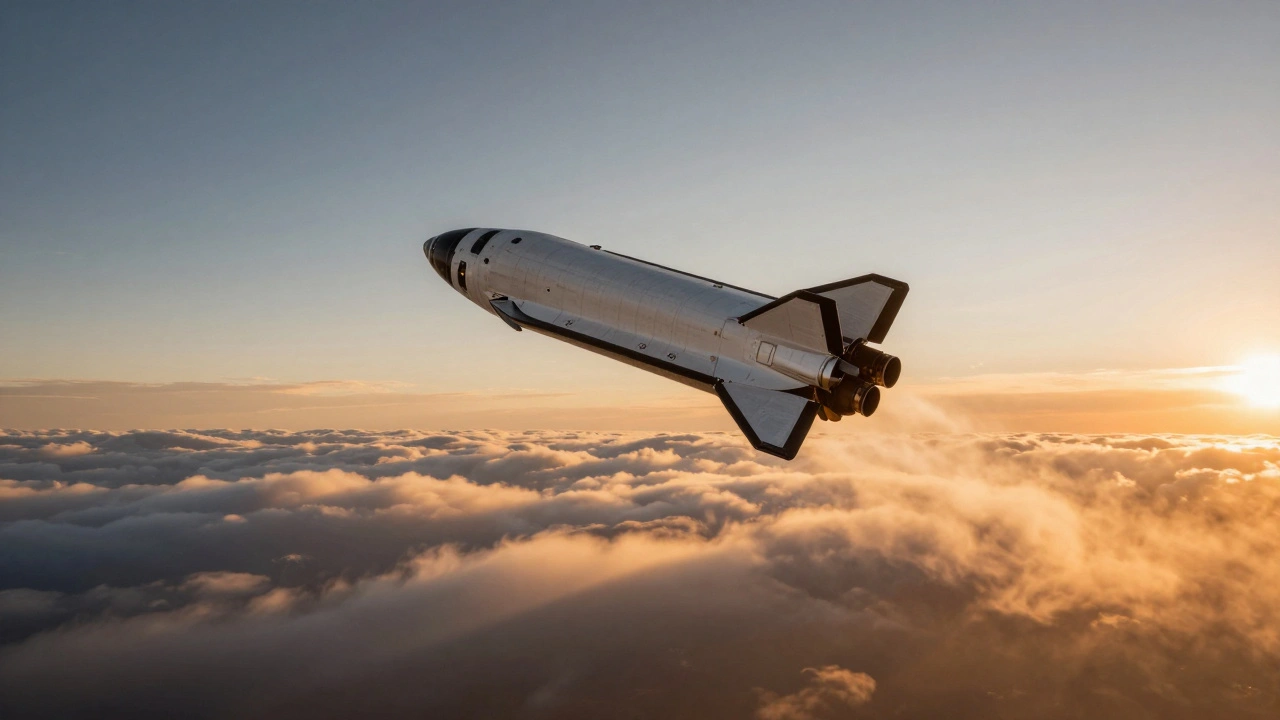
Starship's belly flop maneuver is a revolutionary reentry technique that uses horizontal drag to slow down before flipping upright for landing. It saves fuel, enables Mars missions, and redefines how rockets return from orbit.
Learn More