
When Starship belly flop, a controlled, horizontal mid-air maneuver used by SpaceX’s Starship rocket to slow its descent before landing. Also known as belly flop landing, it’s a high-stakes ballet of aerodynamics and engine timing that turns a falling rocket into a glider. This isn’t just a stunt—it’s the core of SpaceX’s plan to make rockets fully reusable. Unlike traditional vertical landings that use a single engine burn to brake, the belly flop uses atmospheric drag to shed speed while the rocket lies flat, like a skydiver spreading their arms. It’s messy, dramatic, and until recently, considered too dangerous to try at this scale.
What makes the Starship belly flop possible is the Raptor engine, a full-flow staged combustion engine that burns liquid methane and oxygen. These engines can throttle deeply and restart instantly, giving Starship the control it needs to flip upright just before touchdown. The hypersonic control system—using four large flaps to adjust pitch, yaw, and roll—acts like ailerons on a plane, but for a 50-meter-tall rocket falling at Mach 5. NASA’s Mars missions depend on this tech because you can’t land a crewed ship with parachutes alone; you need precision, power, and reusability.
It’s not just about landing. It’s about doing it over and over. Every successful belly flop reduces the cost per launch by eliminating the need to build a new rocket each time. The first few attempts ended in fireballs, but each failure taught SpaceX how to tweak the flap angles, engine timing, and fuel distribution. By Flight 4, Starship completed a full belly flop and landed softly—no explosion, no crash, just a quiet thud on the pad. That moment changed everything. Now, the same maneuver is being tested for future lunar landers and even interplanetary return vehicles.
What you’ll find in the posts below aren’t just videos of rockets flipping. They’re deep dives into the engineering behind the flaps, the physics of atmospheric braking, and why methane is the fuel of choice for deep space. You’ll see how this one maneuver ties into everything from satellite deorbit systems to cryogenic fuel depots in orbit. This isn’t just about SpaceX. It’s about how the next generation of spaceflight is being built—one controlled fall at a time.
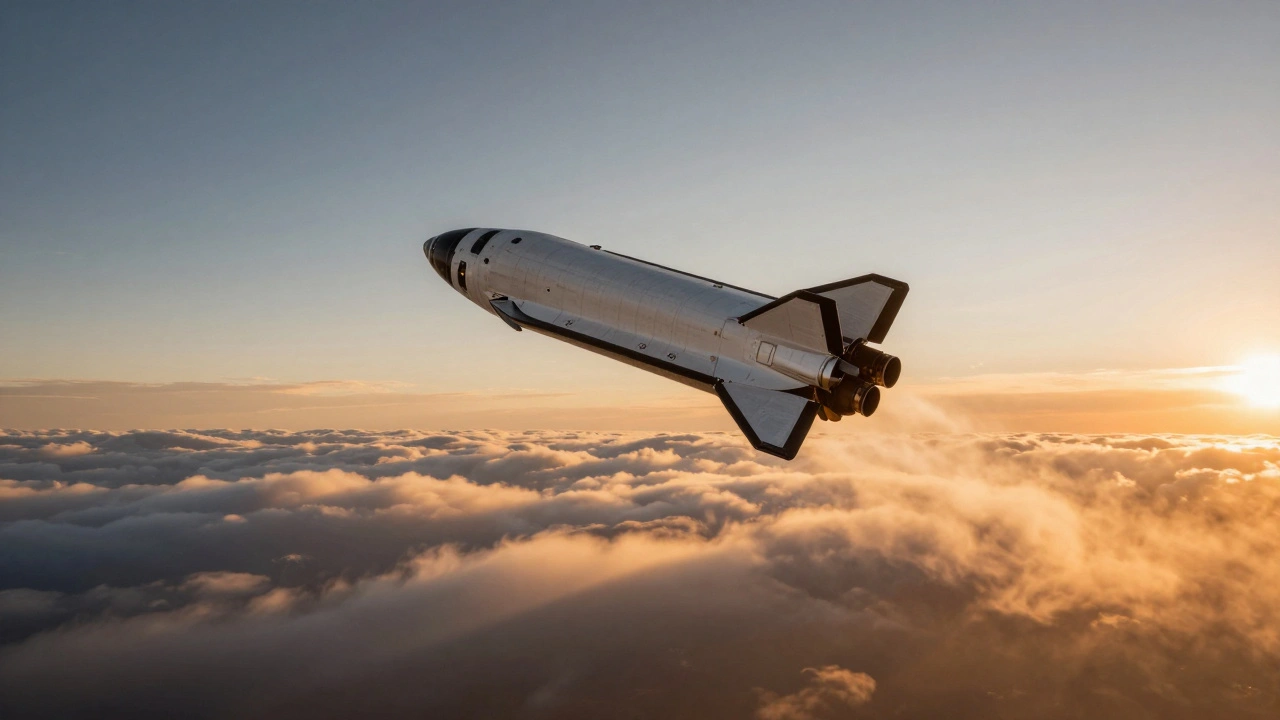
Starship's belly flop maneuver is a revolutionary reentry technique that uses horizontal drag to slow down before flipping upright for landing. It saves fuel, enables Mars missions, and redefines how rockets return from orbit.
Learn More