
When you think about space communication, you might picture lasers or satellites beaming data across the void. But behind every signal—from the ISS talking to Houston to a CubeSat sending weather data—is something far more basic: spectrum allocation, the official assignment of specific radio frequency bands for use by space missions, ground stations, and satellites. Also known as frequency allocation, it’s the rulebook that stops every satellite from screaming over each other in the airwaves. Without it, your GPS could glitch, a Mars rover could go silent, and emergency signals from astronauts might get lost in the noise.
Spectrum allocation isn’t just about picking a frequency—it’s about managing scarcity. The radio spectrum is a finite resource, and every satellite, ground station, and even your phone uses a slice of it. Agencies like the FCC in the U.S. and the ITU globally decide who gets what, based on mission needs, interference risks, and international agreements. For example, the 2.4 GHz and 5.8 GHz bands are common for small satellites because they’re unlicensed and widely supported, but high-data missions like Earth observation satellites often need dedicated bands like X-band (8–12 GHz) or Ka-band (26–40 GHz) to avoid congestion. These bands aren’t just technical choices—they’re legal ones. Missions that use unauthorized frequencies risk being shut down, fined, or even blocked from launch.
It’s not just about satellites either. Spectrum allocation affects how astronauts talk to Earth, how deep-space probes send images from Jupiter, and even how amateur radio operators on the ground connect with the ISS. The ARISS program, for instance, relies on carefully allocated VHF and UHF bands to let students talk to astronauts. Meanwhile, new technologies like laser communication are emerging, but they don’t replace radio—they complement it. Lasers offer higher bandwidth but need line-of-sight and clear skies. Radio waves still win when you need reliability through clouds, dust, or storms. That’s why spectrum allocation remains critical: it’s the backbone of every space mission’s lifeline to Earth.
What you’ll find below are real-world stories of how spectrum allocation shapes space missions—from the drag sails that keep satellites from becoming debris, to the ground station networks that keep the ISS connected, to the legal frameworks that protect astronaut communications. These aren’t just tech pieces—they’re about who gets to speak, when, and why no one else can interrupt.
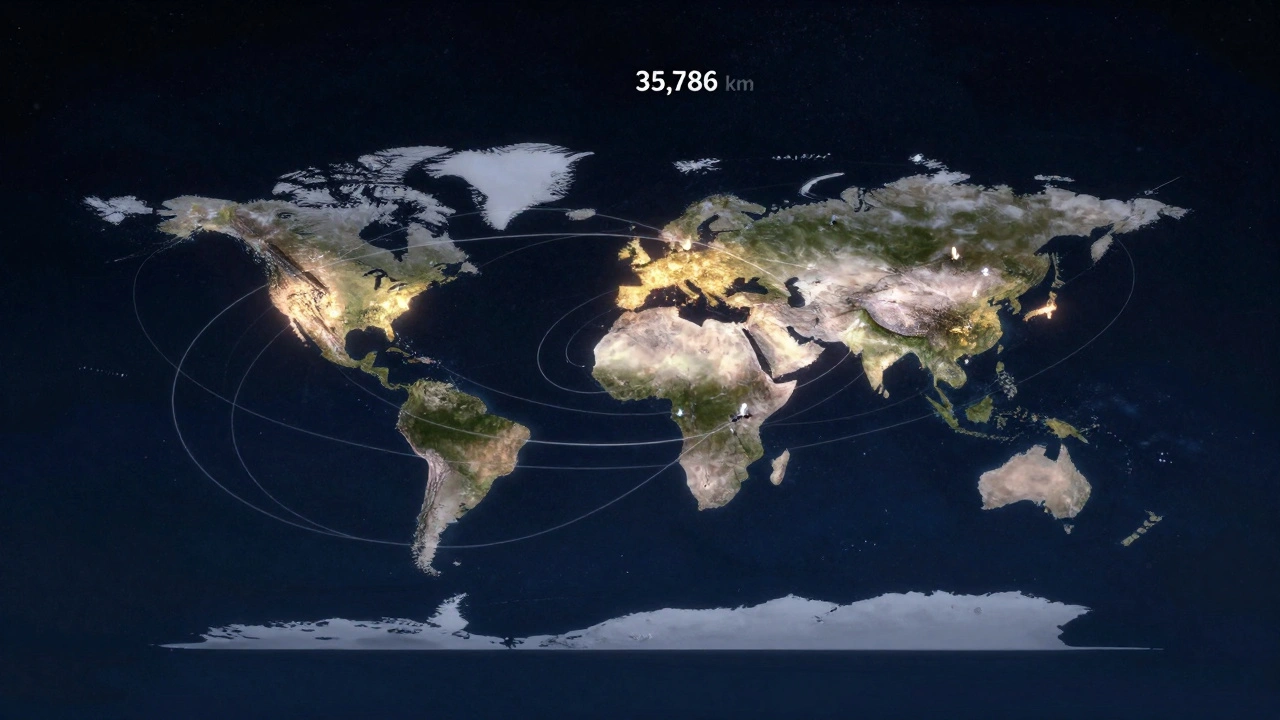
The ITU manages global satellite spectrum and orbital rights through a complex filing system. Learn how countries and companies claim space, why paper satellites are a problem, and what’s changing in 2025 to make space fairer.
Learn More