
When SpaceX reentry technique, the method SpaceX uses to guide its Starship spacecraft safely back through Earth’s atmosphere for landing. It’s not just about surviving heat—it’s about controlling speed, angle, and structure so the vehicle can fly again. This isn’t like the old space shuttle method. No thermal tiles glued on by hand. No parachutes. Instead, SpaceX uses a belly-flop maneuver, a grid fin system, and a tile-based heat shield that literally burns off a little with each pass. It’s risky. It’s bold. And it works.
The core of this technique is the heat shield design, a dense array of hexagonal ceramic tiles that cover Starship’s underside and withstand temperatures over 1,600°C during reentry. Also known as thermal protection system, it’s made of a material called LI-2200, similar to what NASA used on the shuttle but redesigned for mass production and repeated use. Each tile is replaceable, and SpaceX tests them under real reentry conditions using high-speed wind tunnels and flight data from Starship’s test hops. The tiles aren’t just passive armor—they’re part of a dynamic system that works with the atmospheric entry, the controlled descent of a spacecraft through the upper layers of Earth’s atmosphere, using aerodynamic drag to slow down. Also known as aerobraking, it’s how Starship turns kinetic energy into heat without relying on fuel. The spacecraft doesn’t just fall—it flies. At a 40-degree angle, it generates lift to steer, using its hypersonic deceleration, the process of slowing down from speeds over Mach 20 using only air resistance, not rockets. Also known as aerodynamic braking, it’s what lets Starship land with precision, not crash system. The grid fins, made of titanium, adjust mid-air to keep the vehicle stable as it slows from orbital velocity to subsonic speeds.
What makes this technique revolutionary isn’t just the hardware. It’s the data. Every reentry generates terabytes of temperature, pressure, and structural stress readings. SpaceX uses that to tweak the next flight. They’ve gone from losing vehicles in early tests to landing Starship intact over a dozen times. That’s not luck. It’s iteration. And it’s the only reason we’re getting closer to Mars. The SpaceX reentry technique isn’t just a way to come home—it’s the foundation for reusable interplanetary travel. Below, you’ll find real-world breakdowns of how this system works, what went wrong on early flights, and how it’s being adapted for Moon and Mars missions.
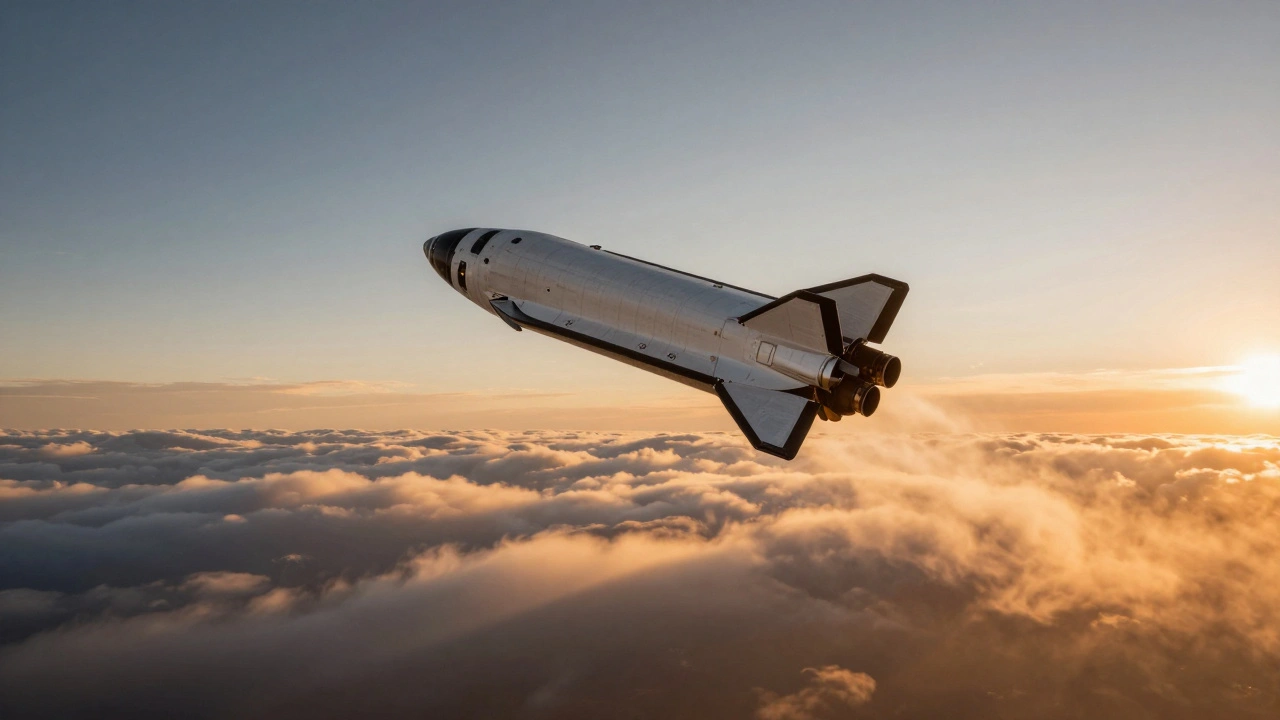
Starship's belly flop maneuver is a revolutionary reentry technique that uses horizontal drag to slow down before flipping upright for landing. It saves fuel, enables Mars missions, and redefines how rockets return from orbit.
Learn More