
When you think of modern spaceflight, you’re probably thinking of the SpaceX Falcon 9, a two-stage reusable rocket designed to deliver payloads to orbit and land back on Earth for reuse. Also known as the F9, it’s the most flown orbital rocket in history, with over 300 successful launches and more than 200 landings. Before Falcon 9, rockets were thrown away after one use—expensive, wasteful, and slow. SpaceX flipped that model. Instead of building a new rocket for every launch, they built one that could come home, touch down like a helicopter, and fly again in days. That’s not science fiction. That’s Tuesday at Cape Canaveral.
What makes Falcon 9 special isn’t just that it lands—it’s how often it does. The first stage, powered by nine Merlin engines, separates after burnout, flips around, fires its engines again, and lands either on a drone ship in the ocean or back on solid ground. This reusable rocket, a system that recovers and reflies major components to reduce launch costs cut the price of orbital access by more than half. It’s why NASA trusts it to haul cargo to the ISS, why Starlink deploys its satellites by the hundreds, and why private companies now see space as a routine business, not a moonshot. The rocket reusability, the practice of recovering and reusing launch vehicle components to lower costs and increase launch frequency pioneered by Falcon 9 is now the global standard. Even competitors like Blue Origin and Rocket Lab are copying its landing tech.
It’s not perfect. Some landings fail. Some boosters fly too many times and get retired. But every failure teaches something. Every success proves the model works. And with each launch, Falcon 9 gets faster, cheaper, and more reliable. It’s the reason SpaceX can afford to test Starship—the next-generation rocket that builds on Falcon 9’s lessons. While Starship aims for Mars, Falcon 9 is still the backbone of Earth orbit, launching everything from weather satellites to human crews. It’s the quiet giant behind the space boom.
Below, you’ll find real-world breakdowns of Falcon 9 missions, how its engines work, why it’s become the go-to for global customers, and how it’s shaping the future of launch systems. No fluff. Just facts, failures, and the engineering that made it all possible.
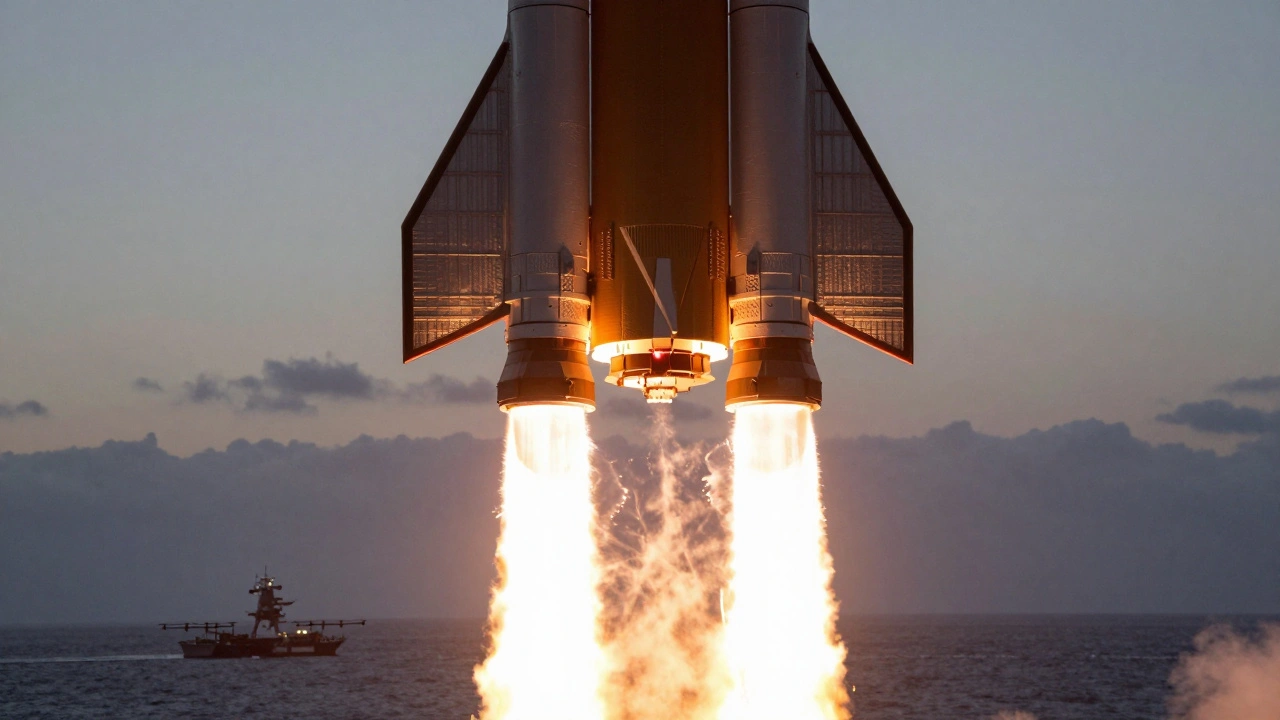
Grid fins are the key to precision rocket landings, enabling reusable boosters to steer through extreme reentry conditions. SpaceX's titanium grid fins have slashed launch costs and made drone ship landings routine.
Learn More