
When we think of spacewalks, we picture astronauts floating outside the ISS, tethered to the station, working on solar panels or repairing equipment. But what most people don’t see is the months of spacewalk planning, the detailed process of preparing astronauts and systems for extravehicular activity in the vacuum of space. Also known as EVA, it’s not just about putting on a suit—it’s about predicting every possible failure before the hatch opens. Every minute outside the spacecraft is accounted for, down to the torque on a bolt or the temperature of a glove.
Spacewalk planning relies on three core systems: the spacesuit systems, the life-supporting suits that protect astronauts from extreme temperatures, radiation, and vacuum, the ISS extravehicular activity, the structured procedures and timelines that govern every task performed outside the station, and the ground teams at NASA’s Mission Control who simulate every scenario. A single spacewalk might involve 50+ engineers reviewing checklists, testing tools in zero-g water tanks, and rehearsing repairs using virtual reality. The suits alone have over 100 subsystems—oxygen flow, cooling loops, communication links—that must all work perfectly for 6–8 hours in a place where a single leak can be fatal.
It’s not just about the hardware. Astronauts train for years to learn how to move in a bulky suit, how to use tools without floating away, and how to respond if a suit alarm goes off mid-repair. They practice in the Neutral Buoyancy Lab, a giant pool where they simulate space conditions, repeating the same motions hundreds of times until muscle memory takes over. And because spacewalks often happen during emergencies—like a coolant leak or a broken antenna—they must be ready to improvise while still following strict safety protocols.
What you’ll find in this collection are real examples of how spacewalk planning works in practice: how astronauts learn to communicate in Russian during emergencies, how humidity control inside suits prevents fogging, and how ground teams use real-time data to adjust tasks on the fly. These aren’t hypotheticals—they’re the same systems used on the ISS and will be critical for future missions to the Moon and Mars. Whether you’re curious about the tech, the training, or the human side of spacewalks, the articles below break it all down without the fluff.
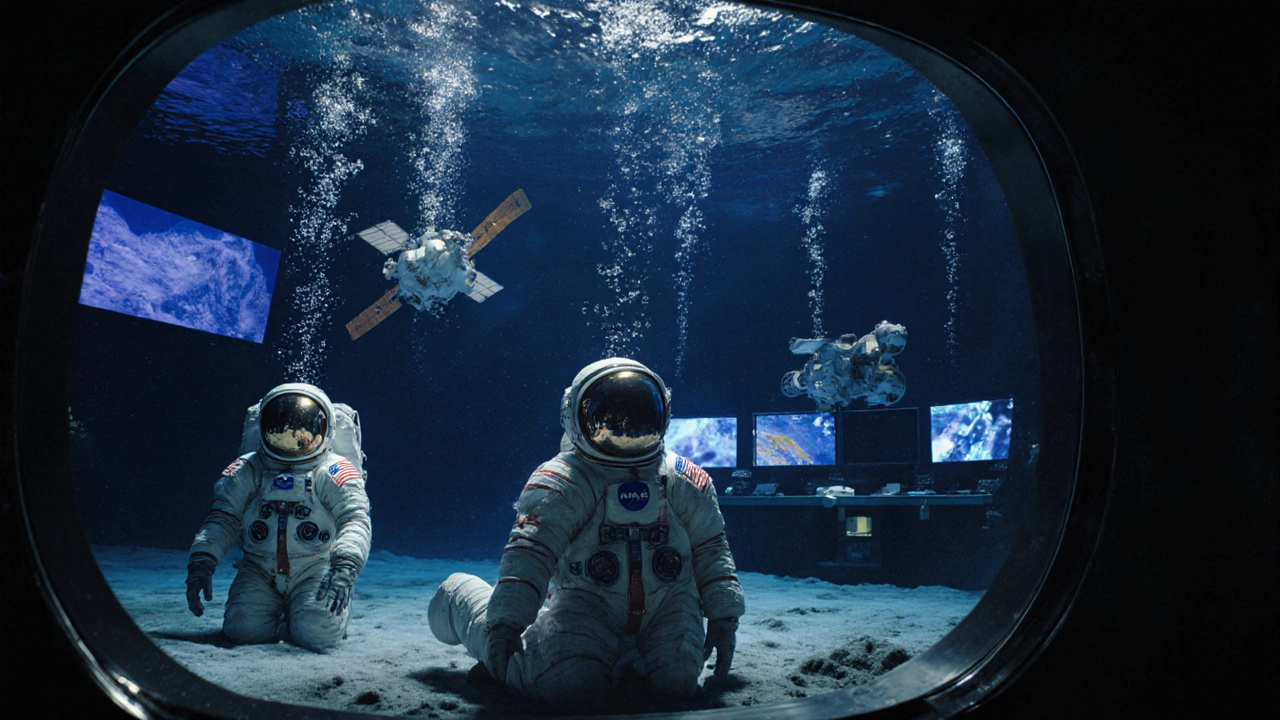
EVA maintenance planning ensures astronaut safety during spacewalks by combining advanced tools, strict protocols, and exhaustive simulations. Learn how NASA plans every spacewalk to handle extreme risks in orbit and beyond.
Learn More