
When you think of a spacecraft, you picture rockets, solar panels, or rovers—but the real hero is often hidden: the spacecraft antenna, a specialized radio system designed to send and receive signals across millions of miles in the vacuum of space. Also known as space communication array, it’s the only thing keeping NASA, ESA, and private companies in touch with their missions beyond Earth. Without it, a rover on Mars is just a metal box sitting in the dust. A probe flying past Jupiter? A silent ghost. These antennas don’t just transmit data—they carry science, commands, and sometimes, humanity’s first glimpse of alien worlds.
Not all spacecraft antennas are the same. high-gain antennas, narrow-beam dishes that focus signals over vast distances are used on deep space missions like Voyager and Perseverance. They need precise pointing—sometimes within a fraction of a degree—to lock onto Earth. Meanwhile, low-gain antennas, omnidirectional and less powerful act as backups, always listening, even if the main dish is misaligned. Then there are phased array antennas, electronic systems that steer beams without moving parts, now common on satellites and future lunar landers because they’re faster, more reliable, and don’t wear out. These aren’t just antennas—they’re precision instruments built to survive radiation, extreme cold, and years of silence.
Behind every signal is a chain of technology: the transmitter, the amplifier, the waveguide, and the feed horn—all tuned to specific radio frequency bands like X-band or Ka-band. NASA’s Deep Space Network uses giant ground antennas to catch whispers from probes 15 billion miles away. Meanwhile, Starlink satellites rely on compact, high-speed antennas to beam internet down to your phone. The same physics applies whether you’re talking to a Mars rover or streaming video from orbit. It’s all about power, direction, and timing. And when things go wrong? A single antenna failure can end a mission. That’s why engineers test them in vacuum chambers that mimic space, shake them like an earthquake, and freeze them to -200°C.
What you’ll find here are real stories from missions that depended on these systems—the ones that worked, the ones that nearly failed, and the breakthroughs that changed how we talk to space. From how JWST’s antennas relayed its first images to why CubeSats use simple whip antennas, this collection pulls back the curtain on the unsung tech that makes space exploration possible.
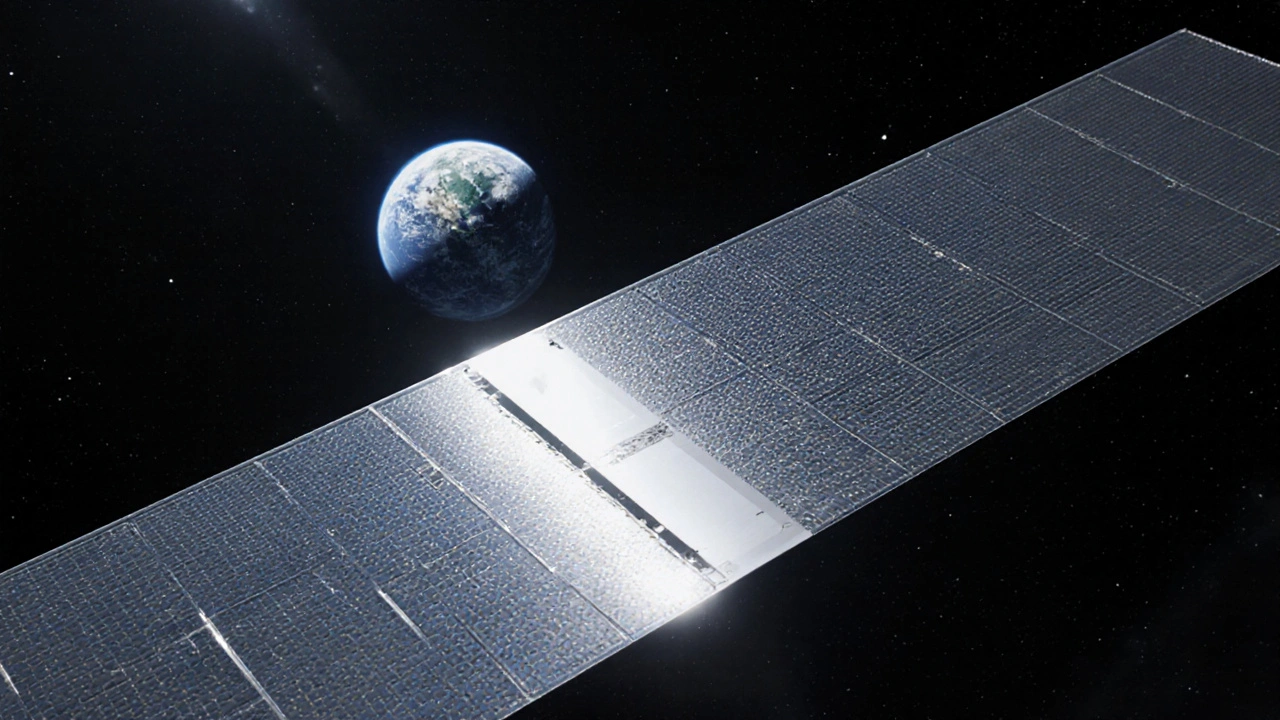
Advanced metamaterials are revolutionizing space hardware by shrinking antennas, cutting weight, and improving thermal control. Used in NASA missions like Europa Clipper, they offer dramatic performance gains-but come with high costs and long qualification times.
Learn More