
When we talk about sintering regolith, the process of heating lunar or Martian soil to fuse particles into solid structures without melting them completely. It's not science fiction—it's the key to building bases on the Moon and Mars without hauling a single brick from Earth. Regolith is the layer of loose dust, rock, and broken fragments covering the surface of airless bodies. On the Moon, it’s sharp and electrostatic. On Mars, it’s mixed with perchlorates and iron oxide. But if you heat it right—between 800°C and 1,200°C—it sticks together. No cement. No water. Just pure heat and gravity-defying engineering.
This isn’t just about saving launch weight. It’s about survival. Transporting one kilogram of material to Mars costs over $1 million. Sintering regolith cuts that cost by 90%. NASA’s Artemis program, ESA’s Moonlight initiative, and companies like SpaceX and ICON are all testing it. Some use lasers to melt thin layers. Others use microwaves, which heat the regolith from within. There’s even research into using concentrated sunlight with mirrors, like a giant magnifying glass in space. Each method has trade-offs: speed, energy use, equipment complexity. But they all do the same thing: turn dirt into walls, runways, radiation shields, and landing pads.
The real breakthrough? It works. In 2023, a team at the European Space Agency sintered lunar simulant into a 3D-printed brick strong enough to handle pressure differences in a habitat. In 2024, NASA tested a microwave sintering device on the ISS that fused regolith simulant into a solid disc. These aren’t lab curiosities—they’re prototypes for the first off-world construction crews. And it’s not just about habitats. Sintered regolith could become the foundation for solar panel arrays, communication towers, and even roads for lunar rovers. It’s the material that makes permanent space settlements possible.
What you’ll find below are real-world tests, technical breakdowns, and engineering stories from missions pushing this tech forward. From how microwave sintering avoids dust clouds in low gravity, to why lunar regolith behaves differently than Martian soil, to the materials science behind heat-resistant tiles used in these systems—you’ll see exactly how dirt becomes destiny in space.
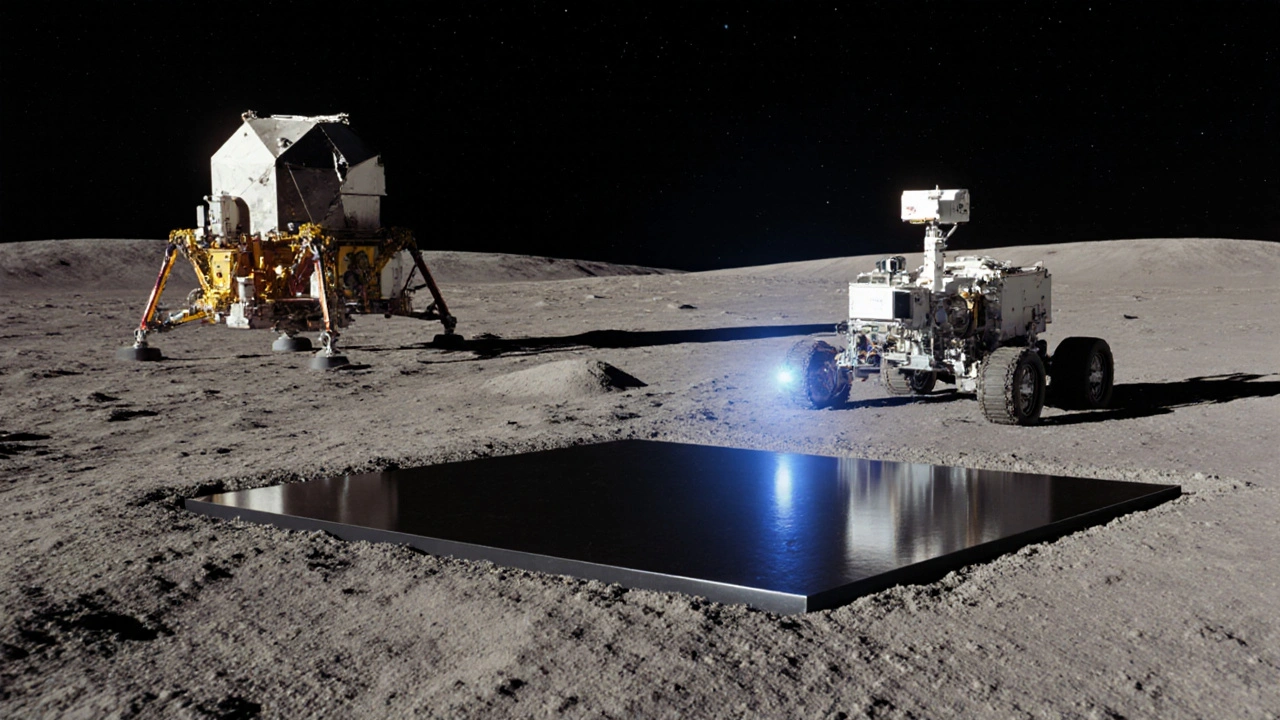
Lunar landing pads made by sintering Moon soil reduce dangerous dust ejecta from rocket landings. Using microwaves, lasers, or polymers, engineers are turning regolith into durable surfaces-cutting Earth-launched mass by 90% and enabling long-term lunar bases.
Learn More