
When we talk about satellite coordination, the process of managing the movement and positioning of multiple satellites to prevent collisions and optimize orbital use. It's not just about pointing antennas or scheduling data drops—it’s the invisible traffic control system keeping thousands of spacecraft from turning Earth’s orbit into a junkyard. Every satellite, whether it’s a tiny CubeSat or a giant weather observatory, needs to know where everything else is—and what it’s about to do next.
Space traffic management, the broader framework of rules, data sharing, and international agreements that guide satellite operations is what makes satellite coordination possible. Without it, a single misstep—like a failed deorbit or an unannounced maneuver—could trigger a chain reaction. We’ve seen this happen before: one collision creates thousands of pieces of orbital debris, defunct satellites, spent rocket stages, and fragments from past collisions that now circle Earth at 17,000 mph. That debris doesn’t just sit there. It moves. And it keeps hitting other things. The U.S. Space Surveillance Network tracks over 50,000 objects larger than a softball. But there are millions of smaller pieces too small to track—and just as dangerous.
Satellite operators, the companies and agencies that launch and run satellites, from NASA to SpaceX to private startups are on the front lines. They don’t just push buttons. They spend hours analyzing orbital paths, running collision avoidance simulations, and coordinating with other operators through global databases. When a potential close pass is predicted, they might adjust a satellite’s orbit days in advance. Sometimes, they just wait and see. It’s not perfect. But it’s getting better. New tools are letting operators predict conflicts weeks ahead, not hours. And more countries are joining shared tracking systems instead of working in isolation.
It’s not just about avoiding crashes. Satellite coordination also means making the most of crowded orbits. Think of it like parking spots in a busy city—everyone needs a spot, but no one wants to block the exit. Operators negotiate frequency bands, orbital slots, and access to ground stations. There are international guidelines, but no global police. That means trust, transparency, and timing matter more than ever. With private companies launching hundreds of satellites a year, and nations like China and India expanding their space presence, coordination isn’t optional anymore—it’s survival.
What you’ll find below are real stories of how this system works—or sometimes, how it almost breaks. From drag sails that help satellites die safely, to ground networks that keep the ISS talking to Earth, to the quiet radio chatter between operators when a near-miss is avoided. These aren’t theoretical exercises. They’re daily decisions that keep our space environment functional. And if you’ve ever used GPS, streamed a weather report, or watched a live broadcast from space—you’re already benefiting from it.
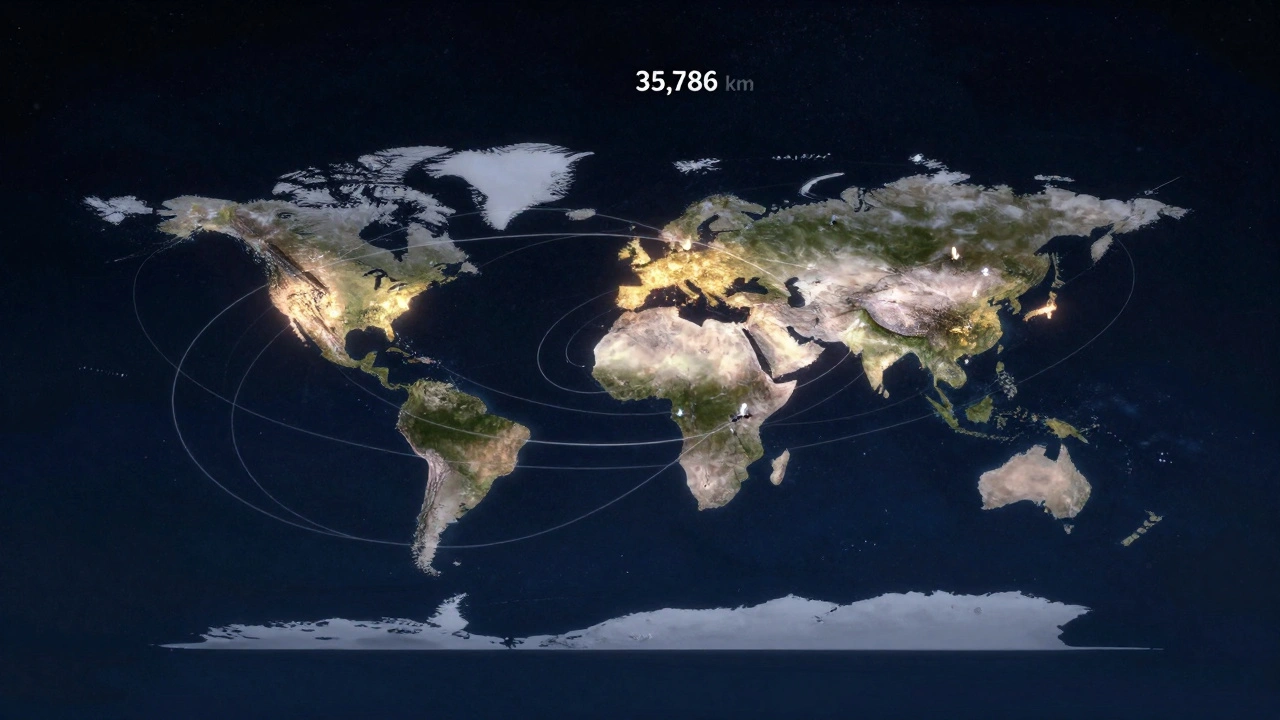
The ITU manages global satellite spectrum and orbital rights through a complex filing system. Learn how countries and companies claim space, why paper satellites are a problem, and what’s changing in 2025 to make space fairer.
Learn More