
When you think of a rocket blasting off, you’re seeing the result of rocket propulsion, the method of generating thrust to move a spacecraft through space by expelling mass at high speed. Also known as spacecraft propulsion, it’s the reason we can leave Earth’s gravity behind and reach orbit, the Moon, or even Mars. Unlike planes that rely on air for lift and combustion, rockets carry their own fuel and oxidizer — they work in the vacuum of space because they don’t need outside air. This is why every mission, from a small satellite launch to NASA’s SLS rocket, depends on how well that fuel burns and how efficiently the thrust is directed.
There are different ways to make that thrust. Most rockets today use cryogenic propellants, liquid fuels like hydrogen and oxygen stored at extremely low temperatures for maximum energy. These are powerful but tricky to handle — they boil off if not kept cold, which is why orbital fuel depots are being developed to store them in space for future missions. Other systems use solid fuel, like the boosters on the Space Shuttle, or hypergolic liquids that ignite on contact — simpler but less efficient. The key isn’t just how much power you get, but how precisely you control it. Small thrusters adjust a spacecraft’s attitude, while main engines push it into new orbits or toward other planets.
What makes rocket propulsion more than just big explosions is the engineering behind it. Every nozzle shape, fuel mix, and combustion cycle is tuned for a specific job. The thrust, the force that pushes the rocket forward, measured in pounds or kilonewtons must overcome gravity, air resistance, and the weight of the rocket itself. That’s why SpaceX’s Merlin engines and NASA’s RS-25s are so carefully designed — they’re not just powerful, they’re reusable and reliable. And as we plan longer missions to Mars, we’re looking at new ideas: electric propulsion for slow, steady pushes, or nuclear thermal rockets that could cut travel time in half. The future isn’t just about bigger engines — it’s about smarter ones.
What you’ll find in the posts below are real-world examples of how these systems are built, tested, and used. From how cryogenic propellant depots could change deep space travel to how engineers manage fuel flow in zero-g, this collection shows the science behind the fire. No fluff. Just how rockets actually work — and what’s coming next.
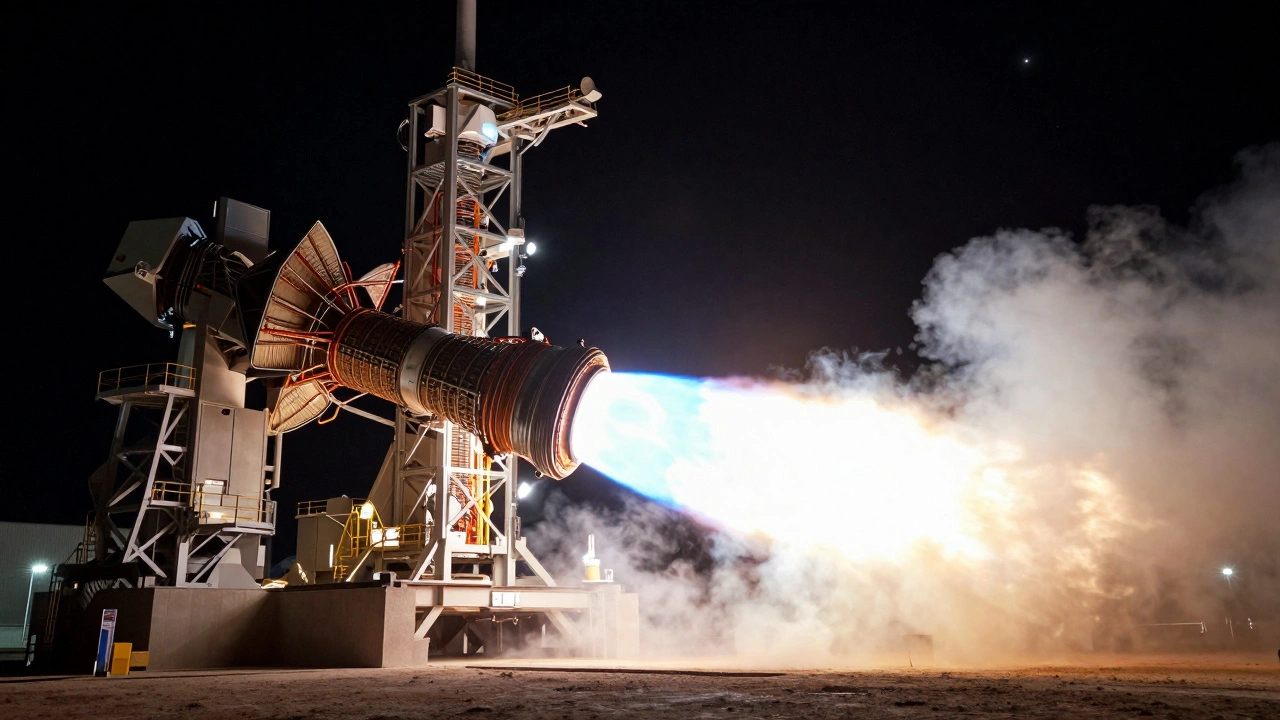
Methalox engines using liquid methane and oxygen are replacing kerosene in modern rockets due to cleaner burns, lower costs, and unmatched reusability - making them essential for Mars missions and affordable spaceflight.
Learn More