
When we talk about orbital rights, the legal framework that determines who can operate satellites, how long they can stay in orbit, and who is responsible for cleaning up debris. Also known as space traffic management, it’s not about owning space—it’s about controlling how we use it. There’s no property line in orbit, but there are rules. The Outer Space Treaty of 1967 says no country can claim sovereignty over space or celestial bodies. But it doesn’t say much about what happens when a satellite breaks down, drifts into another’s path, or blocks a telescope’s view. That’s where space law, the body of international agreements and norms governing human activity in space comes in—and why it’s falling behind.
Today, over 10,000 satellites are in low Earth orbit, and thousands more are planned. Companies like SpaceX, Amazon, and OneWeb are launching constellations faster than regulators can keep up. When a satellite dies, it becomes space junk. If it doesn’t deorbit, it could collide with another satellite, triggering a chain reaction. That’s why satellite deorbit, the process of safely removing a satellite from orbit at end-of-life is no longer optional. Drag sails, propulsion burns, and passive decay are now part of the legal expectation—not just engineering best practices. But who pays? Who enforces it? The Rescue Agreement, a 1968 treaty requiring nations to assist astronauts in distress was written for government missions. It doesn’t cover space tourists, private space stations, or commercial debris cleanup. And that’s just the tip of the iceberg.
Orbital rights aren’t just about avoiding crashes. They’re about access, fairness, and survival. If one company fills up the best orbital slots, what happens to others? If a nation launches a satellite that jams another’s signal, who responds? The current system relies on voluntary guidelines, not binding rules. And with space tourism legal status, the unclear legal standing of civilians flying to space still undefined, the risks are growing. What if a tourist’s malfunctioning capsule drifts into a critical orbital path? Who’s liable? The answer isn’t in the law yet—it’s in the headlines.
What follows are real cases, real tech, and real legal gaps that show how orbital rights are being tested every day. You’ll see how drag sails are becoming mandatory, why Russian language training matters for emergency docking, and how a single uncontrolled satellite could trigger a global crisis. This isn’t science fiction. It’s the new normal—and you’re already living in it.
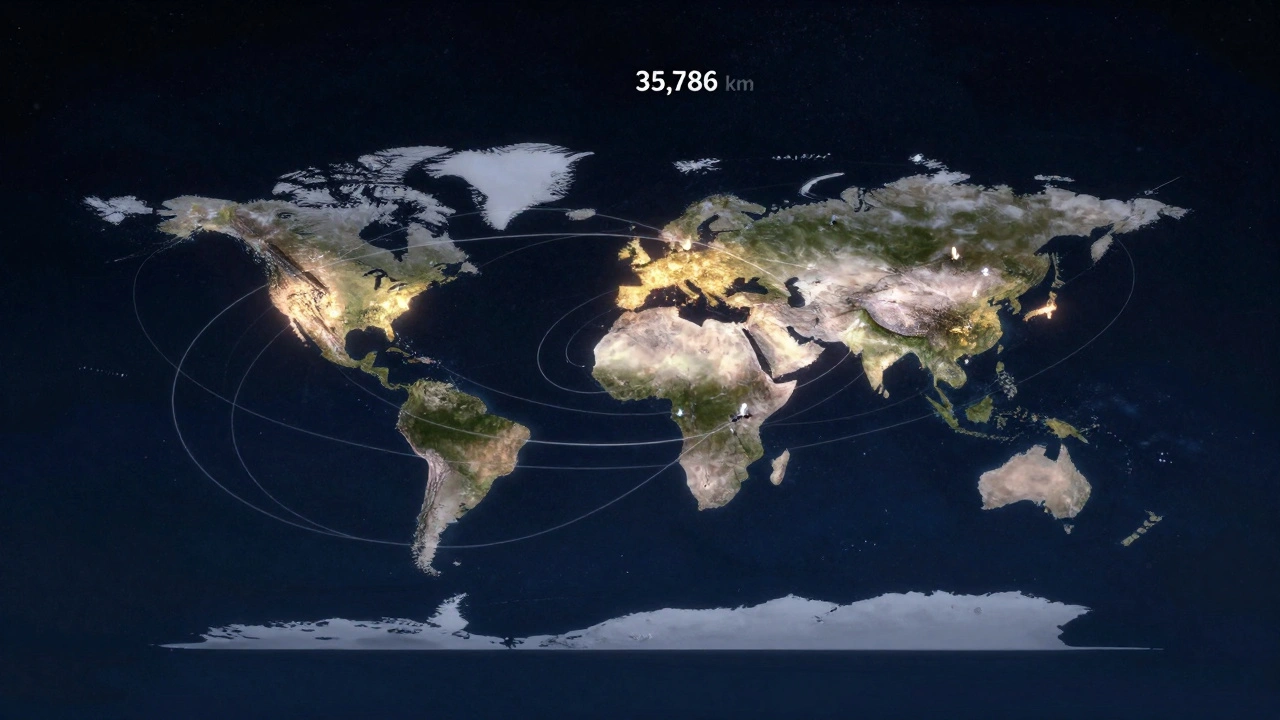
The ITU manages global satellite spectrum and orbital rights through a complex filing system. Learn how countries and companies claim space, why paper satellites are a problem, and what’s changing in 2025 to make space fairer.
Learn More