
When you mine cryptocurrency, you’re competing against thousands of others to solve complex math problems and earn new coins. But doing it alone? Almost impossible. That’s where mining pools, collectives of cryptocurrency miners who combine their computing power to increase chances of earning block rewards. Also known as mining collectives, they’re the reason most people actually make money mining Bitcoin and other Proof of Work coins. Without them, solo miners would wait years for a single reward—while big mining farms dominate the network.
Mining pools work by dividing the work. Instead of one person trying to solve the whole block, everyone in the pool tackles small pieces. When the pool finds a block, the reward gets split based on how much work each miner contributed. This isn’t charity—it’s math. You get smaller, regular payouts instead of huge, rare ones. It’s like buying a lottery ticket every day instead of waiting for a jackpot that might never come. The Proof of Work, the consensus mechanism that secures Bitcoin and similar blockchains by requiring computational effort to validate transactions system depends on this distributed effort. Without mining pools, the network would be too slow and too centralized, controlled only by the biggest hardware owners.
Not all mining pools are the same. Some charge fees, others offer different payout methods—like PPS (Pay Per Share) or FPPS (Full Pay Per Share). Some are run by big companies, others by hobbyists. And not all cryptocurrencies use them equally. Bitcoin mining is almost entirely pool-based. But newer coins with lower hash rates? Many still run solo. Still, if you’re mining Bitcoin, Ethereum Classic, or Litecoin, you’re almost certainly in a pool—even if you didn’t realize it.
There’s a trade-off. You give up the chance at a full block reward, but you gain consistency. And that’s what keeps people mining. You can plan your electricity costs, your hardware upgrades, your income. No more guessing if you’ll get paid next month. Mining pools turn crypto mining from a gamble into a job.
But here’s the catch: mining pools aren’t just about money. They’re about network security. If just a few pools control most of the hash power, the whole system becomes vulnerable. That’s why some miners switch pools regularly—to spread out control. It’s not just about profit. It’s about keeping Bitcoin decentralized.
What you’ll find in this collection are real breakdowns of how mining pools operate, the hidden costs behind the payouts, how hardware choices affect your earnings, and why some pools fail while others thrive. You’ll see how mining pools connect to energy use, regulation, and even environmental impact. Whether you’re just starting out or you’ve been mining for years, these posts cut through the noise and show you exactly what’s happening behind the scenes.
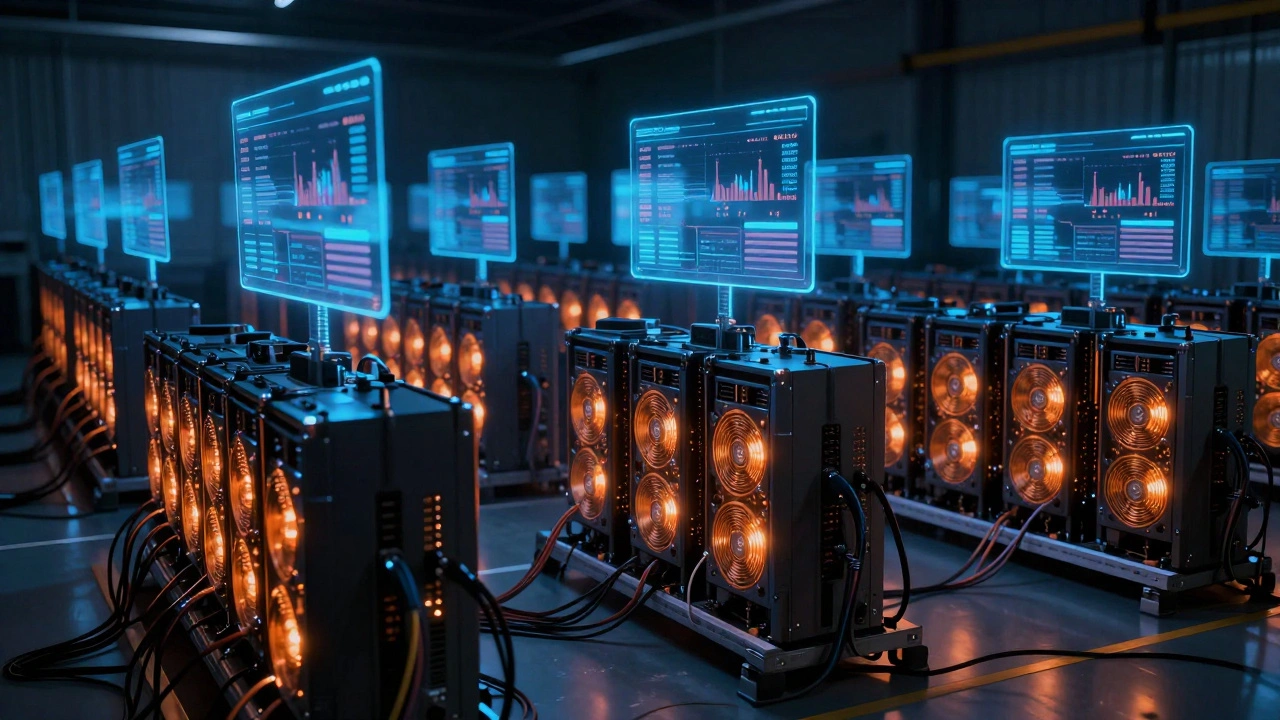
Mining pools let individual miners combine computing power to find cryptocurrency blocks more reliably. Learn how they work, which ones to choose, and why solo mining is no longer viable.
Learn More