
When you think of military GPS, a high-precision satellite navigation system used by armed forces for targeting, troop movement, and drone operations. Also known as Precise Positioning Service (PPS), it's the backbone of modern warfare—far more accurate and secure than the civilian version you use on your phone. Unlike regular GPS, which can be off by a few meters, military GPS locks down positions within centimeters, even in jammed or contested environments. It’s not just about knowing where you are—it’s about making sure your missile, drone, or soldier hits the exact spot, every time.
This system relies on Differential GPS, a technique that uses ground-based reference stations to correct satellite signal errors in real time. That’s why you’ll see it mentioned in posts about precision positioning and satellite navigation, the broader framework of using orbital satellites to determine location anywhere on Earth. Military GPS doesn’t just use the same satellites as your car’s navigation—it adds encrypted signals, anti-jamming tech, and real-time corrections that civilian systems can’t access. These corrections come from networks like the Wide Area Augmentation System (WAAS) or military-specific ground stations, making the system resilient even when adversaries try to block or trick it.
It’s not just about bombs and troops. GPS augmentation, methods that improve accuracy, reliability, and availability of satellite signals powers everything from guided artillery to satellite formation flying. The same tech that lets a drone land on a moving ship also helps satellites in orbit stay perfectly aligned for Earth observation or deep-space communication. NASA and the Department of Defense share infrastructure—think of the GPS satellites themselves. They’re built by defense contractors, launched on rockets like Falcon 9, and maintained by teams that also track space debris and coordinate satellite constellations. This isn’t separate from space exploration—it’s woven into it.
What you’ll find in the posts below isn’t just theory. You’ll see how military GPS connects to real-world systems: how formation flying satellites rely on its precision, how launch contracts account for GPS reliability during critical missions, and how even lunar missions use similar navigation principles to land safely on the Moon. You’ll also find how civilian tech—like Starlink and satellite internet—borrows from military-grade signal processing. This isn’t just about defense. It’s about the hidden infrastructure that makes today’s space age possible.
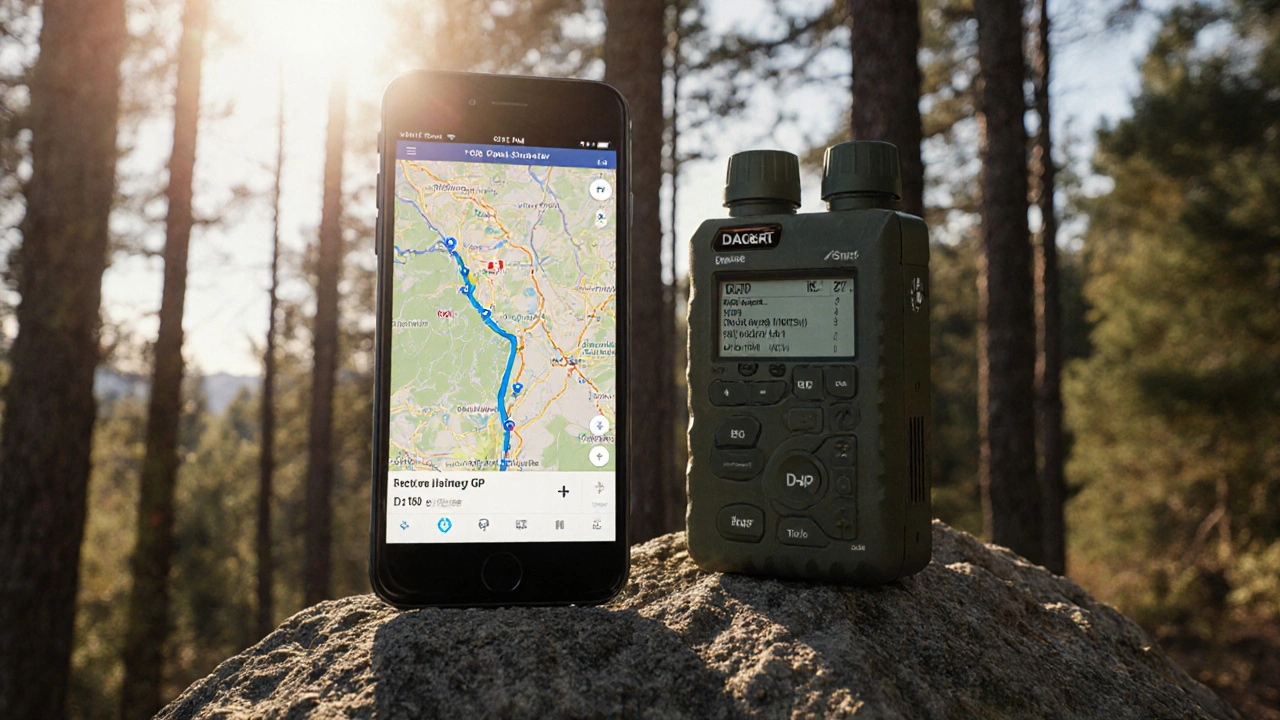
Civilian GPS is no longer less accurate than military GPS - modern devices using dual-frequency signals match military precision. The real difference lies in anti-jamming, security, and access - not raw accuracy.
Learn More