
When you think about rockets blasting off, you might picture fiery exhaust and loud booms—but the real magic is in the fuel. methalox engines, a type of rocket engine that burns liquid methane and liquid oxygen together. Also known as liquid methane-oxygen engines, they’re becoming the go-to choice for next-generation spacecraft because they’re efficient, reusable, and surprisingly clean-burning. Unlike older fuels that leave behind soot or require complex handling, methalox produces mostly carbon dioxide and water vapor. That’s why NASA and private companies like SpaceX are betting big on it—not just for Earth orbit, but for missions to Mars.
What makes methalox special isn’t just the fuel itself, but how it fits into the bigger picture of space travel. liquid methane, a hydrocarbon that can be manufactured on Mars using local resources means future missions could refuel on the Red Planet instead of hauling all their fuel from Earth. That’s a game-changer for long-term exploration. And liquid oxygen, the oxidizer that lets methane burn in the vacuum of space is easy to store and handle compared to older, more toxic options like hypergolic fuels. Together, they enable engines like SpaceX’s Raptor to be reused dozens of times without major overhauls—something earlier engines couldn’t do.
This isn’t just theory. The methalox engines powering Starship have already flown test missions, reached space, and landed back on Earth. They’re designed to be powerful enough to carry humans and cargo to Mars, and simple enough to be maintained between flights. You won’t find methalox in old-school rockets like the Saturn V, but you’ll see it everywhere now: in orbital tugs, lunar landers, and deep-space probes under development. It’s not just a fuel choice—it’s a shift in how we think about space logistics.
Behind every successful launch is a team solving hard problems: keeping cryogenic fuels stable, preventing ice buildup on tanks, managing combustion instability. That’s why posts in this collection cover everything from engine testing data to how NASA plans to use methalox for lunar missions. You’ll find real-world examples of how these engines are built, tested, and optimized—not just marketing hype. Whether you’re curious about why SpaceX skipped traditional fuels or how future Mars settlers might make their own rocket fuel, this collection gives you the facts without the fluff.
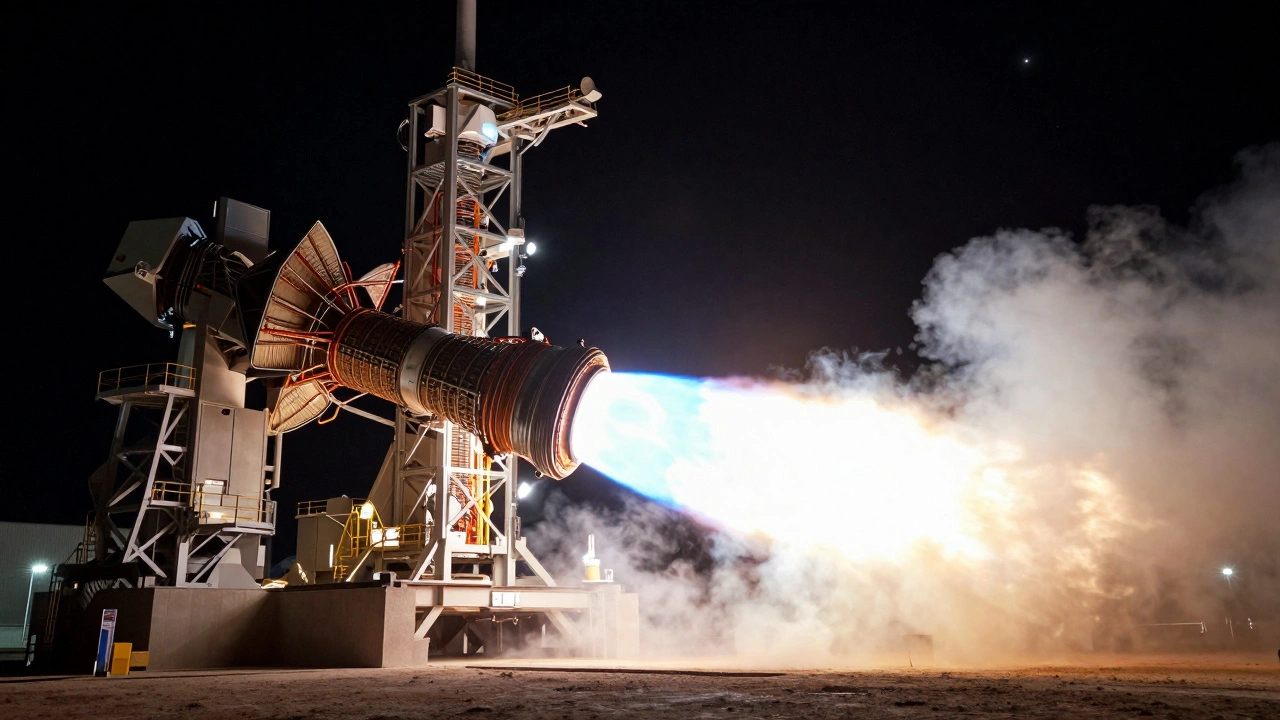
Methalox engines using liquid methane and oxygen are replacing kerosene in modern rockets due to cleaner burns, lower costs, and unmatched reusability - making them essential for Mars missions and affordable spaceflight.
Learn More