
When astronauts land on the Moon again, they won’t just be touching down on dirt—they’ll be landing on a lunar landing pad, a specially engineered surface designed to handle rocket exhaust, reduce dust, and support long-term operations on the Moon. It sounds simple, but building a landing pad on the Moon isn’t like pouring concrete in your driveway. The Moon has no atmosphere, so rocket plumes kick up fine, sharp dust that can jam equipment, scratch suits, and even damage sensitive instruments hundreds of meters away. Without a landing pad, every landing risks turning the whole area into a radioactive sandstorm.
That’s why NASA and private companies like SpaceX and Blue Origin are designing landing pads made from materials that can survive extreme temperatures and vacuum. Some ideas include sintered lunar regolith—basically, melting Moon dirt with lasers to form a hard, stable surface. Others propose using woven mesh or modular tiles made from recycled rocket parts. These aren’t just for show. A solid pad lets rovers and habitats park safely nearby, keeps dust out of airlocks, and makes it easier to refuel and reload for future trips. It’s not a luxury—it’s a moon base, a permanent human settlement on the lunar surface that depends on reliable infrastructure. Without landing pads, you can’t build a base. And without a base, you can’t go deeper into space.
The NASA Artemis, the U.S. program aiming to return humans to the Moon and establish a sustainable presence. program already knows this. Artemis III won’t just drop a lander on the surface—it’ll need a prepared zone. That’s why engineers are testing how to build pads using robots and in-situ resources. No need to haul tons of material from Earth. Just use what’s already there. This is where lunar surface, the terrain of the Moon, including regolith, craters, and potential lava tubes. science meets engineering. The same dust that’s a problem for landers is also the raw material for building them. And the same heat from rocket exhaust that melts regolith could one day power other systems.
It’s not just about the first landing. It’s about the 10th, the 50th, the 100th. Every mission adds more traffic. Every habitat needs more power, more supplies, more connections. A landing pad turns chaos into order. It turns a temporary visit into a lasting presence. And it’s one of the first real steps from science fiction to real-world space infrastructure.
What you’ll find below are real articles that dig into how these pads are being designed, what materials might work best, how they connect to future lunar bases, and why this small piece of engineering could make or break humanity’s future on the Moon.
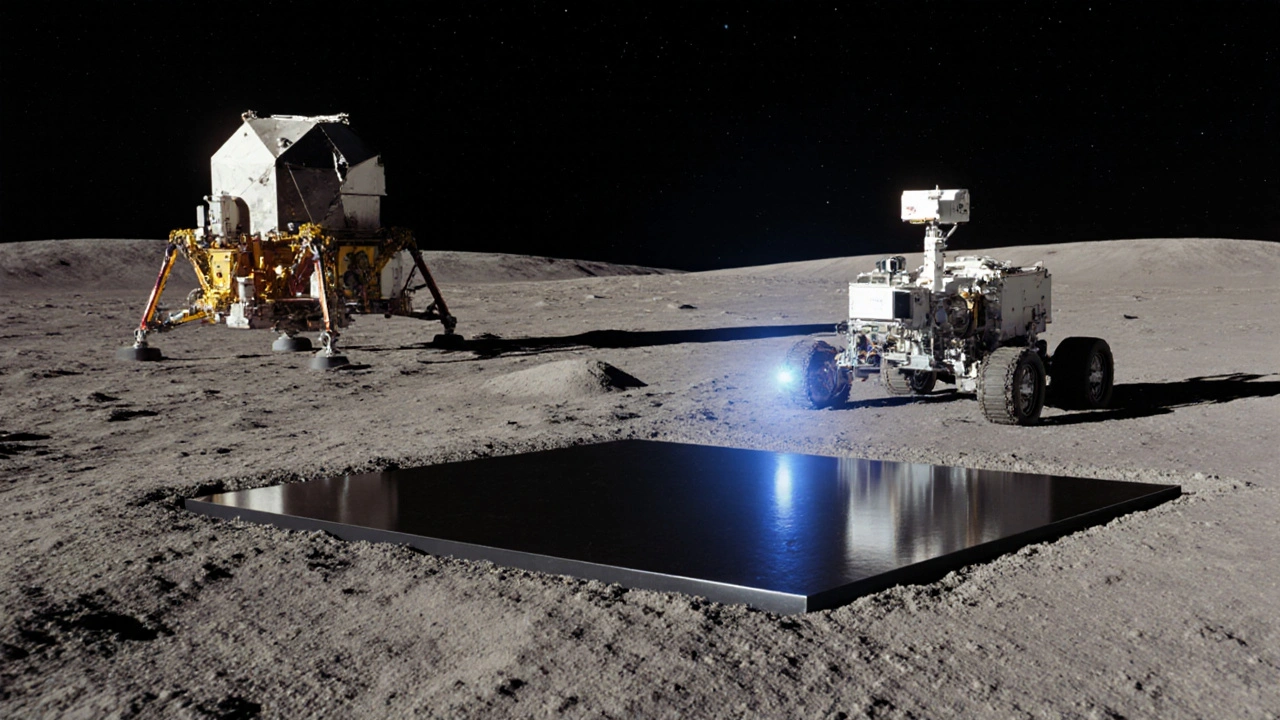
Lunar landing pads made by sintering Moon soil reduce dangerous dust ejecta from rocket landings. Using microwaves, lasers, or polymers, engineers are turning regolith into durable surfaces-cutting Earth-launched mass by 90% and enabling long-term lunar bases.
Learn More