
When you think of rocket fuel, you might picture liquid hydrogen or kerosene. But the future is leaning hard into liquid methane rocket, a type of rocket propellant that burns methane and liquid oxygen to produce thrust, offering a balance of efficiency, reusability, and in-situ resource potential. Also known as methalox, this combination is now the backbone of next-gen spacecraft like SpaceX’s Starship, and it’s not just a tech experiment—it’s a practical shift in how we plan to reach Mars. Unlike older fuels, liquid methane doesn’t leave soot behind, which means engines can be reused dozens of times without heavy cleaning. That’s huge for companies trying to cut launch costs and fly more often.
Why methane? Because it’s not just about performance—it’s about survival. On Mars, you can’t just ship fuel from Earth for every return trip. But with the right tech, you can make methane right there using the planet’s own atmosphere and ice. NASA and SpaceX are both testing systems that pull carbon dioxide from the air and hydrogen from water ice, then combine them into methane using the Sabatier reaction. That means a Mars lander could refuel itself and fly back home. That’s not science fiction—it’s the plan. And cryogenic propellant, a category of fuels stored at extremely low temperatures to keep them liquid, including liquid methane and liquid oxygen. Also known as cryo fuels, they require advanced insulation and storage systems is key to making this work. These fuels need tanks that stay cold in space, which is why in-space refueling, the process of transferring cryogenic fuels between spacecraft in orbit to extend mission range. Also known as orbital propellant depots, it’s critical for deep space missions is being developed right now. You won’t launch a Mars ship fully fueled. You’ll launch it partly fueled, then top off in orbit using fuel from a separate tanker.
The SpaceX Starship, a fully reusable super-heavy lift spacecraft designed for Mars missions and Earth orbit, powered by Raptor engines that burn liquid methane and liquid oxygen. Also known as Starship Super Heavy, it’s the first spacecraft built from the ground up for methane propulsion isn’t just a big rocket—it’s a proof of concept. Its Raptor engines are the first full-flow staged combustion engines running on methalox, and they’ve already flown multiple test missions. The engine design is simpler than older ones, more reliable, and easier to maintain. That’s why every major space player is watching. Even China and Russia are now exploring methane engines for their next-generation rockets. This isn’t a niche trend. It’s the new standard.
What you’ll find in the posts below are real-world breakdowns of how these systems work—from the tanks that hold the fuel at -161°C to the pumps that push it into combustion chambers under extreme pressure. You’ll see how engineers solve problems like sloshing, thermal stress, and long-term storage. You’ll also find how this tech connects to broader goals like lunar outposts and interplanetary supply chains. No fluff. Just the facts behind the fuel that’s getting us off Earth—and keeping us alive out there.
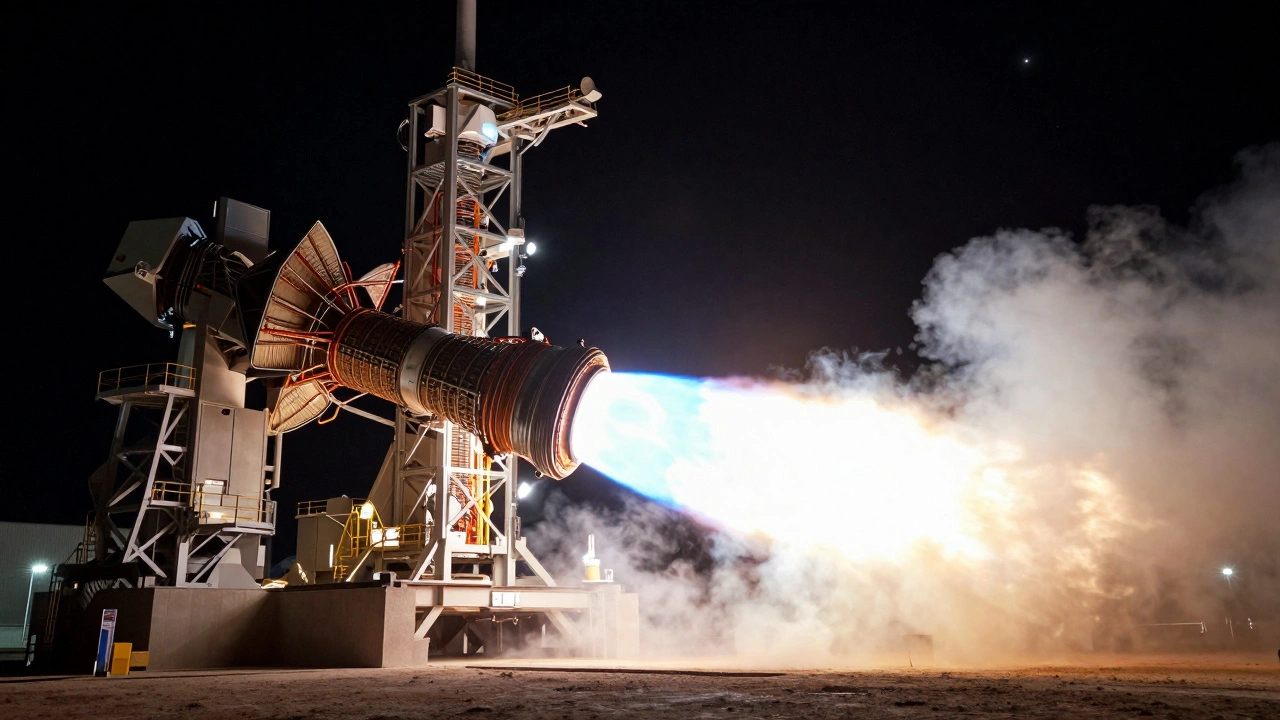
Methalox engines using liquid methane and oxygen are replacing kerosene in modern rockets due to cleaner burns, lower costs, and unmatched reusability - making them essential for Mars missions and affordable spaceflight.
Learn More