
When you hear JWST, the James Webb Space Telescope, a next-generation space observatory launched in 2021 to observe the universe in infrared light. Also known as James Webb Space Telescope, it’s not just another telescope—it’s a time machine built to see the first galaxies that formed after the Big Bang. Unlike Hubble, which peered mostly in visible and ultraviolet light, JWST looks at infrared—the invisible heat glow from distant stars, cold gas clouds, and planets forming in the dark. This lets it see through dust that blocks older telescopes and catch light that’s been stretched across 13 billion years of space.
JWST doesn’t just look farther—it looks deeper. It’s helping scientists map how galaxies grew from tiny clumps of gas into the swirling spirals we see today. It’s spotted water vapor in the atmospheres of distant exoplanets, detected organic molecules in stellar nurseries, and caught galaxies forming stars faster than anyone expected. Behind the scenes, its massive gold-coated mirror, its sunshield the size of a tennis court, and its cryogenic cooling system all work together to keep its instruments cold enough to detect the faintest heat signals from space. This isn’t science fiction—it’s real data, collected in orbit around the second Lagrange point, 1.5 million kilometers from Earth.
And it’s not just about distant galaxies. JWST is also studying our own solar system. It’s taken sharp images of Jupiter’s storms, tracked methane on Mars, and peered into the icy plumes of Saturn’s moon Enceladus. These aren’t side projects—they’re critical pieces of a bigger puzzle: how planets form, how life’s ingredients spread through space, and whether we’re alone. The telescope’s data is public, free, and being used by researchers worldwide—from universities to amateur astronomers with home telescopes.
What makes JWST different isn’t just its tech. It’s the shift in how we explore. Where past missions were isolated events, JWST is a continuous stream of discoveries. Every week, new images drop, each one answering old questions and raising new ones. It’s not just a tool—it’s a conversation starter between scientists, engineers, and anyone who’s ever looked up and wondered what’s out there.
Below, you’ll find a collection of articles that break down how JWST works, what it’s found so far, and how it connects to the bigger picture of space exploration—from the materials used in its mirrors to the data pipelines that turn infrared signals into cosmic portraits. Whether you’re curious about the science behind its mirrors or how it compares to future telescopes, these posts give you the real details—not the hype.
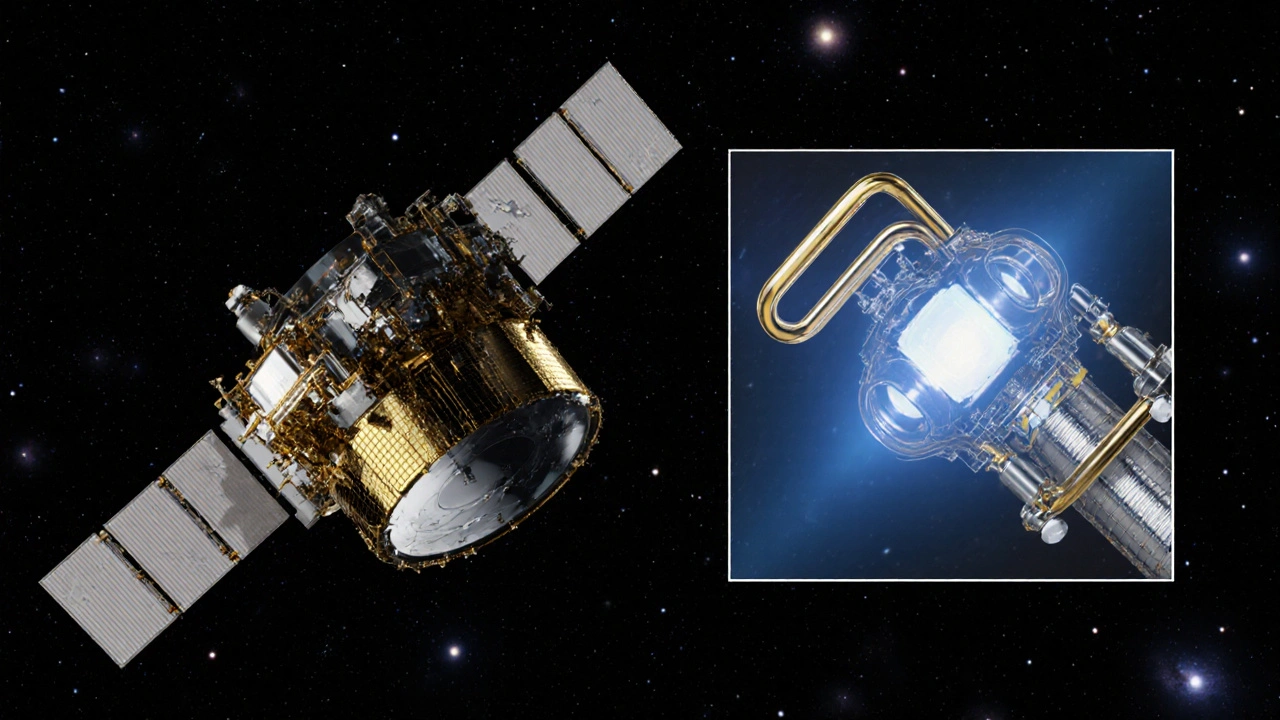
Cryostats and heat pipes enable space sensors to operate at near-absolute zero temperatures, making infrared astronomy possible. From JWST to future telescopes, this technology reveals the cold universe.
Learn More