
When countries launch satellites or send missions to space, they don’t just own the hardware—they take on legal responsibilities. These are called international space obligations, binding agreements under global treaties that govern how nations behave in outer space. Also known as space law, these rules exist because space isn’t a free-for-all. It’s shared, fragile, and regulated by treaties signed by over 110 countries, including the 1967 Outer Space Treaty, which says no nation can claim the Moon or any celestial body as its own. But obligations go beyond ownership. They cover how you launch, how you avoid crashing into others’ satellites, and even how you dispose of your old hardware.
One of the biggest practical pieces of this puzzle is ITU filings, the global system run by the International Telecommunication Union that assigns radio frequencies and orbital slots to prevent interference between satellites. Also known as spectrum allocation, this isn’t optional—it’s mandatory. If a company in Brazil wants to launch a satellite, it must file with its national agency, which then submits the request to the ITU. Other countries can object if the signal might disrupt theirs. Without this, GPS, weather satellites, and even your phone’s data could glitch from overlapping signals. And it’s not just about radio waves. orbital rights, the legal claim to a specific path in space, are also tracked and coordinated through this system. The problem? Thousands of filings are submitted, but many satellites never launch. These "paper satellites" clog the registry and make it harder for new players to get a slot. That’s why the ITU is updating its rules in 2025 to require proof of launch within five years or lose the slot.
Then there’s the trash. space debris, defunct satellites, rocket parts, and fragments from collisions that orbit Earth at 17,000 mph. Also known as orbital junk, it’s a growing threat. One collision can create thousands of new pieces, each capable of destroying another satellite. That’s why international obligations now require countries to plan for safe deorbiting. Drag sails, propulsion burns, or passive decay aren’t optional—they’re expected. The U.S., Europe, Japan, and China all have national policies aligned with these global norms. But enforcement? That’s the gap. There’s no space police. Compliance relies on transparency, peer pressure, and the fear of being blamed if something goes wrong. These rules aren’t about stopping progress. They’re about making sure space stays usable—for science, for commerce, and for future generations.
What you’ll find in the posts below are real examples of how these obligations play out: from how satellites are legally assigned their orbits, to why astronauts train in Russian to follow emergency procedures, to how companies are now required to remove their hardware before it becomes a hazard. This isn’t theory. It’s daily practice—and it’s changing fast.
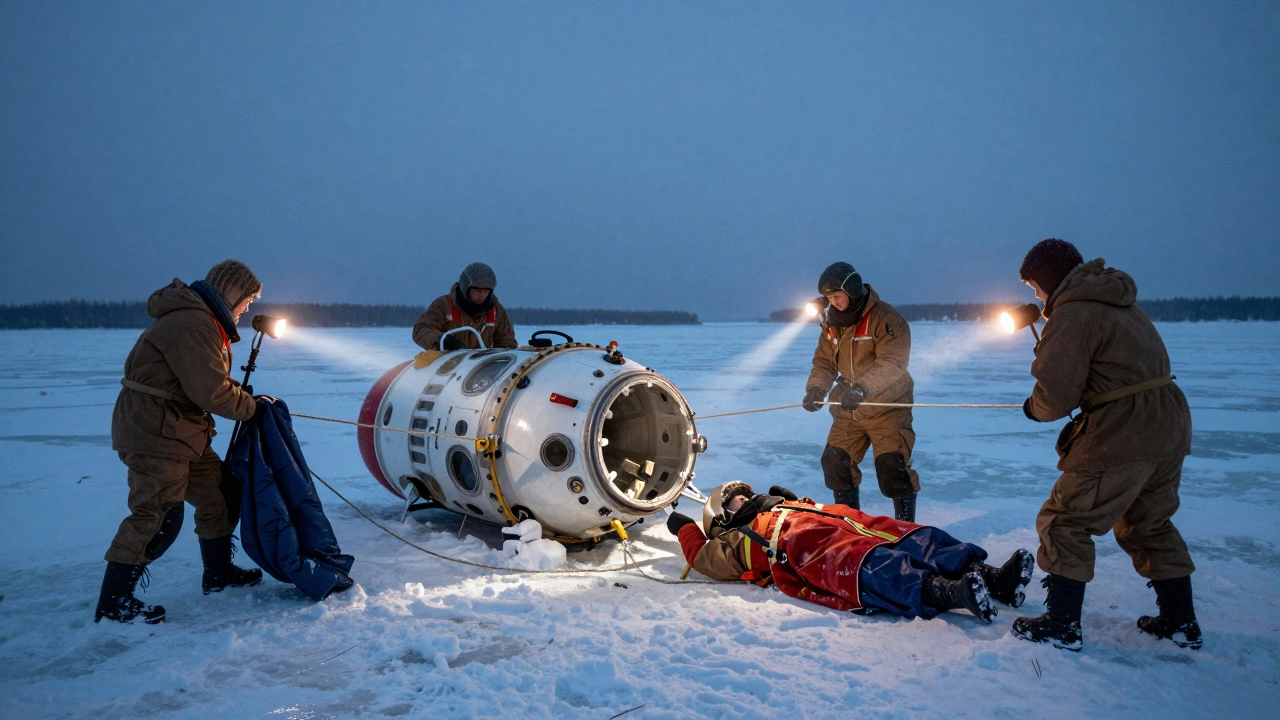
The Rescue Agreement legally obligates nations to save astronauts in distress and return them safely. But with space tourism rising, outdated definitions and unaddressed costs threaten its effectiveness.
Learn More