
When we talk about in-situ resource utilization, the process of using materials found at a space mission’s destination instead of bringing them from Earth. Also known as ISRU, it’s not science fiction—it’s the only way humans will live long-term on the Moon or Mars. Sending a single liter of water to Mars costs more than $100,000. That’s why NASA, SpaceX, and others are building systems to pull water from lunar ice, turn Martian soil into oxygen, and 3D print habitats from regolith. Without ISRU, lunar bases and Mars colonies are just expensive dreams.
ISRU isn’t just about saving money—it’s about survival. On the Moon, ice trapped in shadowed craters can be melted and split into hydrogen and oxygen: rocket fuel and breathable air. On Mars, the atmosphere is 96% carbon dioxide. With the right tech, you can turn that into methane fuel and oxygen for return trips. This isn’t theoretical. The Mars water extraction, methods to pull water from Martian regolith using heat and drilling tech being tested today is directly tied to future crewed missions. And it’s not just about fuel. The same regolith that holds water can be baked into bricks to build radiation shields. That’s the power of ISRU: one resource, multiple uses.
ISRU also connects to other critical space technologies. lunar regolith, the fine, abrasive dust covering the Moon’s surface isn’t just a hazard—it’s a raw material. Missions like Artemis are testing how to process it into construction material, radiation shielding, and even glass for windows. Meanwhile, companies are designing mobile ISRU plants that can operate autonomously, powered by solar panels and controlled by AI. These systems need to be simple, reliable, and able to run for years without repair. That’s why materials science, robotics, and thermal control—topics covered in posts about cryostats, devices that cool space sensors to near-absolute zero and heat pipes, passive systems that move heat without moving parts—are all part of the same puzzle.
What you’ll find below isn’t a list of buzzwords. It’s a collection of real, working ideas. Posts show how drilling and microwave heating can unlock water on Mars, how lunar lava tubes could shelter ISRU plants from radiation, and how satellite formation tech helps map ice deposits from orbit. These aren’t future concepts—they’re active projects with test hardware on the ground and flight-ready prototypes in development. If you’ve ever wondered how we’ll live off the land in space, this is where the answers are being built.
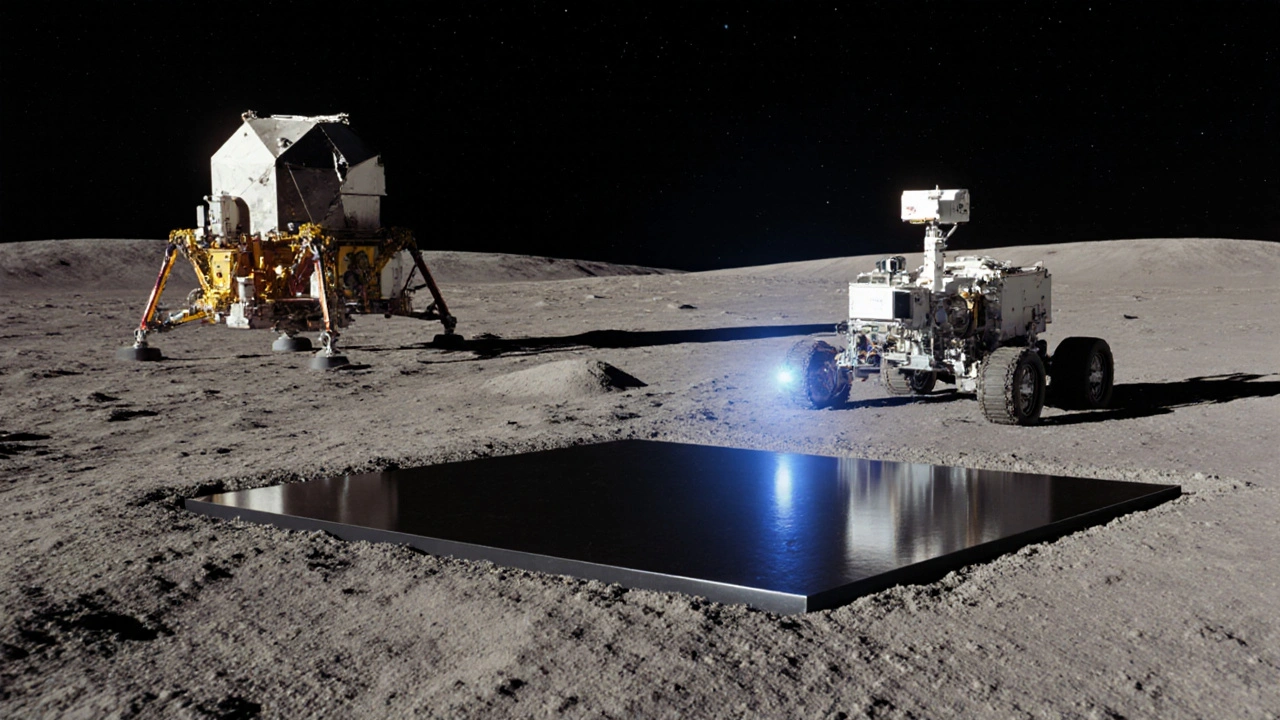
Lunar landing pads made by sintering Moon soil reduce dangerous dust ejecta from rocket landings. Using microwaves, lasers, or polymers, engineers are turning regolith into durable surfaces-cutting Earth-launched mass by 90% and enabling long-term lunar bases.
Learn More