
When you think about what keeps a satellite alive in space, you probably imagine solar panels or thrusters. But the real unsung hero? heat pipes, a passive thermal control system that moves heat from hot spots to radiators without pumps or electricity. Also known as two-phase heat transfer devices, they’re the reason your phone doesn’t melt when you game for hours—except in space, where failure means total mission loss. No fans, no moving parts, no power needed. Just science. And it works because of a simple trick: liquid boils where it’s hot, vapor travels to where it’s cold, condenses back to liquid, and flows back—repeat, forever.
Space is brutal on electronics. Sunlight can hit a satellite at 250°F while the shadow side plummets to -250°F. Without something to even that out, sensors fry, batteries die, and computers crash. That’s where thermal management, the science of controlling temperature in extreme environments comes in. Heat pipes are the backbone of it. They’re in every NASA rover, every SpaceX rocket engine, and every GPS satellite orbiting Earth. They don’t just help—they enable missions. The Europa Clipper? It uses heat pipes to keep its instruments warm enough to function near Jupiter’s icy moon. The James Webb Space Telescope? Its sunshield would’ve failed without heat pipes pulling heat away from its infrared sensors.
And it’s not just about cooling. Heat pipes can also deliver warmth where it’s needed. On the Moon, where nights last two weeks, lunar landers use them to keep batteries from freezing. On the ISS, they move heat from crew quarters to external radiators. They’re lightweight, reliable, and silent—perfect for space. satellite heat control, the practice of managing thermal loads in orbiting platforms relies on them because there’s no air to carry heat away. In vacuum, conduction and radiation are your only tools—and heat pipes are the best at both.
What’s wild is how old this tech is. First developed in the 1960s for NASA’s Apollo program, heat pipes haven’t changed much in design—but their applications have exploded. Today, they’re made from copper, aluminum, or even titanium, filled with ammonia or water, and bent into any shape needed to fit inside cramped spacecraft. Companies like Rocket Lab and Astra use them to cool avionics in small launch vehicles. Even commercial satellite constellations like Starlink depend on them to keep thousands of transmitters running 24/7.
There’s no magic here—just smart physics. But that’s the point. In space, you don’t need flashy tech. You need stuff that works, over and over, with zero chance of repair. Heat pipes deliver that. They’re not glamorous, but without them, none of the missions you read about here would fly. Below, you’ll find real examples of how engineers use heat pipes to solve problems no one else can—and why the next big leap in space tech might not be a new rocket, but a better way to move heat.
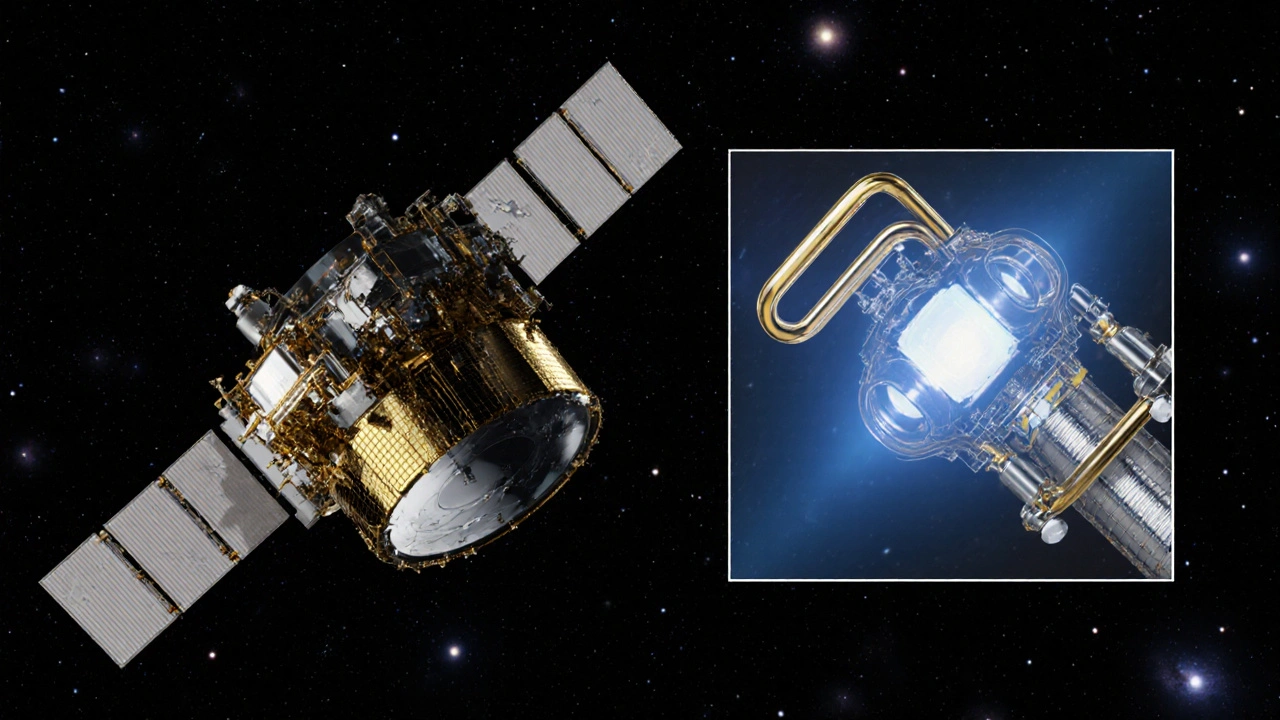
Cryostats and heat pipes enable space sensors to operate at near-absolute zero temperatures, making infrared astronomy possible. From JWST to future telescopes, this technology reveals the cold universe.
Learn More