
When you hear hash rate, the speed at which a blockchain network performs cryptographic calculations to validate transactions and secure the ledger. It's not just a number—it's the backbone of security for networks like Bitcoin and Ethereum before its switch to Proof of Stake. Also known as mining power, it tells you how hard miners are working to keep the system honest and tamper-proof. Without enough hash rate, the network becomes vulnerable. Attackers could theoretically rewrite transaction history if they controlled more than half the total computing power. That’s why higher hash rates mean stronger security.
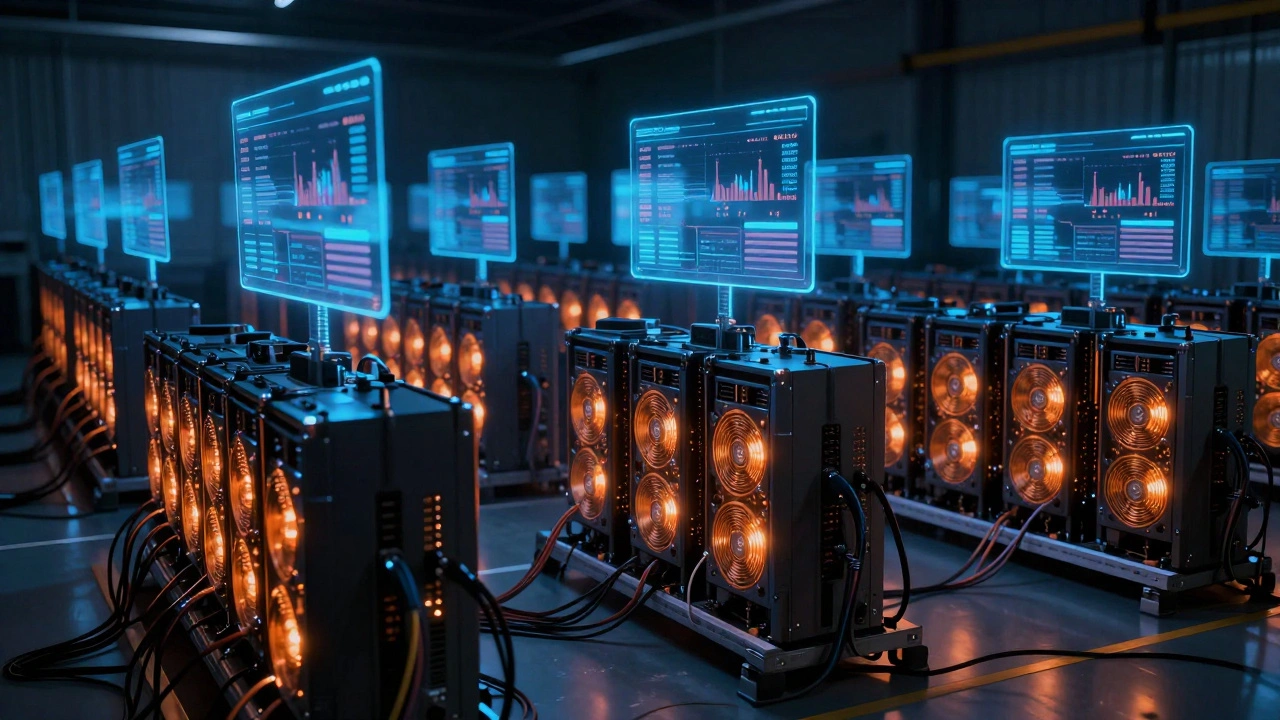
Hash rate is tied directly to Proof of Work, the consensus mechanism that requires miners to solve complex puzzles to add new blocks. Every time a miner guesses the right answer, they earn crypto—and the network gets more secure. The more miners join, the harder the puzzles get, and the higher the overall hash rate climbs. This isn’t just theory; Bitcoin’s hash rate has grown from a few terahashes per second in 2010 to over 1,000 exahashes today. That’s a trillion times more computing power. It’s also why specialized hardware like ASIC miners, custom-built machines designed only to calculate hashes for specific blockchains. dominate the scene. Regular computers can’t compete.
But hash rate isn’t just about security. It affects your wallet too. If the network’s hash rate drops suddenly—say, because of a power outage in a major mining region—the time between blocks can stretch. That means slower transaction confirmations. On the flip side, when hash rate spikes, mining becomes more competitive. Profitability shrinks unless you have efficient gear and cheap electricity. That’s why miners track hash rate like stock prices. It tells them when to upgrade, when to shut down, and when to double down.
Even though Ethereum moved away from Proof of Work, Bitcoin and others like Litecoin and Dogecoin still rely on it. And as long as they do, hash rate will be the pulse of their networks. It’s not just a technical metric—it’s a real-world indicator of trust, investment, and resilience. What you’re seeing in the numbers is how much global energy, money, and engineering is locked into keeping these systems alive.
Below, you’ll find deep dives into how hash rate shapes mining economics, what happens when it shifts, and how new hardware and energy sources are changing the game. Whether you’re mining yourself or just trying to understand why Bitcoin stays secure, these posts give you the facts without the fluff.
Mining pools let individual miners combine computing power to find cryptocurrency blocks more reliably. Learn how they work, which ones to choose, and why solo mining is no longer viable.
Learn More