
When you scan a barcode at the grocery store, you’re using GS1 standards, a global system for identifying, capturing, and sharing product information across supply chains. Also known as global trade item numbering, it’s the invisible backbone of every package, shipment, and inventory system you encounter — from Amazon warehouses to hospital drug inventories. Without GS1, retailers couldn’t track products, manufacturers couldn’t recall faulty batches, and pharmacies couldn’t verify medicine authenticity.
These standards aren’t just about barcodes. They include EAN, the European Article Number used across Europe and beyond, and UPC, the Universal Product Code dominant in North America. Both are built on the same GS1 framework, letting a product made in China be scanned in Brazil, shipped through Germany, and sold in Canada — all with the same identifier. GS1 also handles serial numbers for individual items, location codes for warehouses, and even digital links to product data through QR codes and GS1 Digital Link.
It’s not just retail. Hospitals use GS1 to track surgical tools and blood bags. Airlines use it to manage spare parts. Even space missions rely on GS1 to log components on the ISS. The system prevents mix-ups, reduces waste, and cuts costs by making data consistent across thousands of companies. If a recall happens, GS1 lets companies pinpoint exactly which units are affected — down to the batch and serial number.
What you’ll find in these posts is how GS1 standards connect to real-world tech: how barcodes enable satellite component tracking, how supply chain data flows into blockchain systems for transparency, and why companies building reusable rockets use the same numbering systems as your local pharmacy. These aren’t abstract rules — they’re the reason your coffee, your phone, and your medicine get where they need to go, on time and without error.
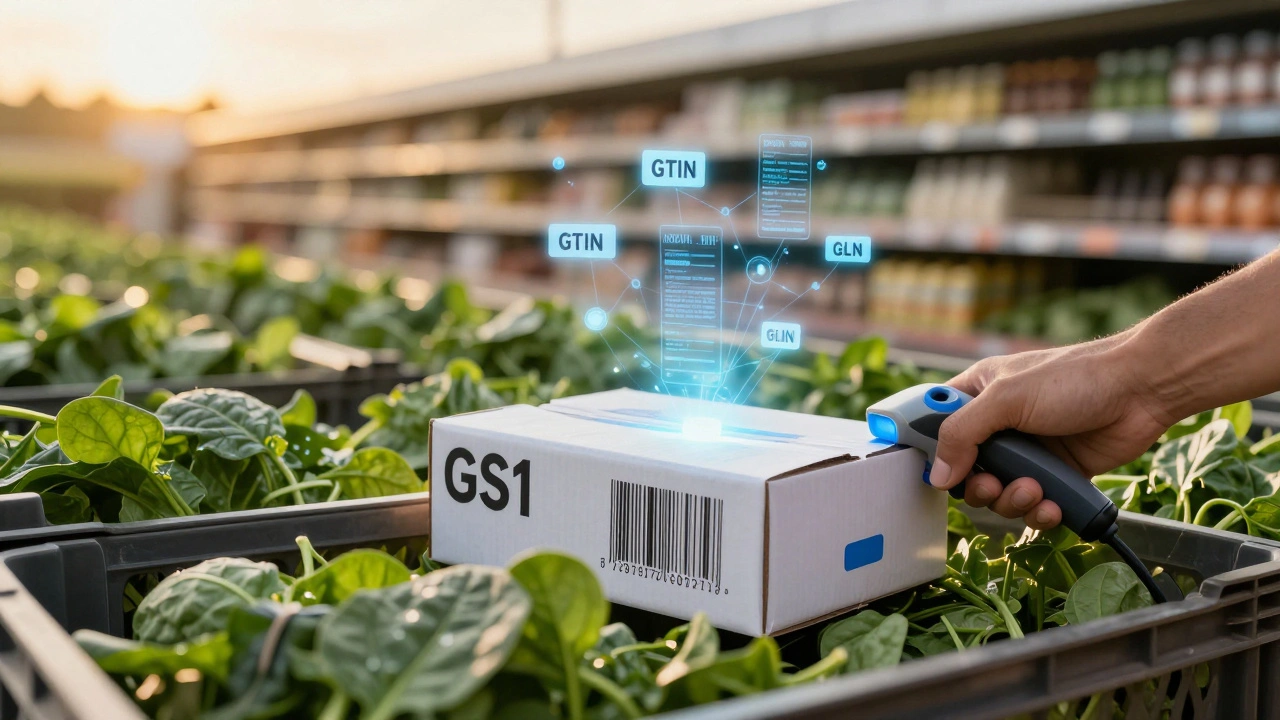
GS1 standards and blockchain work together to create trusted, real-time supply chain traceability. Learn how GTIN, GLN, and EPCIS enable compliance, reduce recalls, and meet global regulations by 2026.
Learn More