
When your phone shows your location, it’s picking up GPS signals, radio waves transmitted by a network of satellites orbiting Earth that let receivers calculate position using timing and distance. Also known as Global Positioning System, these signals are the invisible backbone of modern navigation—from tracking delivery trucks to guiding Mars rovers. It’s not magic. It’s math, timing, and a constellation of 24+ satellites that never stop broadcasting their exact location and the exact time.
But not all GPS is created equal. Raw GPS signals alone can be off by a few meters. That’s where Differential GPS, a system that uses ground-based reference stations to correct satellite signal errors in real time. Also known as DGPS, it’s what turns average navigation into precision landing for spacecraft and survey-grade mapping. Without DGPS, lunar landers couldn’t touch down safely. Without it, your phone’s map might drop you in the next street over. The difference between 5-meter accuracy and 10-centimeter accuracy isn’t just nice—it’s mission-critical.
And it’s not just about getting from A to B. satellite navigation, the broader system that includes GPS and similar networks like GLONASS and Galileo. Also known as Global Navigation Satellite Systems, it’s the reason formation flying satellites can stay perfectly aligned in orbit, and why reusable rockets like Falcon 9 know exactly where to land on a drone ship. These systems don’t just help you find a coffee shop—they enable entire industries to operate with millimeter-level precision.
What you’ll find here isn’t just theory. These posts break down how real-world systems work: how DGPS cuts error margins, how satellite constellations stay synchronized, and why even tiny delays in signal travel time can throw off a lunar mission. You’ll see how NASA and private companies rely on these signals—not as a luxury, but as a necessity. Whether you’re curious about why your phone’s map glitches or how a rover finds its way on Mars, the answers start with the same thing: GPS signals.
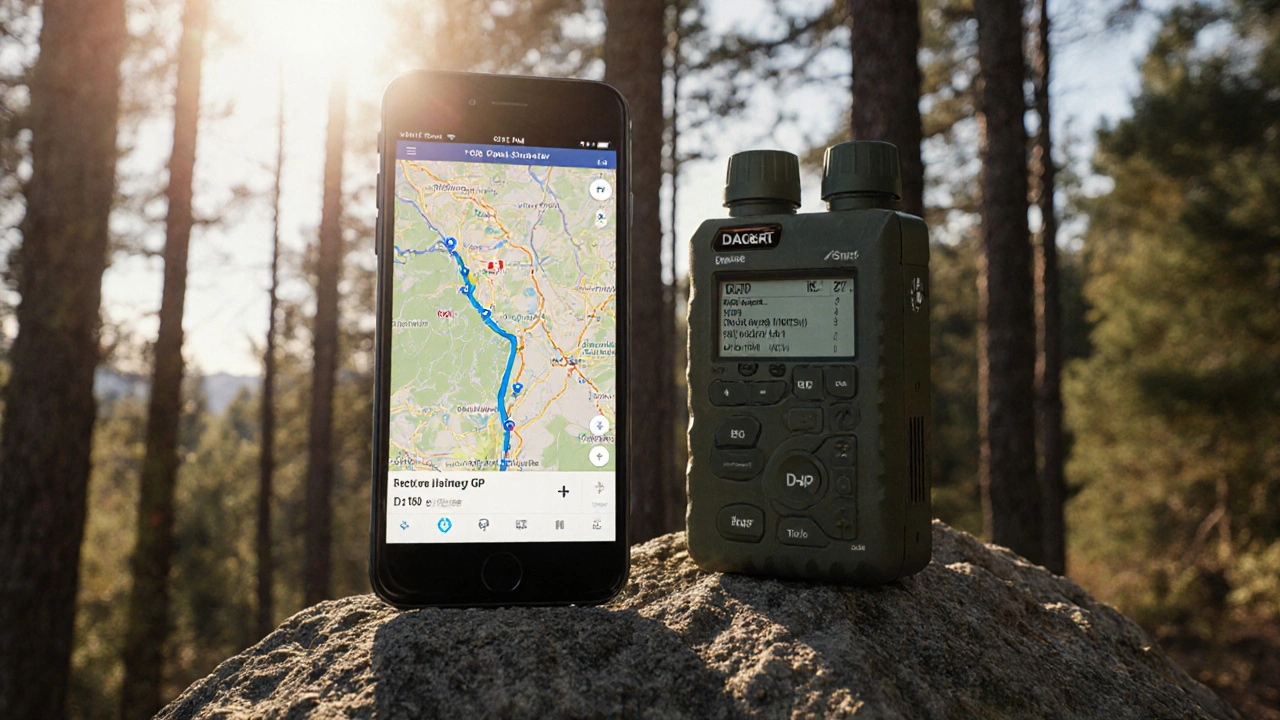
Civilian GPS is no longer less accurate than military GPS - modern devices using dual-frequency signals match military precision. The real difference lies in anti-jamming, security, and access - not raw accuracy.
Learn More