
When we talk about extravehicular activity, the process of astronauts leaving a spacecraft to work in the vacuum of space. Also known as spacewalk, it’s one of the most dangerous things humans do in space—no air, no gravity, and temperatures swinging from -150°C to 120°C in minutes. Every minute outside the spacecraft is planned down to the second. One mistake, one loose tool, one suit leak—and the mission could turn deadly.
Extravehicular activity doesn’t happen by accident. It requires a spacesuit, a wearable life support system that keeps astronauts alive in space designed to handle radiation, micrometeoroids, and extreme temperatures. The suit isn’t just a suit—it’s a mini spacecraft. It has oxygen tanks, cooling lines, communication gear, and even a small computer to monitor vital signs. NASA’s EMU and Russia’s Orlan suits are the two main ones used today, mostly on the ISS, the International Space Station, where most spacewalks happen. These aren’t sightseeing trips. Astronauts fix broken equipment, replace batteries, install new science tools, and even test future tech for Mars missions—all while floating in the dark.
Every extravehicular activity is a team effort. Back on Earth, mission control watches every move. Inside the station, another astronaut helps with the suit check, manages the airlock, and talks the spacewalker through each step. Even simple tasks like turning a bolt take 10 times longer in space because you can’t push off the ground. You’re not just fighting gravity—you’re fighting physics itself. And because the ISS orbits Earth every 90 minutes, astronauts get a new sunrise and sunset every hour, which means they’re often working in full sunlight or total darkness, with no warning.
What you won’t see in the videos is the prep work. Astronauts train for months in giant pools that mimic zero-G, wearing full suits that weigh over 200 pounds on Earth. They practice fixing simulated leaks, replacing broken antennas, and handling tools that float away if you let go. One wrong move and a screwdriver could become a deadly projectile. There’s no room for error.
And it’s not just NASA. China, Russia, and private companies are all planning more EVAs—some for lunar bases, others for satellite repairs in orbit. The next big leap? Spacewalks on Mars, where the suit will have to handle dust, low pressure, and longer missions without quick return. Every EVA today is a test run for tomorrow’s deep-space missions.
Below, you’ll find real stories and technical breakdowns from missions that pushed the limits of what’s possible outside a spacecraft—from fixing the Hubble Telescope to installing new solar arrays on the ISS. These aren’t just science experiments. They’re human achievements, happening in the most hostile place we’ve ever sent people.
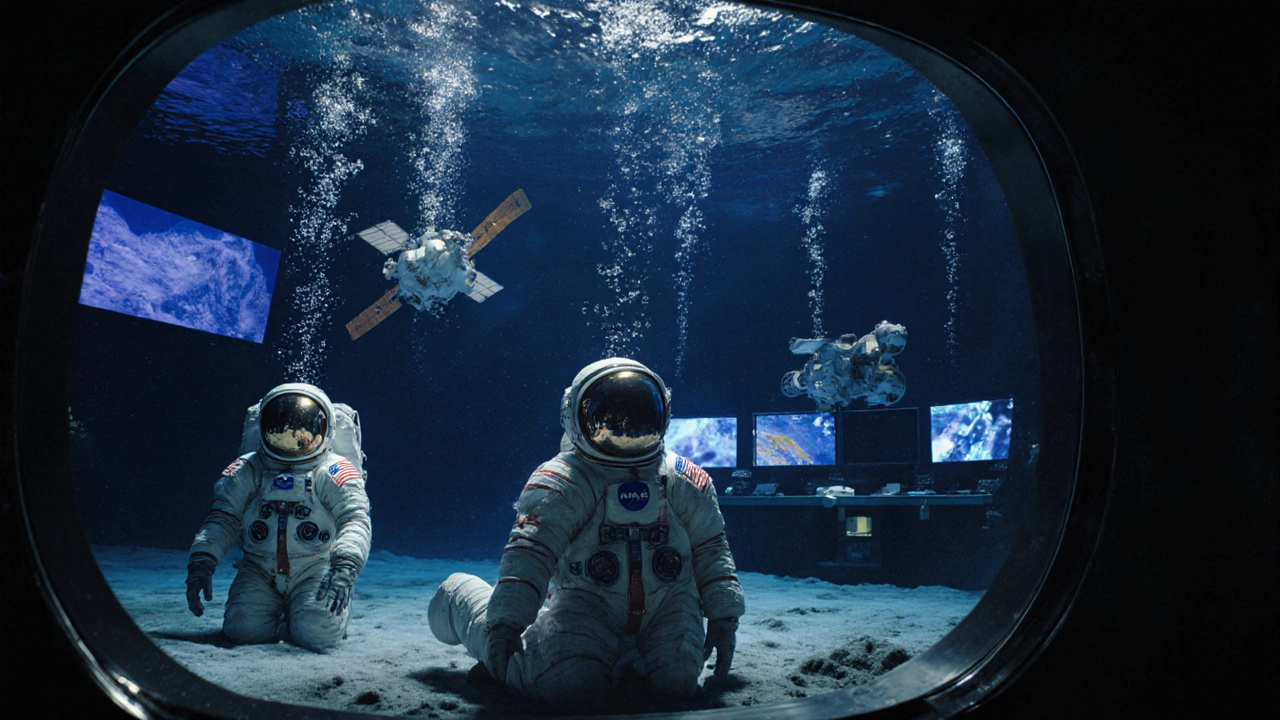
EVA maintenance planning ensures astronaut safety during spacewalks by combining advanced tools, strict protocols, and exhaustive simulations. Learn how NASA plans every spacewalk to handle extreme risks in orbit and beyond.
Learn More