
When astronauts step outside their spacecraft for an extravehicular activity, a spacewalk performed outside a spacecraft in the vacuum of space. Also known as EVA, it’s one of the most dangerous and demanding tasks in spaceflight. EVA training isn’t just about learning how to move in a bulky suit—it’s about mastering survival in a place where one mistake can be fatal.
Training for an EVA starts long before launch. Astronauts spend hundreds of hours in NASA’s Neutral Buoyancy Laboratory, a giant indoor pool where full-scale mockups of the International Space Station are submerged to simulate microgravity. Wearing full EVA suits that weigh over 200 pounds on Earth, they practice repairing equipment, replacing batteries, and installing new hardware—all while floating in water that mimics the weightlessness of orbit. These sessions aren’t simulations in the video game sense; they’re real-time problem-solving under pressure, with instructors watching every movement for signs of fatigue or error. The suits themselves are complex machines: life support systems, communication gear, and mobility joints all have to work perfectly. A single leak or suit malfunction during training can mean canceling the entire session.
But water isn’t the only place they train. Astronauts also use virtual reality headsets to rehearse tasks inside digital replicas of the ISS or future lunar bases. They practice using tools designed for zero-g, like torque wrenches that don’t rely on gravity to hold them in place. They learn how to anchor themselves using foot restraints and tethers—because in space, pushing against a surface sends you flying backward. And they train with EVA suits, pressurized garments that provide oxygen, temperature control, and radiation shielding during spacewalks. These suits are custom-fitted, and even small gaps can cause serious injury. Every seam, every valve, every glove is checked and rechecked.
Why go through all this? Because spacewalks aren’t optional—they’re essential. From fixing the Hubble Telescope to installing new solar arrays on the ISS, EVA missions keep space infrastructure alive. With Artemis missions heading to the Moon, astronauts will need to perform EVAs on lunar terrain, where the suit design and mobility challenges are completely different. The training you see today is the foundation for tomorrow’s Mars missions.
What you’ll find below are real stories, technical breakdowns, and firsthand accounts from the people who make spacewalks possible. From the physics of movement in a pressurized suit to the mental toll of working in silence for hours, these posts cover the grit behind the glamour of spacewalks.
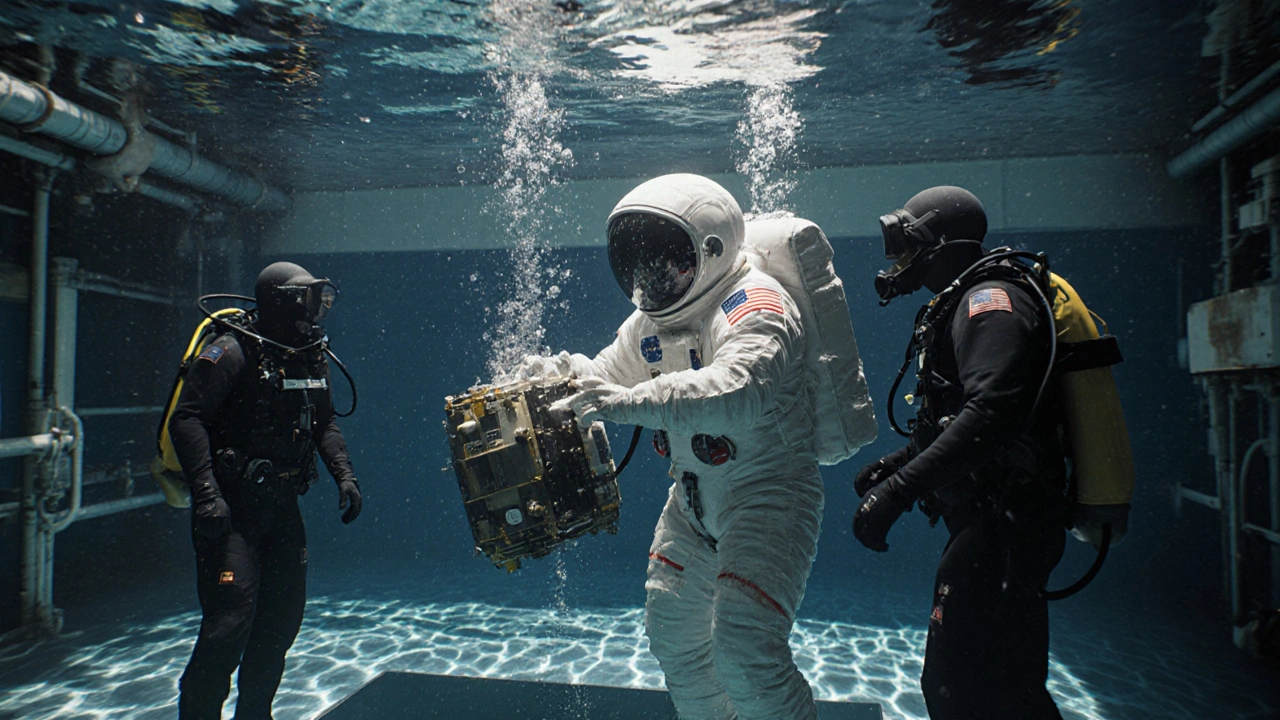
Astronauts train for hours underwater to prepare for spacewalks, using NASA's Neutral Buoyancy Laboratory to simulate microgravity. Learn how EVA training works, why it's so intense, and what happens when things go wrong.
Learn More