
When astronauts step out of their spacecraft into the vacuum of space, they’re not sightseeing—they’re doing EVA maintenance, extravehicular activity performed to repair, upgrade, or inspect equipment outside a spacecraft. Also known as spacewalks, these missions are high-risk, high-reward operations that keep the International Space Station alive and future missions to the Moon and Mars possible. Every bolt tightened, every cable replaced, every panel inspected during an EVA is a direct line between human skill and machine survival in one of the harshest environments on Earth—or anywhere else.
EVA maintenance isn’t just about fixing broken parts. It’s a complex dance of timing, training, and teamwork. Astronauts train for years in giant pools that simulate microgravity, learning how to handle tools that don’t behave the same way in space. They rely on ISS operations, the daily systems and procedures that keep the space station functioning to guide them—like knowing exactly where to find a spare part or how to communicate with mission control when radio signals drop. The tools they use, from torque wrenches to the Simplified Aid for EVA Rescue (SAFER) jetpack, are designed for one thing: reliability when failure means death.
And it’s not just the ISS. EVA maintenance is critical for satellites, space telescopes, and future lunar bases. When a solar array on a satellite stops working, there’s no mechanic nearby. Someone has to go out and fix it—or design the next one to be self-healing. That’s why NASA and private companies are investing in robotic arms and AI-assisted tools to reduce the need for human spacewalks. But humans still win when the problem is unexpected, complex, or requires judgment. A robot can’t yet decide whether a cracked thermal blanket is a minor issue or a ticking time bomb.
Behind every successful EVA is a team of engineers on the ground, simulating the exact conditions hours before the astronaut even suits up. They run through every possible failure, every tool malfunction, every moment of delay. The training is brutal, the stakes are real, and the margin for error is microscopic. But when it works—when a broken antenna is repaired, a leaking coolant line is sealed, a new experiment is installed—it’s one of the most human things we’ve ever done in space.
What you’ll find in this collection are real stories, real tech, and real lessons from missions that kept astronauts alive and science moving. From how Russian language skills saved a spacewalk to how humidity control systems had to be redesigned after a leak, these posts show you the gritty details behind the headlines. No fluff. No guesswork. Just what actually happens when humans go outside to fix the universe.
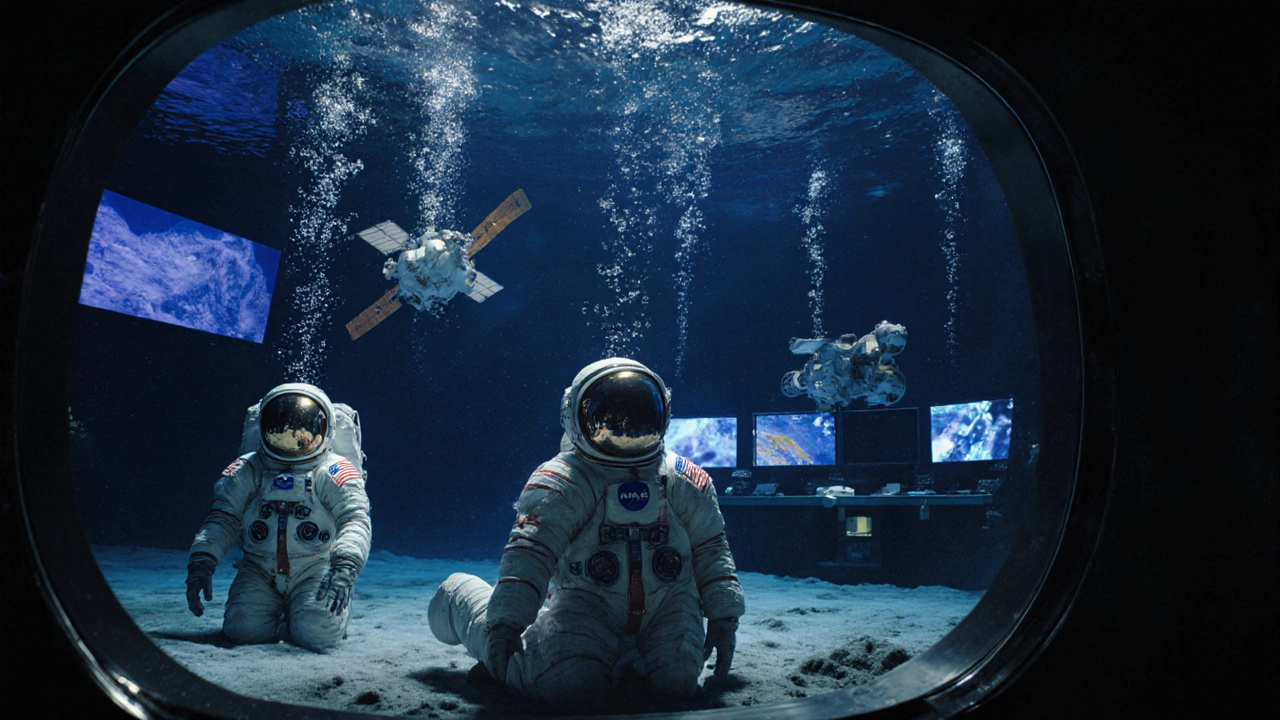
EVA maintenance planning ensures astronaut safety during spacewalks by combining advanced tools, strict protocols, and exhaustive simulations. Learn how NASA plans every spacewalk to handle extreme risks in orbit and beyond.
Learn More