
When you buy a product online, EPCIS, Event Capture and Information Sharing, a global standard for tracking physical goods using digital identifiers. Also known as Electronic Product Code Information Services, it is the invisible system that tells retailers, shippers, and manufacturers where your package is—at every stop. It’s not magic. It’s data. And it’s built on barcodes, RFID tags, and sensors that record when something moves, changes hands, or gets scanned. Without EPCIS, tracking a shipment across continents would be guesswork. With it, you know exactly when your phone arrived at the warehouse, which truck carried it, and if it was ever left in the sun.
EPCIS doesn’t work alone. It connects to RFID tracking, a wireless system that uses radio signals to identify and track objects to log items without line-of-sight scanning. It relies on GS1 standards, a global set of rules for product identification, barcodes, and data sharing to make sure every company—whether in Tokyo or Texas—reads the same code the same way. And it feeds into digital product passports, electronic records that follow a product from factory to recycling, storing its history, materials, and compliance data. These aren’t just tech buzzwords. They’re what let a pharmaceutical company recall a single batch of medicine without pulling every bottle off shelves. They’re why Amazon knows a drone delivery is delayed because a warehouse door jammed—not because the package got lost.
The posts below dive into how EPCIS is used in real systems: how it cuts down on counterfeit goods by locking product histories to blockchain, how space agencies track spare parts for the ISS using the same principles, and how small logistics firms are finally catching up to giants like Walmart and Maersk. You’ll see how EPCIS turns scattered data into clear, actionable signals—whether you’re managing a warehouse, building a supply chain app, or just wondering why your order arrived faster than expected.
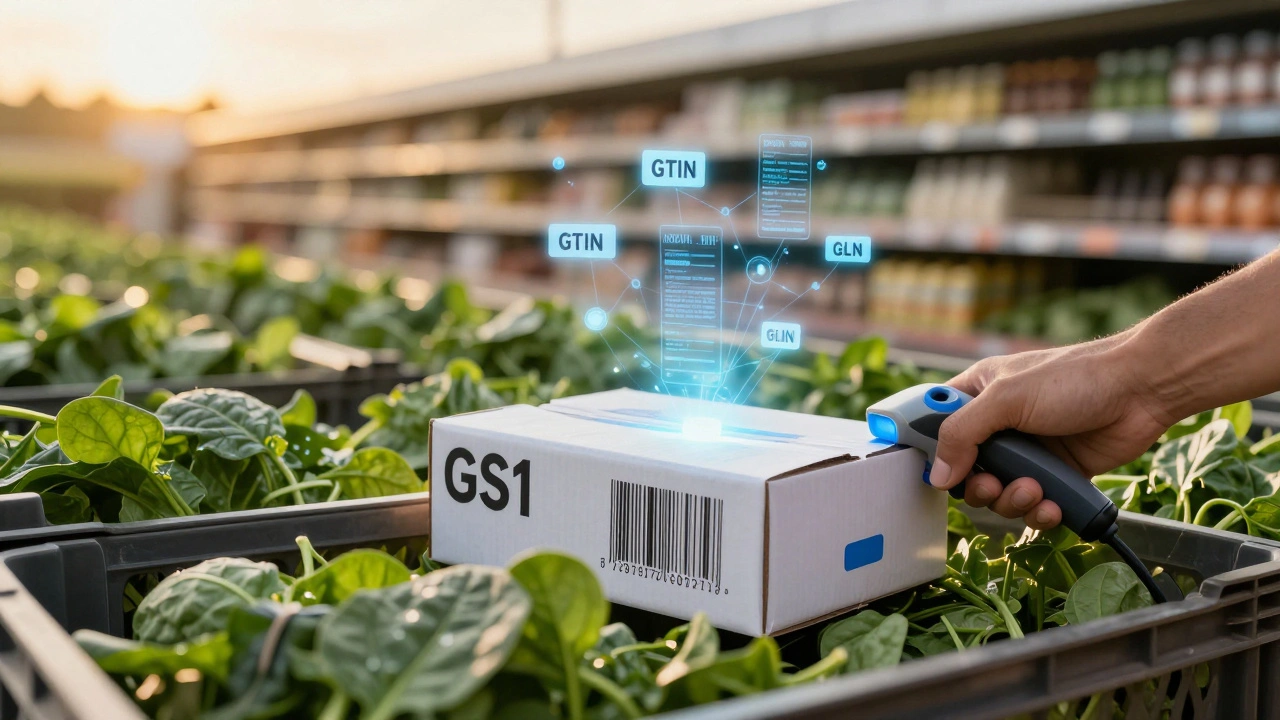
GS1 standards and blockchain work together to create trusted, real-time supply chain traceability. Learn how GTIN, GLN, and EPCIS enable compliance, reduce recalls, and meet global regulations by 2026.
Learn More