
When a rocket lands on the Moon or Mars, it doesn’t just touch down—it kicks up a storm. This cloud of fine particles is called dust ejecta, fine particles thrown upward by spacecraft landings or surface impacts, often composed of regolith or soil. Also known as regolith plume, it’s not just a visual effect—it’s a serious engineering problem that can damage instruments, obscure sensors, and even threaten astronauts. On the Moon, where there’s no atmosphere to slow things down, this dust flies farther and settles slower. On Mars, with its thin air, it behaves differently but still poses risks. NASA learned this the hard way during Apollo missions, where lunar dust clung to suits, clogged seals, and irritated astronauts’ lungs. Today, it’s one of the top concerns for Artemis and future Mars missions.
Dust ejecta doesn’t happen in isolation. It’s tied to other key concepts in space exploration. For example, lunar regolith, the layer of loose, fragmented material covering the Moon’s surface, made of crushed rock and glassy particles is the main source of this dust. When landers or rovers touch down, their thrusters blast this material outward at high speed. Then there’s Mars surface, a dry, dusty environment where fine iron oxide particles can be stirred up by wind or landing systems. Unlike the Moon, Mars has wind, so dust doesn’t just fall—it can drift for miles. That’s why missions like Perseverance carry dust-resistant designs and why future habitats need sealed entry systems. Even space mission hazards, unintended risks that threaten mission success, from equipment failure to environmental exposure are often defined by how well engineers handle dust ejecta. It’s not a side note—it’s a core design constraint.
What you’ll find in these articles isn’t just theory. You’ll see how teams are testing dust-resistant coatings, designing landing pads that reduce plume effects, and even using dust ejecta as a clue to understand planetary geology. Some posts show how lunar dust affects solar panels, others explain how Mars dust storms interact with landing systems. You’ll learn why the same dust that makes the Moon look like a glowing silver ball can also break electronics. This collection pulls from real missions, real data, and real engineering trade-offs. Whether you’re curious about why SpaceX’s Starship needs special landing tech or how NASA plans to keep astronauts safe on Mars, the answers start with dust ejecta. It’s small, but it’s everywhere—and it’s shaping the future of space travel.
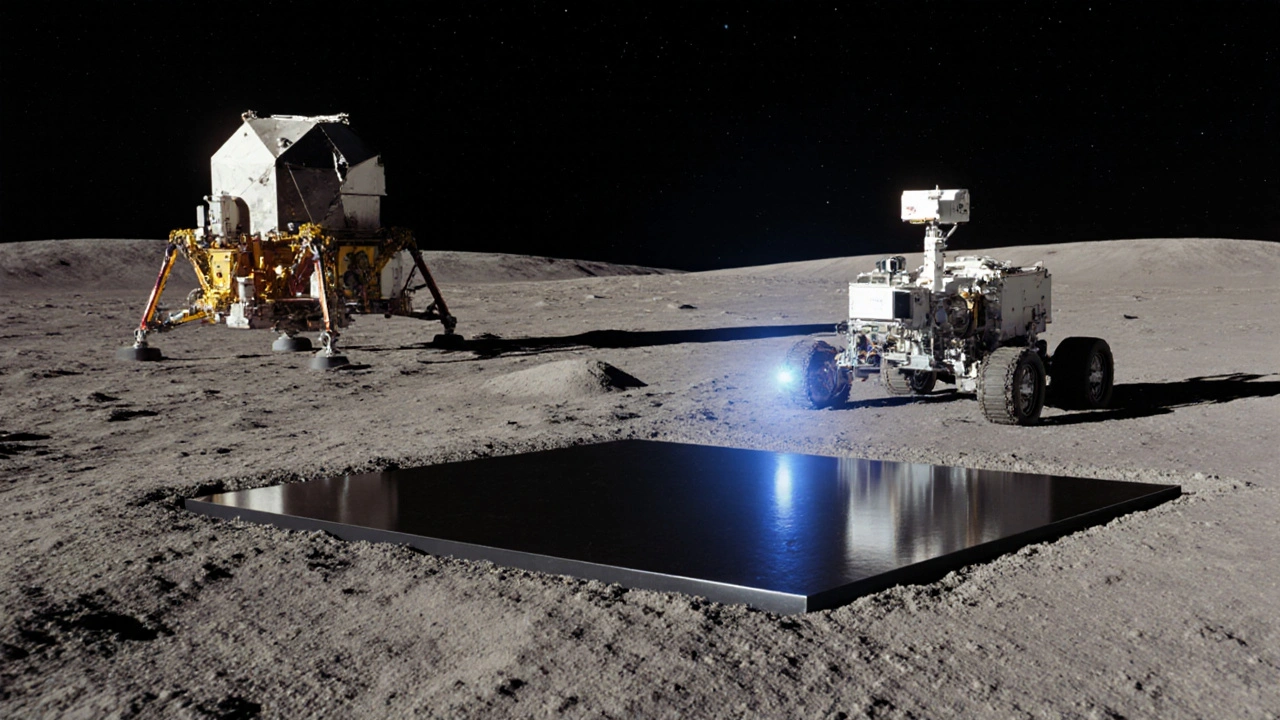
Lunar landing pads made by sintering Moon soil reduce dangerous dust ejecta from rocket landings. Using microwaves, lasers, or polymers, engineers are turning regolith into durable surfaces-cutting Earth-launched mass by 90% and enabling long-term lunar bases.
Learn More