
When you think of space, you probably imagine heat—sunlight, reentry, hot engines. But some of the most critical tech in orbit needs to be colder than Antarctica. That’s where cryostats, devices that maintain extremely low temperatures for scientific instruments in space. Also known as cryogenic containers, they’re the unsung heroes behind the clearest images from the James Webb Space Telescope and the most sensitive detectors on lunar missions. Without cryostats, infrared sensors would drown in their own heat, quantum sensors would fail, and superconducting magnets would lose their magic.
Cryostats don’t just hold cold—they manage it. They use layers of insulation, vacuum gaps, and sometimes active cooling like pulse tube refrigerators to keep sensors at temperatures near absolute zero. In space, where there’s no air to carry heat away, these systems have to work harder than on Earth. NASA’s JWST uses a cryostat to chill its MIRI instrument to -266°C so it can see the first galaxies. SpaceX’s Starlink satellites use smaller cryostats to stabilize atomic clocks that keep timing precise. Even future Mars missions will rely on them to run lab-grade chemistry in freezing conditions.
They’re not just for big observatories. Cryostats are inside satellites that map Earth’s magnetic field, in deep-space probes that hunt for dark matter, and in experimental quantum computers being tested on the ISS. The tech is evolving fast: newer models are lighter, use less power, and can run for years without refilling. Some even use solid-state cooling, eliminating moving parts that could break. This isn’t science fiction—it’s what keeps modern space science alive.
Below, you’ll find real-world examples of how cryostats are designed, tested, and used in missions you’ve heard about—and some you haven’t. Whether you’re curious about how a telescope stays cold in vacuum or why your phone can’t do the same, these posts break it down without jargon.
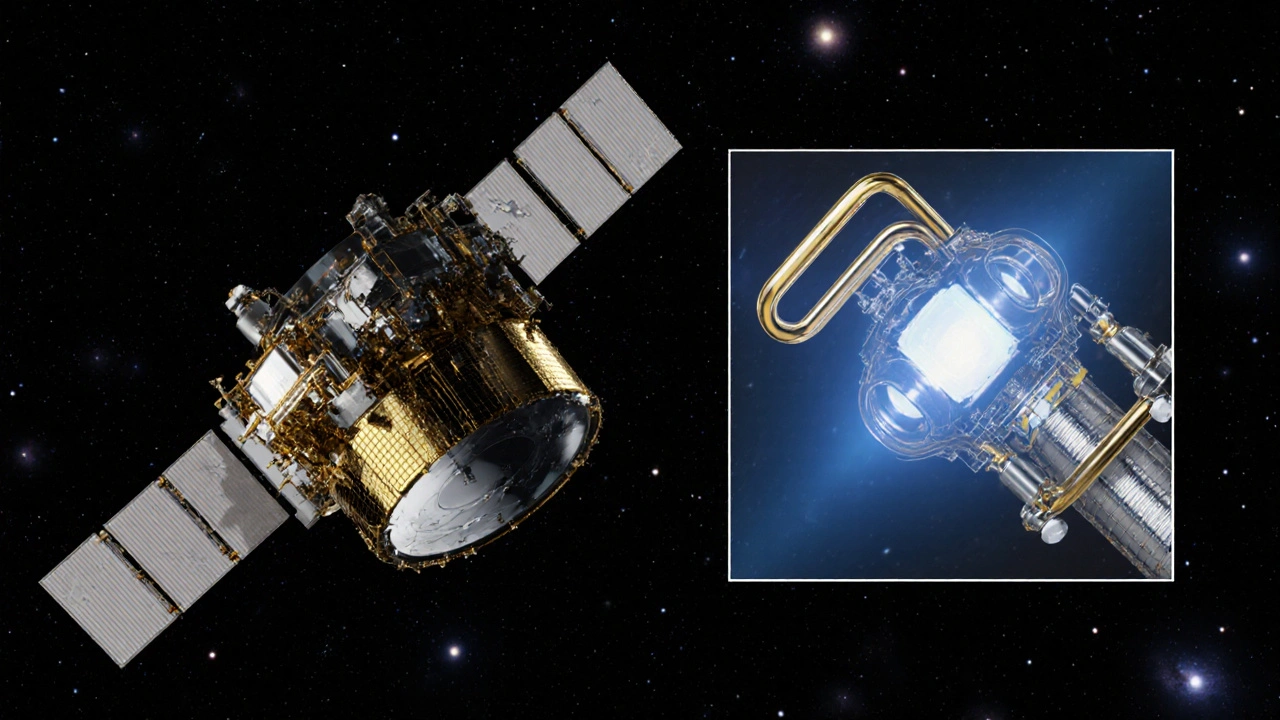
Cryostats and heat pipes enable space sensors to operate at near-absolute zero temperatures, making infrared astronomy possible. From JWST to future telescopes, this technology reveals the cold universe.
Learn More