
When you open a map app on your phone, you’re using civilian GPS, a global navigation system designed for public use, not military or government operations. Also known as Standard Positioning Service, it’s the reason your car knows where to turn, your fitness tracker counts your steps, and your delivery arrives on time. Unlike military-grade systems, civilian GPS doesn’t use encrypted signals or ultra-high precision—yet it’s still accurate enough for most daily needs, often within 3 to 5 meters.
But here’s the catch: raw civilian GPS isn’t always good enough. That’s where Differential GPS, a technique that uses ground-based reference stations to correct satellite signal errors. Also known as DGPS, it’s what makes surveying equipment, farm tractors, and drone delivery systems work with centimeter-level accuracy. DGPS doesn’t replace civilian GPS—it fixes it. By comparing known ground positions with satellite data, it cancels out atmospheric delays, satellite drift, and timing errors. This isn’t science fiction; it’s used every day by farmers planting crops, construction crews laying foundations, and even emergency responders navigating disaster zones.
And it’s not just about location. GPS augmentation, a broad category of systems that improve GPS reliability and precision. Also known as satellite-based augmentation systems, these include technologies like WAAS in the U.S., EGNOS in Europe, and MSAS in Japan. These systems broadcast correction data via geostationary satellites, letting your phone or car receiver get better accuracy without extra hardware. They’re built into modern smartphones, aviation systems, and even some budget navigation devices.
Why does this matter? Because civilian GPS is now the invisible backbone of modern life. It syncs your bank transactions, times your power grid, tracks shipments across oceans, and even helps your smart thermostat learn your schedule. Without it, ride-sharing apps wouldn’t work, logistics companies would lose billions, and emergency services would struggle to find you. The system was designed for the military in the 1970s, but today, over 90% of its users are civilians.
The posts below dig into how this technology really works—from the math behind signal correction to the real-world systems that make civilian GPS more precise than ever. You’ll find clear explanations of how Differential GPS boosts accuracy, what limits civilian GPS in cities or under tree cover, and how companies are pushing it beyond maps into robotics, agriculture, and space. Whether you’re curious about your phone’s location history or how self-driving cars stay on the road, these articles break it down without jargon.
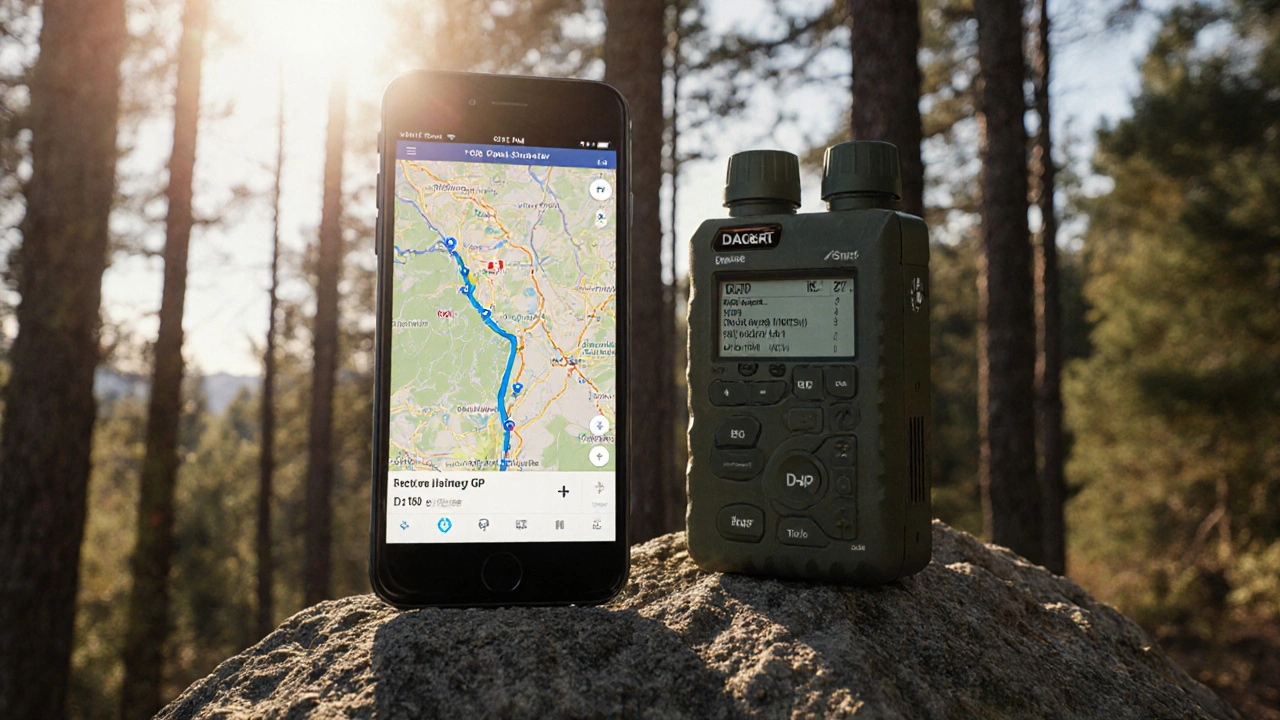
Civilian GPS is no longer less accurate than military GPS - modern devices using dual-frequency signals match military precision. The real difference lies in anti-jamming, security, and access - not raw accuracy.
Learn More