
When you send Bitcoin, control a satellite, or log into the ISS, you’re not typing a password—you’re using an account model, a system that links identity to cryptographic keys instead of usernames and passwords. Also known as key-based authentication, it’s the invisible foundation behind secure transactions, space communications, and decentralized apps. No bank, no IT department, no middleman. Just math.
This model relies on two things: a private key, a secret number only you hold that proves you own something, and a public key, a math-generated address anyone can see to send you value or data. Together, they create a digital signature—like a fingerprint made of equations—that proves you authorized an action without ever revealing your secret. That’s how Bitcoin verifies payments, how NASA confirms commands to the ISS, and how your hardware wallet stops hackers. It’s not magic. It’s cryptography.
The same logic applies to space missions. Astronauts don’t log into the ISS with a password—they use encrypted commands tied to their digital identities. Ground stations authenticate those commands using public key infrastructure, just like your crypto wallet. Even language training for Russian ISS operations ties into this: commands must be precise, unambiguous, and cryptographically verified. If a signal gets corrupted or spoofed, the account model rejects it. No second chances. That’s why systems like EVA maintenance planning and spacecraft humidity control depend on reliable, key-based authentication—they’re not just about hardware, they’re about trust.
Underneath every secure crypto transfer, every satellite command, every blockchain transaction, there’s an account model at work. It’s not about remembering passwords. It’s about holding a key only you can use. And in space or on the blockchain, that’s the only thing that keeps you safe.
Below, you’ll find real-world breakdowns of how this system powers everything from Ethereum staking to Mars rover operations—no fluff, just how it actually works.
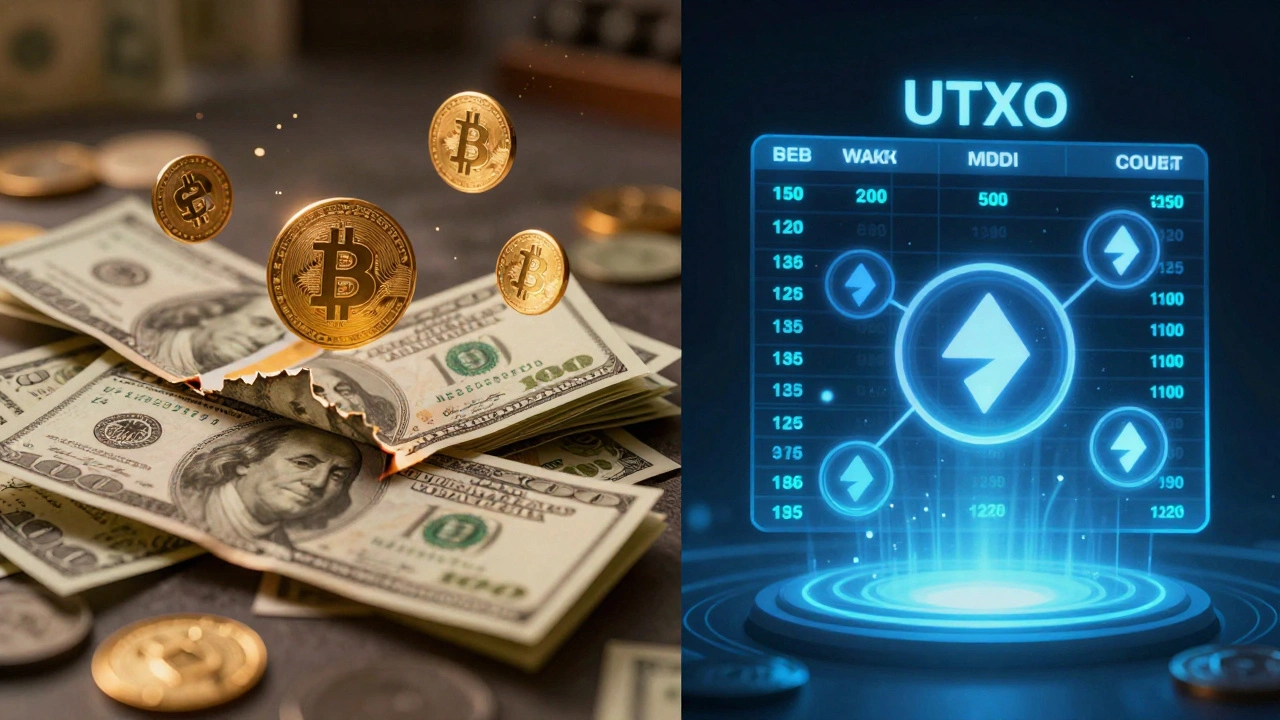
UTXO and account models are two foundational blockchain architectures. UTXO, used by Bitcoin, treats funds like cash with discrete outputs. Account model, used by Ethereum, tracks balances like bank accounts. Each has trade-offs in scalability, privacy, and smart contract support.
Learn More