
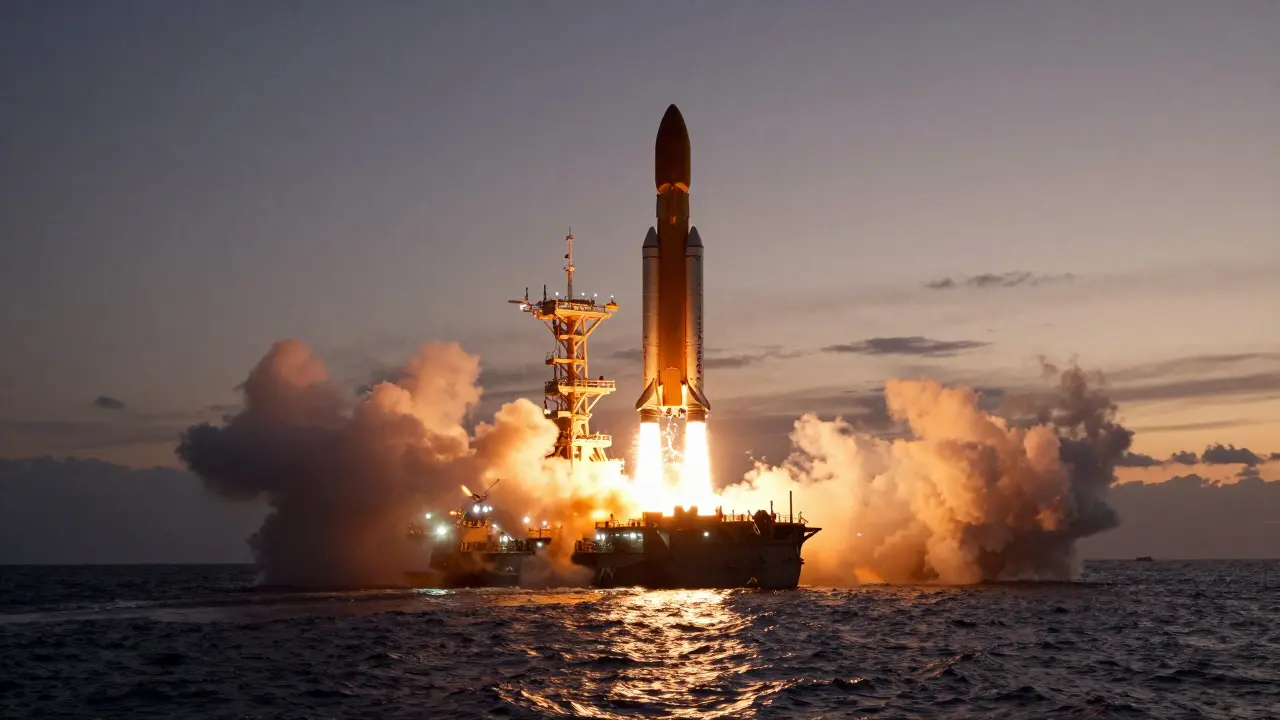
Imagine if every time you flew on an airplane, the airline threw the plane away after landing. You would pay a fortune for that ticket. That is exactly how traditional space travel worked for decades. Now, companies like SpaceX are changing the game by catching their rockets and flying them again. This shift from disposable to reusable rocket technology has cut the price of sending cargo to orbit by up to 75%. But does it actually save money in the long run? The answer isn't just yes or no-it depends entirely on how often those rockets fly.
The Core Economic Shift: From Disposal to Reuse
Traditional expendable launch vehicles treat rockets as single-use tools. After one mission, the multi-million dollar hardware burns up in the atmosphere or splashes into the ocean. In contrast, reusable systems recover the most expensive parts-usually the first stage booster-and refurbish them for future flights. This changes the financial model completely. Instead of building a new rocket for every mission, you spread the manufacturing cost across dozens of launches.
The math behind this is straightforward but powerful. When you build a new booster, you pay for raw materials, engineering labor, and testing. When you reuse one, you mostly pay for inspection, minor repairs, and propellant. Data shows that refurbishing a recovered booster costs only about 10% of what it takes to build a brand-new one. This massive gap in operational expense is the engine driving down prices.
| Metric | Expendable Rockets | Partially Reusable (e.g., Falcon 9) | Fully Reusable (Projected) |
|---|---|---|---|
| Cost per Kilogram to Orbit | $1,500 - $3,000 | $200 - $500 | < $100 |
| Booster Refurbishment Cost | N/A (Discarded) | ~10% of New Build | Minimal (Rapid Turnaround) |
| Material Efficiency | Low (Single Use) | High (40% Savings) | Very High |
Real-World Savings: The Falcon 9 Case Study
Falcon 9 remains the gold standard for demonstrating these savings. Before reusability became routine, the cost to send a kilogram of payload to Low Earth Orbit (LEO) was roughly $10,000. Today, that figure sits around $2,500 per kilogram. That is a 75% reduction in cost. For context, industry sources note that partially reusable systems can be up to 65% cheaper than traditional counterparts when factoring in all operational variables.
These savings come from multiple angles. First, there is the direct material saving. Advanced alloys and thermal protection systems allow components to survive the heat of re-entry and the stress of landing. By reusing these high-value parts, companies avoid spending millions on new hardware for each flight. Second, there is the speed advantage. Because the core structure is already built, the turnaround time between launches shrinks. This allows providers to offer more frequent rides, which further dilutes fixed costs like engineering salaries and facility maintenance.
The Hidden Cost: High Upfront Investment
Reusability is not free at the start. In fact, developing a reusable rocket requires significantly more capital upfront than building an expendable one. Companies must invest heavily in research and development, often spending 30% to 40% more initially compared to disposable designs. They need complex landing legs, precise navigation systems for return-to-earth, and robust refurbishment infrastructure.
This creates a high barrier to entry. If a company builds a reusable rocket but only flies it twice, they have lost money compared to simply building two cheap, disposable rockets. The economic model relies on volume. As analysts from Forecast International point out, the economic argument for reusability strengthens with higher payload masses and higher flight rates. The more expensive the rocket to build, the easier it is to justify the extra engineering effort to make it reusable-provided you fly it enough times to recoup that initial investment.

The Frequency Threshold: When Does It Pay Off?
This brings us to the most critical factor in the economics of reusability: launch frequency. A 2021 study by Lionnet and Cuellar analyzed the finances of Falcon 9 and found a surprising threshold. They determined that a reusable rocket is only economically viable if it achieves at least 6 to 9 launches per year. Below that rate, the high fixed costs of maintaining the reusable system outweigh the savings from not buying new hardware.
If a reusable rocket flies only three or four times a year, it is not necessarily more sustainable or profitable than an expendable alternative. This challenges the common assumption that reusability automatically equals lower costs. It means that market demand must be strong and consistent. Without a steady stream of customers needing to get satellites or cargo to orbit, the business case for reusability collapses.
Blue Origin and the Scale Requirement
Other players in the market face similar pressures. Take Blue Origin’s New Glenn program, for example. The vehicle’s financial targets depend on achieving at least 25 launches to break even and become profitable. Because New Glenn is designed to be fully reusable, the stakes are higher. Any launch failure represents a much greater financial hit than it would for a disposable rocket, because the asset being lost is far more valuable.
This dynamic forces companies to prioritize reliability above all else. There is a misconception that reusable rockets might be less reliable due to wear and tear. In reality, the opposite is true. Because so much capital is tied up in the vehicle, companies have a massive financial incentive to ensure safety and performance. The engineering standards for reusable systems are exceptionally high, aligning financial goals with technical excellence.
Environmental Benefits Beyond Price Tags
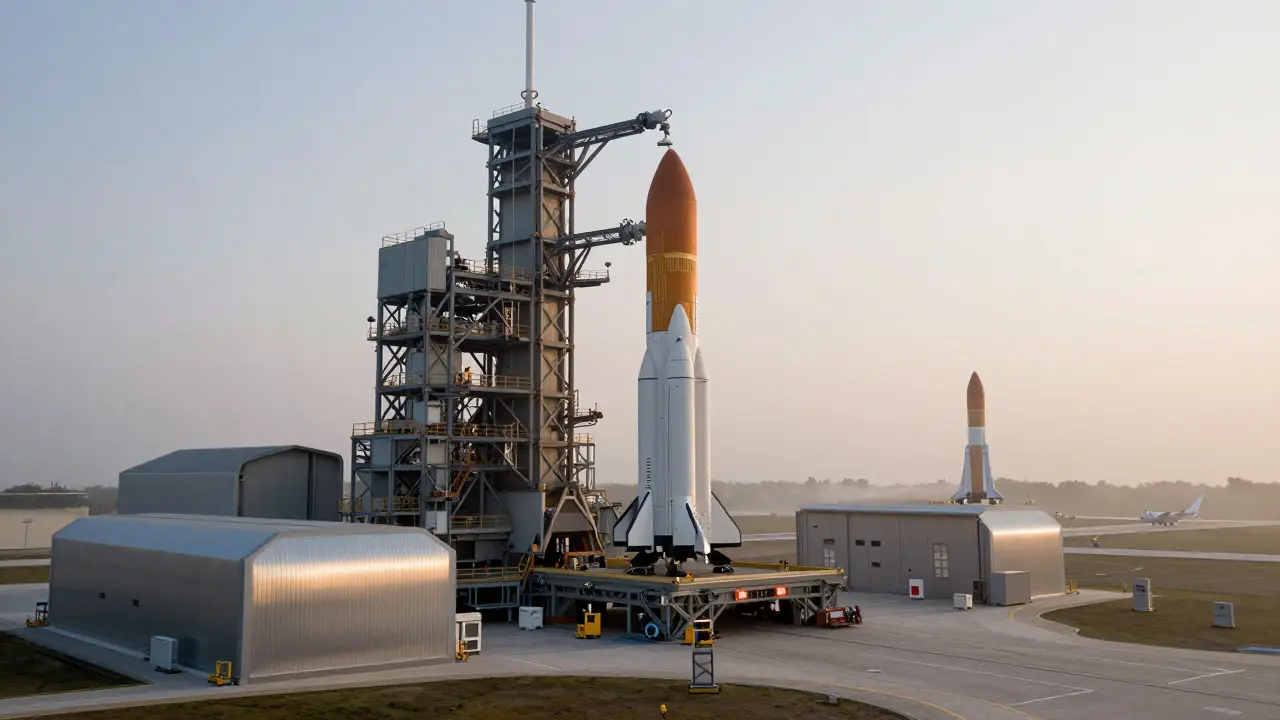
While cost is the primary driver, reusability also offers environmental advantages. Expendable rockets generate significant debris, both in space and in the oceans where stages crash. By recovering boosters, we reduce the amount of metal and composite waste entering the environment. Additionally, reusable systems tend to use fuel more efficiently over their lifecycle. Since you aren't launching the weight of a new engine stack every time, the overall energy consumption per kilogram of payload drops.
As global emphasis shifts toward sustainable practices in commercial space operations, these benefits matter. Reducing space debris is not just an environmental issue; it is an operational one. Less clutter in orbit makes it safer for all satellite operators, protecting billions of dollars worth of infrastructure.
Future Projections: The Sub-$100 Goal
Looking ahead, industry projections suggest that fully reusable rocket technology could drive launch costs below $100 per kilogram within the next decade. This would be a dramatic drop from the current $200-$500 range for partially reusable systems. Achieving this level of affordability would transform space access. It would move spaceflight from a rare, government-funded endeavor to a regular commercial service, similar to international air travel.
To reach this goal, the industry needs to solve logistical challenges. Refurbishment processes must become faster and cheaper. Infrastructure needs to support rapid turnarounds, allowing a rocket to land, be inspected, refueled, and fly again in days rather than months. Companies are already experimenting with automated inspection drones and streamlined repair bays to meet these demands.
Limitations and Market Realities
Despite the promise, reusability is not a silver bullet for every mission. The economics break down for specialized one-time missions where the payload requirements don't fit standard reusable architectures. Very heavy-lift applications sometimes require complete utilization of the vehicle's power, making recovery difficult or impossible. Furthermore, markets with low and unpredictable launch demand cannot support the high-frequency model required for profitability.
For now, the SpaceX Falcon 9 model works exceptionally well for Low Earth Orbit (LEO) and increasingly for Geostationary Earth Orbit (GEO) missions. These orbits require relatively low energy to reach, making recovery operationally feasible. As technology matures, we may see reusability extend to deeper space missions, but the economic thresholds will remain strict.
How much cheaper are reusable rockets compared to disposable ones?
Reusable rockets can reduce launch costs by up to 75%. For example, SpaceX's Falcon 9 dropped the cost per kilogram from $10,000 to approximately $2,500. Industry averages suggest partially reusable systems are 65% cheaper than traditional expendable rockets.
Why do reusable rockets require higher upfront investment?
Developing reusable technology requires 30-40% more initial R&D spending. Companies must build complex landing systems, advanced thermal protection, and refurbishment facilities. These high initial costs must be amortized over many flights to become profitable.
What is the minimum number of launches needed for reusability to be profitable?
Studies indicate that a reusable rocket needs to achieve at least 6 to 9 launches per year to be economically viable. Below this frequency, the fixed costs of maintenance and infrastructure outweigh the savings from reusing hardware.
Is refurbishing a rocket really only 10% of the cost of building a new one?
Yes, data suggests that refurbishing a recovered booster costs roughly 10% of the expense required to manufacture a new one. This includes inspection, minor repairs, and propellant loading, avoiding the massive material and labor costs of new construction.
Will launch costs ever drop below $100 per kilogram?
Industry projections estimate that fully reusable rocket technology could drive costs below $100 per kilogram within the next decade. This would require rapid turnaround times and high launch frequencies to maximize efficiency.
15 Responses
Oh great, another article pretending that throwing metal into the ocean is somehow 'sustainable' just because it's expensive. The sheer audacity of calling this a moral victory is laughable.
The ethical implications of discarding multi-million dollar machinery into our oceans are profound and disturbing. We must consider the stewardship of our planet above mere financial gain. To treat such valuable resources as disposable waste is a failure of moral imagination and a disregard for the delicate balance of our ecosystem. One might argue that true progress is measured not by how much we can discard, but by how carefully we preserve what we create.
It is imperative to note that the grammatical structure of the original post was adequate, yet the argument lacks depth. The assertion that reusability automatically equates to lower costs is a logical fallacy when one considers the high fixed costs of maintenance. A rigorous analysis would reveal that the economic model is fragile and dependent on variables that are often ignored in these simplistic narratives.
American engineering supremacy is undeniable here while other nations squander billions on inefficient systems. This is why we lead.
Indeed, the data presented aligns with current industry trends regarding cost efficiency.
I appreciate the perspective you have shared, and I believe it is important to consider the broader implications of these technological advancements on global cooperation and environmental sustainability. While the economic benefits are clear, we must also ensure that the development of such powerful tools does not exacerbate existing inequalities or lead to unintended consequences in space debris management. It is a delicate balance between innovation and responsibility, and I hope that all stakeholders will engage in open dialogue to address these challenges collectively.
oh honey you really think its that simple? the whole thing is a scam wrapped in shiny metal and lies about saving money when really they just want to own the sky and charge us rent for breathing air up there
think about the potential here people! we are standing on the brink of a new era where space is accessible to everyone not just the rich elites who used to monopolize it
I find myself deeply intrigued by the nuanced discussion surrounding the economic viability of reusable rocket technology, particularly when considering the long-term sustainability goals that many organizations are striving to achieve. It seems that while the initial investment is substantial, the potential for reducing per-launch costs could revolutionize the industry if managed correctly, allowing for more frequent missions and greater access to space for scientific research and commercial applications alike.
Just checking the facts here, the refurbishment cost being 10% of build cost is a widely cited statistic from SpaceX reports, so that part holds up.
Fascinating read, though I suspect the author omitted the fact that most of these rockets still explode occasionally, which is quite inconvenient for the budget.
US leads in tech. Period.
Hey folks from north of the border here, just saying we are working on some cool stuff too and maybe we can collaborate instead of competing so aggressively.
Wow, nothing says 'progress' like burning millions of dollars worth of hardware every time you launch. Groundbreaking.
Oh my goodness, I simply cannot express how utterly devastated I am by the thought of all those beautiful rockets splashing down into the cold, dark ocean depths, never to be seen again, leaving behind only a trail of sorrow and wasted potential that haunts my dreams every single night, causing me to wake up in a cold sweat wondering if we will ever truly learn to cherish our creations rather than discarding them like yesterday's trash, and I just feel so overwhelmed by the sheer magnitude of this tragedy that I don't even know where to begin to articulate my feelings, except to say that it breaks my heart into a million tiny pieces that can never be put back together again.