
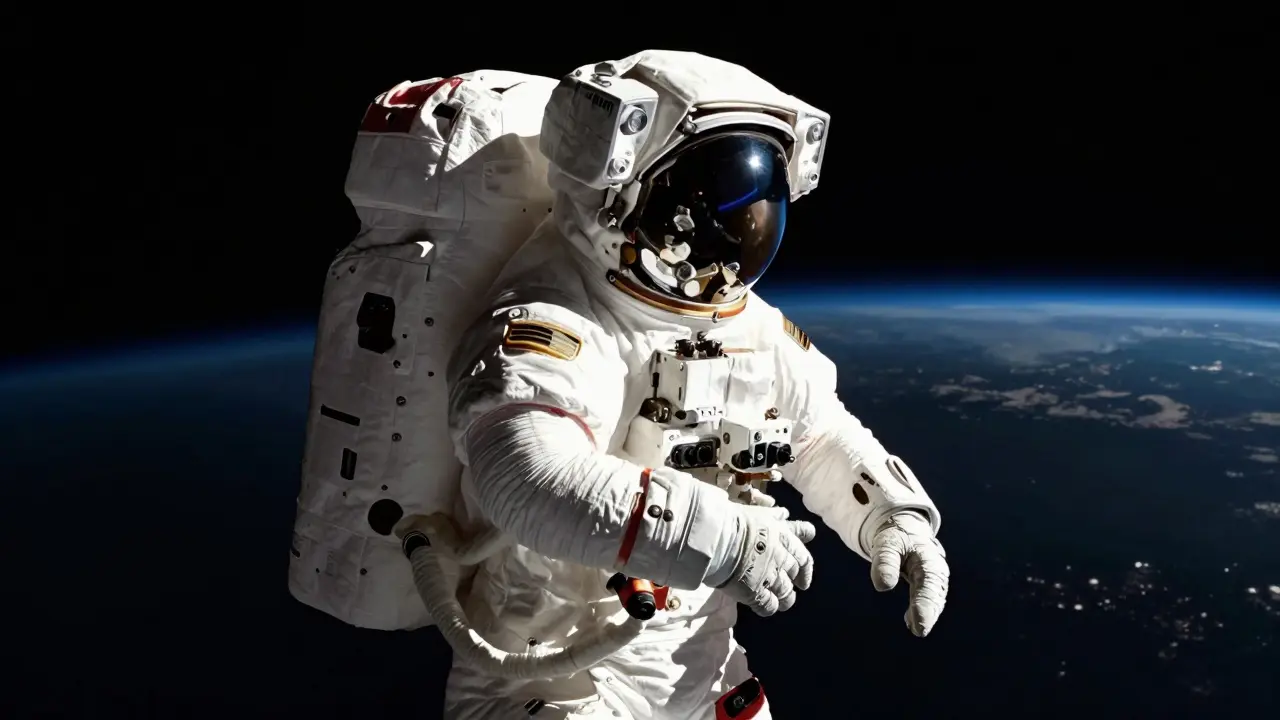
Imagine stepping outside your spacecraft with nothing but a backpack between you and the vacuum of space. That backpack isn't just carrying tools; it is literally keeping you alive. It pumps oxygen into your lungs, scrubs out the carbon dioxide you exhale, cools your sweat, and powers the radio that connects you to Earth. This device is called a Portable Life Support System, or PLSS. It is the self-contained environmental control unit worn on an astronaut's back during Extravehicular Activity (EVA).
Without the PLSS, a human being would lose consciousness in seconds and die within minutes. The system is so critical that spacesuit engineers often call it the heart of the suit. While we usually focus on the helmet or the gloves when we think about space exploration, the technology hidden in that bulky backpack has evolved from simple chemical canisters in the 1960s to sophisticated, computer-controlled life-support hubs today.
The Core Functions: More Than Just Air
You might assume the PLSS’s only job is to provide air. In reality, it manages a complex web of survival needs simultaneously. Think of it as a miniature spaceship cabin strapped to your spine. To keep an astronaut safe for six to eight hours, the system must handle five distinct jobs at once.
- Oxygen Supply: It stores high-pressure oxygen and regulates it down to a breathable level.
- Carbon Dioxide Removal: It actively strips CO₂ from the exhaled air so the astronaut doesn’t suffocate.
- Suit Pressurization: It maintains internal pressure against the vacuum of space.
- Thermal Control: It removes body heat through a liquid cooling garment.
- Power and Communication: It provides electricity for fans, radios, and telemetry sensors.
If any one of these functions fails, the mission ends immediately. For example, if the fan stops circulating air, CO₂ builds up rapidly, leading to headaches, confusion, and eventually unconsciousness. This is why redundancy and reliability are non-negotiable design principles.
Apollo Era: The First Backpacks
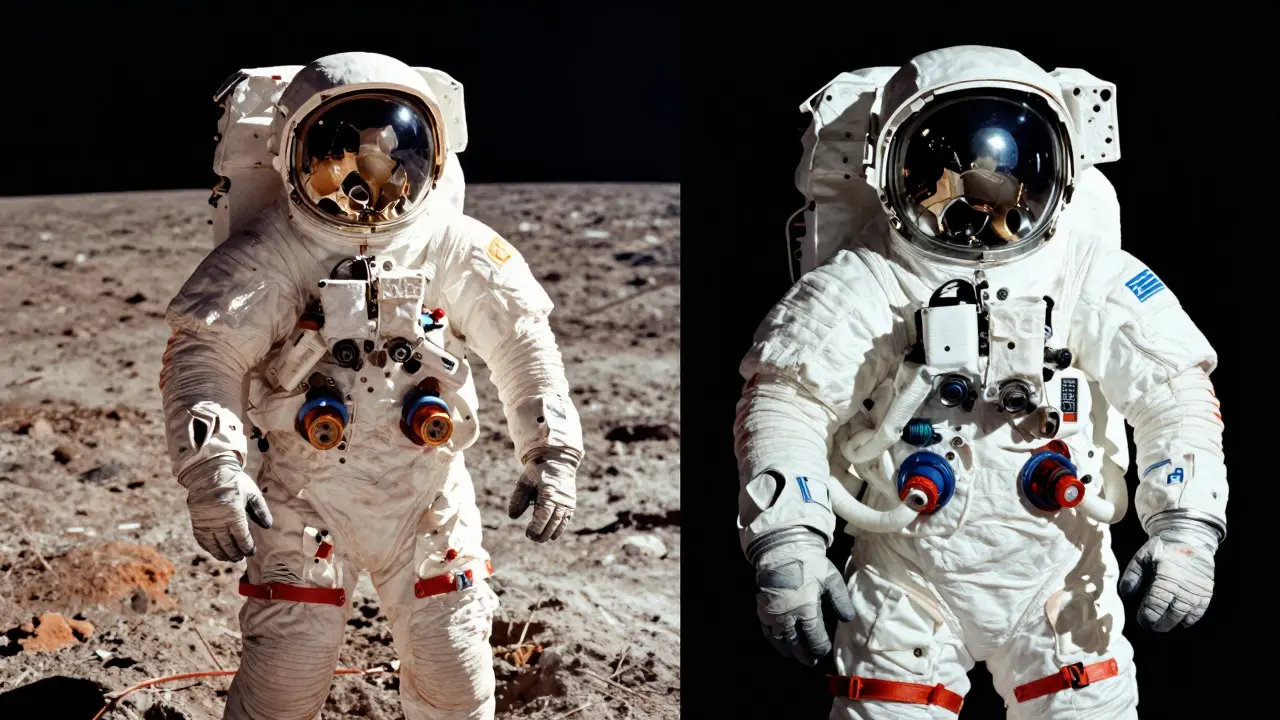
The concept of a portable life support system was born during NASA’s Apollo program, which landed humans on the Moon between 1969 and 1972. Before Apollo, astronauts relied on umbilical cords connected to their spacecraft for air and power. They couldn't wander far. The Apollo PLSS changed everything by making astronauts truly mobile.
The original Apollo PLSS weighed about 65 pounds (29.5 kg) on Earth. In the Moon’s lower gravity, it felt lighter, but it was still a significant burden. Inside that metal casing were relatively simple mechanical systems. Oxygen came from tanks, and carbon dioxide was removed using Lithium Hydroxide (LiOH) canisters. These were expendable chemical filters that bound with CO₂ to remove it from the air supply. Once the chemicals saturated, they were useless. There was no regeneration; you used them up and threw them away.
Astronauts also wore a separate emergency unit called the Oxygen Purge System (OPS). This was a backup oxygen tank mounted above the main PLSS backpack, providing emergency airflow if the primary system failed. It was a fail-safe measure designed to give astronauts enough time to return to the lunar module if the main life support quit working.
Modern EVAs: The EMU and ISS Operations
Today, astronauts conducting spacewalks on the International Space Station (ISS) use the Extravehicular Mobility Unit (EMU). The PLSS in this suit is much more advanced than its Apollo predecessor, though the core physics remain the same.
One major difference is the suit pressure. Modern U.S. space suits operate at 4.3 psi (29.6 kPa) of pure oxygen. This is significantly lower than sea-level atmospheric pressure (14.7 psi). Why lower pressure? Because higher pressure makes the suit stiff like a balloon, restricting movement. By lowering the pressure, the suit remains flexible enough for astronauts to turn wrenches and crawl along handrails. However, this low pressure requires careful pre-breathing protocols before exiting the airlock to prevent decompression sickness (the bends).
The modern PLSS handles thermal control differently too. Instead of just blowing cool air, it pumps chilled water through a Liquid Cooling and Ventilation Garment (LCVG). This is a tight-fitting undergarment containing approximately 350 feet (107 meters) of tubing that circulates water to absorb body heat. Without this, the metabolic heat generated by physical labor would cook the astronaut inside the insulated layers of the suit.
| Feature | Apollo PLSS (1969-1972) | Modern EMU PLSS (ISS Era) |
|---|---|---|
| Weight (Earth) | ~65 lbs (29.5 kg) | ~180 lbs total suit weight (PLSS portion varies) |
| CO₂ Removal | Lithium Hydroxide Canisters (Expendable) | Advanced Sorbent Beds / Regenerative Tech |
| Cooling Method | Air Circulation + Sublimator | Liquid Cooling Garment (Water Loop) |
| Suit Pressure | ~5.0 psi | 4.3 psi |
| Power Source | Batteries | Distributed Battery Systems |
Thermal Challenges: Surviving Extreme Temperatures
Space is not uniformly cold. In direct sunlight, surfaces can reach +120 °C (248 °F). In the shade, temperatures plummet to -150 °C (-238 °F). An astronaut moving between sun and shadow experiences rapid thermal swings.
The PLSS must reject the heat generated by the astronaut’s body (which can be several hundred watts during strenuous work) plus the heat generated by the electronics inside the backpack. It does this primarily through a sublimator or evaporator. Water is allowed to freeze into ice, and then the ice turns directly into vapor (sublimation), carrying the heat away into the vacuum. This process consumes water, which is another consumable resource the PLSS must manage carefully.

Power, Telemetry, and Autonomy
All the fans, pumps, and radios in the PLSS need electricity. Historically, this came from silver-zinc batteries. Modern systems use lithium-ion batteries arranged in distributed configurations to balance weight and provide redundancy. If one battery pack fails, others can take over critical loads.
Crucially, the PLSS is not silent. It constantly sends telemetry data to Mission Control. Sensors monitor suit pressure, oxygen levels, temperature, and humidity. Astronauts have a chest-mounted Control and Display Unit (CDU). This is a handheld interface that allows astronauts to monitor suit status, adjust settings, and receive alarms. If the CO₂ levels rise too high, the CDU alerts the astronaut, and Mission Control sees the same data in Houston. This real-time feedback loop is essential for safety.
The Future: PLSS 2.0 and Artemis Missions
NASA is currently developing next-generation systems known as PLSS 2.0 or the Exploration PLSS. These are designed for the Artemis missions to the Moon and future trips to Mars.
The goal of PLSS 2.0 is increased efficiency and regenerative capability. On long-duration missions, carrying heavy expendable filters is inefficient. Newer designs aim to regenerate CO₂ scrubbers or use more efficient sorbents that last longer. Human-in-the-loop testing has already validated that these new systems can maintain stable pressure, remove CO₂ effectively, and keep test subjects cool under realistic workloads.
Future suits may also feature better mobility joints and lighter materials, reducing the overall mass penalty of the PLSS. As we move further from Earth, the ability to repair or replace PLSS components in orbit becomes even more critical, since a quick return to base is no longer an option.
What happens if the PLSS runs out of oxygen?
If the primary oxygen supply depletes, the astronaut will switch to backup reserves. In older Apollo suits, this meant using the Oxygen Purge System (OPS). In modern EMUs, there are redundant tanks. If all oxygen is lost, the astronaut must abort the EVA and return to the airlock immediately. Hypoxia (oxygen deprivation) leads to loss of consciousness within seconds to minutes, depending on activity level.
How does the PLSS remove carbon dioxide?
The PLSS uses chemical sorbents to bind with CO₂. In the Apollo era, Lithium Hydroxide canisters were used. Modern systems use advanced amine-based sorbent beds that are more efficient and can sometimes be regenerated or last longer. The fan forces exhaled air through these beds, trapping the CO₂ and returning clean oxygen to the suit.
Why do astronauts wear a Liquid Cooling Garment?
Space suits are insulated to protect against extreme external temperatures. This insulation traps body heat. The Liquid Cooling and Ventilation Garment (LCVG) circulates chilled water through tubes stitched into the fabric, absorbing heat from the skin and preventing overheating during physical exertion.
How long can an astronaut stay on a spacewalk?
Typical EVAs last between 6 to 8 hours. This duration is limited by the amount of oxygen, water for cooling, and battery power stored in the PLSS. Mission planners calculate exact limits based on the planned workload to ensure sufficient reserves for emergencies.
Is the PLSS the same as the spacesuit?
No, the PLSS is a component of the spacesuit system. The spacesuit includes the pressure bladder, outer layers, helmet, gloves, and boots. The PLSS is the backpack unit that provides the life support services (air, power, cooling) required for the suit to function.