
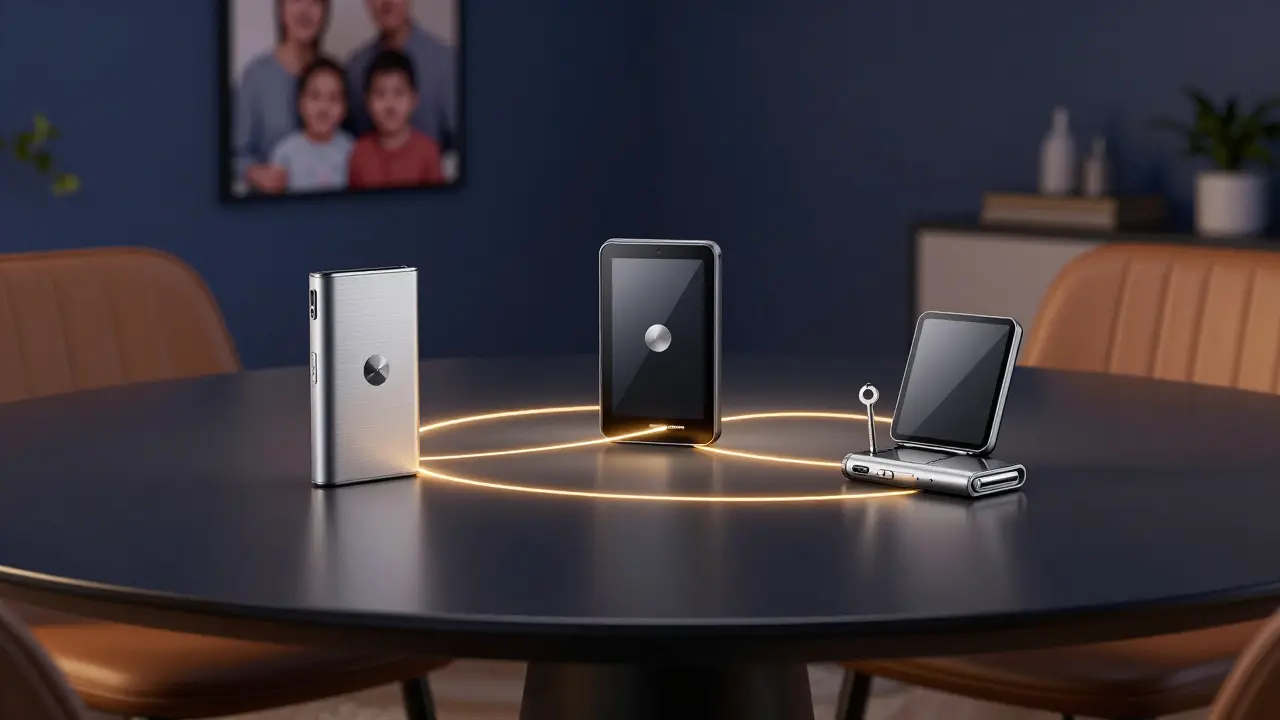
Imagine this: you’ve spent years building a cryptocurrency portfolio. You treat it like gold-secure, valuable, and yours alone. But what happens when you’re no longer around to access it? Unlike a bank account or a deed to a house, your crypto doesn’t have a customer service line that can reset your password for your grieving family. If they don’t have the keys, those assets are gone forever. Chainalysis reports that roughly 20% of all Bitcoin is permanently inaccessible because owners lost their keys or died without a plan.
This is where a family multisig setup comes in. It’s not just a technical tweak; it’s a structural change to how your family owns and protects digital wealth. Instead of one person holding all the power-and all the risk-you distribute control among trusted signatories. This guide walks you through why this matters, how to build it, and the common traps that turn good intentions into locked vaults.
Why Single-Signature Wallets Are a Family Risk
Most people start with a single-signature (1-of-1) wallet. You hold one private key, and that key unlocks everything. It’s simple, which is why 68% of retail holders still use them, according to Chainalysis data from 2025. But simplicity is the enemy of resilience when death or disaster strikes.
The problem isn’t just forgetting a password. It’s the sheer technical barrier for heirs. Swan Bitcoin’s research found that 87% of heirs lack the technical capability to access single-signature wallets left by decedents. Even if you leave them a piece of paper with a seed phrase, do you really expect your spouse or adult child to navigate Linux command lines, verify checksums, and import keys into cold storage software under emotional distress?
A multisig wallet changes the math. In a standard 2-of-3 multisig, three keys exist, but only two are needed to authorize a transaction. If one key is lost, stolen, or destroyed, the funds remain safe. If the primary owner passes away, the remaining two signatories (perhaps a spouse and a trusted attorney) can still access the assets. This redundancy is the core value proposition.
How the 2-of-3 Structure Works for Families
The industry standard for family planning is the 2-of-3 configuration. Here is how you typically assign the roles:
- Key 1 (You): Held by the primary asset owner. Used for daily management and large transactions.
- Key 2 (Spouse/Partner): Held by your immediate next-of-kin. They may not understand crypto deeply, but they hold veto power and access rights.
- Key 3 (Trusted Third Party): Held by a lawyer, a crypto-savvy friend, or a professional custodian. This person acts as a tie-breaker and a technical safety net.
In this scenario, you and your spouse can move funds together. If you pass away, your spouse and the third party can access the funds. If the third party loses their key, you and your spouse are still covered. No single point of failure exists.
Some families opt for a 2-of-4 structure, adding an adult child or another relative. This adds more redundancy but increases coordination complexity. For most households, 2-of-3 offers the best balance of security and usability.

Choosing Your Hardware and Software Stack
You cannot set up a robust family multisig on a mobile app alone. You need dedicated hardware wallets that support multi-signature protocols. As of 2026, the verified options include:
| Device | Price (Approx.) | Multisig Support Since | Best For |
|---|---|---|---|
| ColdCard Mk4 | $139 | Firmware 3.2.0 (Sept 2020) | Advanced users, Bitcoin-only focus |
| Trezor Model T | $219 | Firmware 2.4.2 (July 2021) | Multi-coin portfolios, touchscreen ease |
| Blockstream Jade | $59 | Firmware 0.2.0 (March 2022) | Budget-friendly entry, open-source transparency |
| YubiKey 5 NFC | $70 | N/A (Used as signer) | Secondary signers, non-crypto natives |
For software, you’ll need a host wallet that can generate the multisig descriptors and coordinate signatures. Sparrow Wallet is the free, open-source favorite among experts, offering granular control over transaction fees and coin selection. Alternatively, services like Casa provide a subscription-based interface designed specifically for non-technical users, handling much of the complexity behind the scenes.
Step-by-Step Implementation Plan
Setting up a family multisig is not a five-minute task. Expect to spend 2-4 hours for initial configuration. Follow these steps carefully:
- Acquire Hardware: Buy at least two different brands of hardware wallets. Do not buy three of the same model. If one manufacturer has a firmware bug, you don’t want all three keys vulnerable to the same exploit.
- Initialize Devices: Set up each device independently. Note that ColdCard uses a 9-word seed phrase for multisig setups, unlike the standard 24 words. Write these down on metal plates or fireproof paper.
- Generate Descriptors: Using Sparrow or Casa, generate the multisig descriptor file. This file contains the public keys and the threshold rules (e.g., "wsh(sortedmulti(2,...)"). This is critical documentation.
- Distribute Keys Geographically: Never store all three keys in the same house. Keep one at home, one in a safety deposit box, and one with your trusted third party. Evoke Vault documented a case in July 2025 where a family lost everything because all three keys were in the same fireproof safe during a house fire.
- Conduct a Test Transaction: Send a small amount of Bitcoin (e.g., $10) to a new address. Have two signatories approve it. Verify it hits the blockchain. This confirms your setup works before you move significant funds.
- Document Everything: Create a physical and digital instruction manual. Include QR codes for the descriptor file, instructions on how to install the software, and contact info for the third party.

The Human Factor: Coordination and Documentation
The technology is sound, but human error is the biggest threat. Andreas Antonopoulos warned in early 2025 that multisig creates "false confidence" if families don’t document recovery procedures. Thirty-seven percent of failed inheritance cases involved technically correct setups that were procedurally inaccessible.
Your heirs need to know:
- Where the hardware devices are located.
- Which software to download and how to install it.
- Who the other signatories are and how to contact them.
- How to combine the signatures to create a valid transaction.
Consider conducting an annual "recovery drill." Gather your signatories, simulate a loss of one key, and walk through the process of accessing the funds. This demystifies the process and ensures everyone knows their role. Swan Bitcoin’s certification program shows that users who spend 10+ hours preparing achieve a 94% success rate in implementation, compared to just 61% for unprepared users.
Costs and Trade-Offs
There is a price for security. Hardware wallets cost between $60 and $220 each. If you use a managed service like Casa, expect to pay an annual subscription (around $2,100 for their Premium plan). Transaction times are also slower. A 2-of-3 setup adds approximately 45-90 seconds to processing time per transaction due to the need to aggregate signatures across devices.
However, compare this to the alternative. The cost of losing hundreds of thousands of dollars in crypto is infinite. Furthermore, Gartner forecasts that 63% of high-net-worth crypto holders will implement family multisig by 2028. The market is moving toward this standard because it solves the fundamental inheritance problem that traditional estate planning ignores.
Remember, the goal isn’t just to hide your money-it’s to ensure it flows to the right people, securely and legally. By distributing trust rather than concentrating it, you build a legacy that survives you.
Is a 2-of-3 multisig better than a 3-of-3 for families?
Yes, for most families. A 3-of-3 setup requires all three signatories to be available and willing to sign every transaction. If one person is traveling, sick, or deceased, the funds are frozen. A 2-of-3 setup allows any two people to act, providing flexibility and ensuring access even if one key is lost or a signatory is unavailable.
Can I use a regular exchange like Coinbase for family multisig?
No. Exchanges hold custody of your keys, meaning you rely on their security and policies. True multisig requires self-custody with hardware wallets. While some exchanges offer joint accounts, they do not provide the cryptographic independence and inheritance control that a decentralized multisig setup does.
What happens if my trusted third-party signatory dies?
This is why geographic and legal distribution matters. If your third party dies, you and your spouse still have two keys, so you can access the funds. However, you should update your setup to appoint a new third party. Include instructions in your will for replacing the third-party key to maintain the redundancy structure.
Do I need to know coding to set up a multisig wallet?
Not necessarily. While tools like Sparrow Wallet require some technical comfort, services like Casa have simplified the process with guided tutorials and video support. If you are completely non-technical, consider hiring a crypto consultant to help with the initial setup and then handing over the documentation to your heirs.
Is multisig legal for estate planning?
Yes, but it must be integrated into your legal documents. The SEC clarified in February 2026 that properly documented multisig inheritance plans avoid securities classification issues. Work with an estate attorney who understands digital assets to ensure your will references the multisig structure and identifies the signatories.
8 Responses
THIS IS EXACTLY WHAT WE NEED TO BE TALKING ABOUT!! I mean seriously, how many people are just sitting on their butts thinking a password manager is enough?? It’s not! You need structure! You need redundancy! And you need to stop treating your crypto like it’s going to magically survive you without a plan!!
I’ve been pushing my brother to set up a multisig for months and he keeps saying 'it’s too complicated' or 'I’ll do it later'. Well guess what? Later might be too late!!! The stats in this post about 20% of Bitcoin being inaccessible are terrifying! Like, actually scary! We are building digital wealth in a vacuum if we don’t have these legal and technical bridges built beforehand!
Also, the part about using different hardware wallets is so crucial! Why didn’t anyone tell me sooner that buying three Trezors from the same batch is a bad idea?! I thought I was being smart by getting them all at once during a sale!! Rookie mistake!! Now I’m scrambling to get a ColdCard for the third key because I refuse to let my family lose access to my savings just because one firmware update goes sideways!!
People need to wake up!! This isn’t just tech talk; this is estate planning for the modern age!! If you love your family, you set this up TODAY!! Don’t wait until you’re sick or injured or whatever!! Do it now!! Get those keys distributed!! Get that documentation written down!! Stop procrastinating!!
lol really think this is necessary 😂 most people dont even know what a private key is let alone how to manage a multisig setup. sounds like overkill for regular folks who just want to buy some dogecoin and hold it 🤷♀️
also why would u trust a lawyer with ur crypto keys?? lawyers are basically scammers who charge u hourly to read emails 🙄 i’d rather just write the seed phrase on a napkin and tape it under the toilet seat. simpler right?? besides if ur dead ur dead who cares about the bitcoin?? its just numbers on a screen anyway 💀
Oh honey, no. Writing a seed phrase under a toilet seat is not 'simpler', it is stupid. You are literally inviting theft or accidental destruction. And yes, you should trust a lawyer if they are vetted properly, but honestly, most families shouldn't even be touching complex multisigs unless they have a consultant. It's messy. It's expensive. And if you screw up the descriptor file, which most of you will, your money is gone forever. So maybe stick to paper wallets if you're that lazy.
You sound like such a bitter little pill to swallow, Pamela. Always acting like you own the internet with your superior knowledge. It’s pathetic, really. Watching you type out these condescending paragraphs makes my skin crawl. You probably sleep with a USB drive tucked under your pillow, don’t you? Just waiting for someone to make a mistake so you can swoop in and say 'I told you so.' It’s exhausting. Your energy is toxic and frankly, it’s ruining the vibe of this thread. Go touch grass, or better yet, go hide your keys in a volcano where no one can ever find them.
Michael, your comment is grammatically atrocious and lacks any substantive contribution to the discussion at hand, which is truly disappointing given the high-quality article we are discussing here. Furthermore, attacking another user personally instead of addressing the merits of the argument regarding legal custodians versus informal storage methods demonstrates a profound lack of intellectual maturity and respect for civil discourse, something that seems increasingly rare on this platform these days. One must wonder if you even read the original post or if you are simply lashing out because you feel threatened by the complexity of proper financial security measures, which require diligence and attention to detail that clearly elude you based on your sloppy syntax and aggressive tone.
Sigh... look, everyone needs to chill out :) The point is valid regardless of how you spell things. Multisig is great for peace of mind, but yeah, it’s a bit much for the casual holder. Maybe we can find a middle ground? Like using a service that handles the heavy lifting? That way we don’t have to fight about grammar or insult each other’s parenting skills (or lack thereof). Let’s keep it positive, guys! Crypto is supposed to be liberating, not a source of family drama and Reddit rage wars :)
The concept of 'ownership' in a decentralized system is an illusion we cling to for comfort. By distributing keys, we distribute responsibility, but do we truly understand the weight of that shared burden? When three minds must align to move value, are we securing wealth or creating a bureaucratic prison for our assets? Perhaps the real inheritance isn’t the Bitcoin, but the lesson in trust and verification. Or maybe we’re just delaying the inevitable entropy of all systems. :/
Boring philosophical nonsense aside, the guide is solid. But let’s cut the crap about 'trusted third parties.' In my experience, trusting anyone with a key is a gamble. I’d rather use air-gapped devices and physical media. Less human error, less drama. Just set it up, test it, and forget it. If you can’t handle the basics, don’t play in the big leagues.