
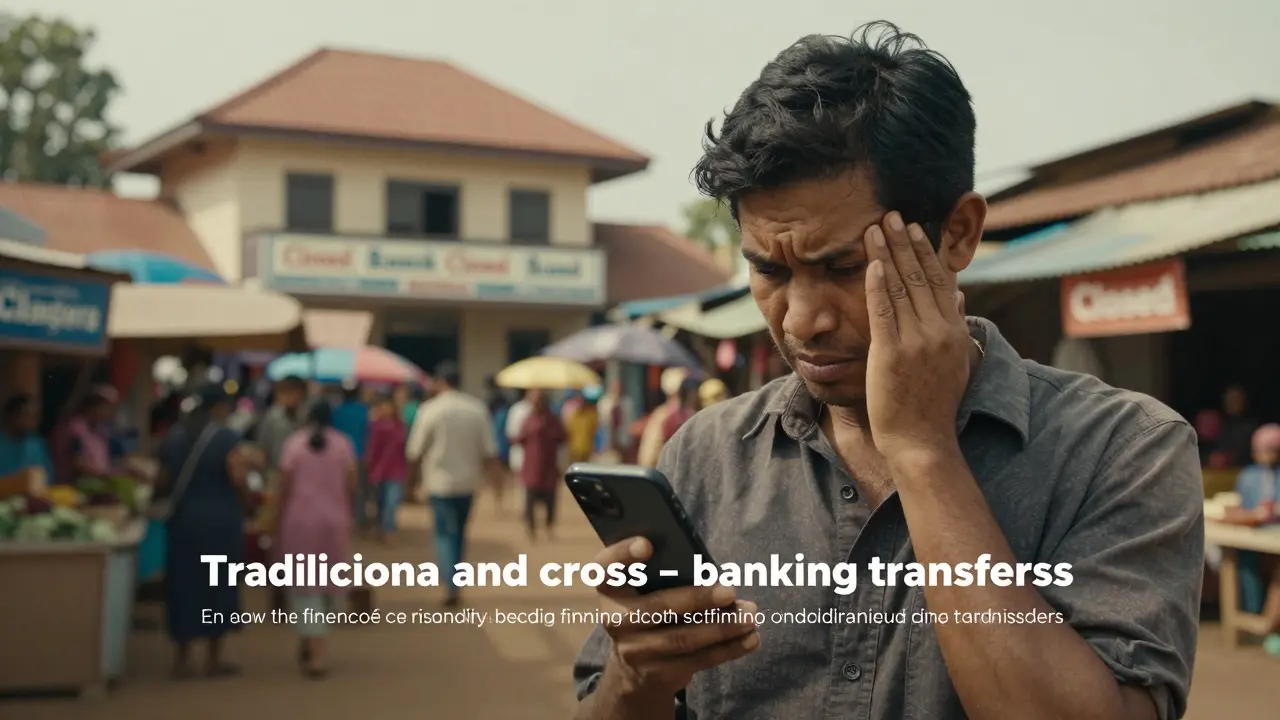
Imagine sending money from Manila to Mexico City. In the old system, that cash sits in limbo for three days while it hops through four different banks. Each bank takes a cut. The exchange rate shifts against you. By the time the recipient gets the funds, they might be holding 10% less than what you sent. Now imagine that same transfer happening in under three minutes, costing just a few cents, with no middlemen taking a slice. This isn’t a futuristic dream anymore; it’s the daily reality for millions of people using stablecoins digital assets pegged to stable currencies like the US dollar to facilitate fast, low-cost cross-border transactions.
The shift is happening fastest where the pain is greatest: in developing economies. These nations face a perfect storm of high inflation, expensive banking infrastructure, and large populations without access to traditional credit cards or bank accounts. Stablecoins offer a way out. They provide the stability of fiat currency with the speed and accessibility of blockchain technology. As of late 2025, the total supply of stablecoins had exploded from $5 billion five years prior to over $305 billion. That’s not just speculation; it’s real utility driving adoption.
The High Cost of Traditional Banking
To understand why stablecoins are winning, you have to look at what they replace. The traditional cross-border payment system is built on correspondent banking. When you send money internationally, your bank doesn’t usually have a direct relationship with the recipient’s bank. Instead, they rely on a chain of intermediary banks to move the money. Each link in this chain charges a fee.
These fees aren’t small. On average, international wire transfers cost between 2% and 7% of the total amount transferred. For a freelancer in Kenya earning $500 per month, a 5% fee means losing $25 just to get paid. That’s money taken directly from their ability to buy food, pay rent, or save. Add in foreign exchange spreads-where banks give you a worse rate than the market value-and the effective cost can climb even higher.
Time is another hidden cost. Traditional settlements take 3 to 5 business days. During that window, businesses can’t plan their cash flow, and individuals can’t access emergency funds. In emerging markets, where informal economies dominate, waiting days for money is often impossible. A construction worker needs to pay for materials today, not next week. A family needs to send remittances before a holiday deadline. The slowness of legacy systems creates friction that stifles economic activity.
How Stablecoins Solve the Speed and Cost Problem
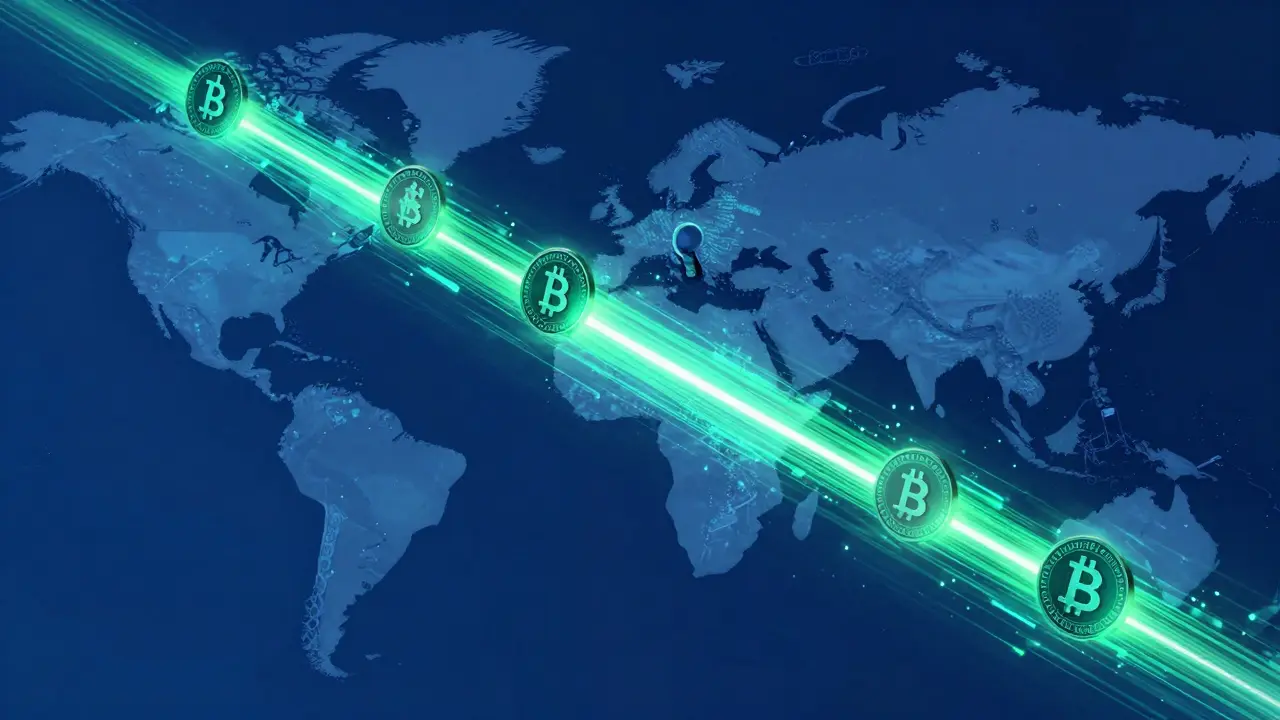
Stablecoins cryptocurrencies designed to maintain a fixed value relative to a reserve asset bypass the correspondent banking network entirely. They operate on blockchain networks, which are public ledgers that record transactions instantly and transparently. Because there are no intermediaries, there are no intermediary fees.
Transaction costs on major blockchain networks can be as low as a few cents. Even on more congested networks, fees rarely exceed a dollar. Compare that to the $25-$35 lost in traditional fees, and the savings are obvious. But the real magic is in the speed. Blockchain transactions settle in seconds or minutes, 24 hours a day, 7 days a week. There are no weekend closures, no banking holidays, and no "cut-off times" for same-day processing.
This speed changes how businesses operate. A small exporter in Vietnam can receive payment from a buyer in Brazil within minutes of shipping goods. They don’t need to wait weeks for letters of credit or wire transfers to clear. They can reinvest that capital immediately. For consumers, it means receiving remittances from abroad almost instantly, rather than waiting for a physical payout or a slow bank deposit.
Financial Inclusion for the Unbanked
In many developing economies, having a bank account is a privilege, not a right. Millions of people are "unbanked"-they lack the documentation, minimum deposits, or proximity to branches required by traditional banks. Others are "underbanked," meaning they have an account but can’t use it effectively due to high fees or limited services.
Crypto wallets change this dynamic. All you need to participate in the global economy is a smartphone and an internet connection. You don’t need a credit check. You don’t need to live near a branch. This lowers the barrier to entry significantly. While Bitcoin was the first decentralized borderless payment system, its volatility made it risky for everyday commerce. If you’re selling vegetables, you don’t want your income to drop 10% overnight because the crypto market crashed.
Stablecoins solve this by pegging their value to stable assets, usually the US Dollar (USD) or Euro (EUR). When you hold a USD-pegged stablecoin, you’re essentially holding digital dollars. You get the benefits of blockchain-fast, cheap, borderless transfers-but without the price swings. This makes them practical for merchants who want to accept international payments without worrying about currency risk.
Hedging Against Local Currency Collapse
For citizens in countries with unstable economies, stablecoins offer more than just convenience; they offer survival. Nations like Argentina, Turkey, and Lebanon have experienced hyperinflation or rapid devaluation of their local currencies. When your national currency loses value every day, saving money becomes a losing game.
People in these regions turn to cryptocurrencies to preserve their purchasing power. Converting local currency into a stablecoin allows them to store value in a stronger asset class. It’s a form of self-imposed financial insurance. When they need to spend, they can convert back to local currency for immediate purchases, or keep it in stablecoins for larger expenses. This flight to stability drives massive adoption volumes.
The International Monetary Fund (IMF) has noted that digital money innovations could reduce cross-border transaction costs by up to 60%. For countries that rely heavily on remittances-which can make up a significant portion of GDP in some nations-this efficiency gain is transformative. It keeps more money in the hands of families and stimulates local consumption.
The "Stablecoin Sandwich": Bridging Crypto and Fiat
A common concern is: "If I receive a stablecoin, how do I actually buy groceries?" Most people still need local fiat currency for daily life. This is where the "stablecoin sandwich" model comes in. Payment platforms act as bridges between the crypto world and traditional banking rails.
Here’s how it works:
- Receive: You receive payment in a stablecoin (e.g., USDC) via a blockchain wallet.
- Convert: The payment platform automatically converts the stablecoin into your preferred fiat currency (USD, EUR, GBP, etc.).
- Withdraw: The platform sends the fiat currency to your local bank account via established networks like SWIFT, ACH, SEPA, or Faster Payments.
This hybrid approach gives you the best of both worlds. You benefit from the low fees and speed of blockchain for the international leg of the journey, and then seamlessly transition to local banking for the final step. Platforms like BVNK and Stripe are building infrastructure to support this, allowing users to withdraw to bank accounts in over 195 countries across 135+ currencies. It removes the technical headache from the user experience.
Real-World Proof: Beyond Theory
This isn’t just theoretical. Real-world pilots are proving the concept. The Inter-American Development Bank (IDB), working with IDB Lab, LACChain, Citi Innovation Labs, and ioBuilders, successfully demonstrated cross-border payments using tokenized money on the LACChain Besu Blockchain Network. This proof-of-concept showed that institutional-grade cross-border payments with currency exchange are technically feasible in Latin America.
Furthermore, transaction volumes tell a compelling story. In 2024, payment-specific stablecoin transaction volumes reached approximately $5.7 trillion, with total transaction volumes exceeding $32 trillion according to Visa data. These aren’t niche numbers; they represent mainstream usage. Businesses are already using stablecoins to pay suppliers, and contractors are invoicing in them. Some governments are even exploring stablecoins for delivering foreign aid, ensuring funds reach intended recipients without being siphoned off by intermediaries.
Looking Ahead: Market Projections
The trajectory points toward accelerated adoption. Analysts at BVNK project that stablecoins could capture 20% of the global cross-border payments market by 2030. Stripe forecasts a slightly more conservative 5-10% share, which still represents trillions of dollars in volume. Given that the broader cross-border payments market is expected to hit $290 trillion by 2030, even a single-digit percentage share is a massive opportunity.
International transfers are expected to grow by 5% annually until 2027. As regulatory frameworks mature and consumer confidence grows, we’ll likely see more integration between traditional banks and crypto providers. Banks are already exploring blockchain technology for real-time settlement tracking, recognizing that the transparency and speed advantages are hard to ignore.
Developing economies are leading this charge not because they love technology for its own sake, but because they need solutions that work. The combination of lower costs, faster speeds, greater financial inclusion, and protection against inflation makes stablecoins a rational choice. For the billions of people outside the traditional banking system, stablecoins aren’t just an alternative; they’re an upgrade.
Are stablecoins safe to use for cross-border payments?
Safety depends on the specific stablecoin and the platform you use. Major stablecoins like USDC and USDT are backed by reserves (cash and short-term government bonds) and undergo regular audits. However, you should always use reputable exchanges or payment platforms with strong security measures. Unlike bank deposits, most crypto holdings are not insured by government agencies like the FDIC, so personal responsibility for securing your private keys is essential.
How much cheaper are stablecoin transfers compared to banks?
Traditional cross-border transfers typically cost 2-7% in fees and exchange rate spreads. Stablecoin transactions often cost just a few cents in network fees. Even when including conversion fees on payment platforms, the total cost is frequently 60-90% lower than traditional banking methods. For a $1,000 transfer, this could mean saving $50 to $70.
Do I need a bank account to use stablecoins?
No. To receive and hold stablecoins, you only need a crypto wallet, which can be set up on a smartphone with an internet connection. However, if you want to convert those stablecoins back into local fiat currency (like pesos or rupees) to spend in stores, you may need a bank account or a local cash-out service depending on your country's regulations.
What is the "stablecoin sandwich"?
The "stablecoin sandwich" is a payment model where funds start as fiat currency, are converted to stablecoins for the fast, cheap cross-border blockchain transfer, and then converted back to fiat currency upon arrival. This method leverages blockchain efficiency for the international leg while ensuring the recipient receives usable local currency.
Can stablecoins protect my money from inflation?
Yes, if the stablecoin is pegged to a stronger currency like the US Dollar. In countries with high inflation or currency devaluation, holding USD-pegged stablecoins preserves purchasing power better than holding local currency. However, this assumes the peg remains stable and the issuer remains solvent.