
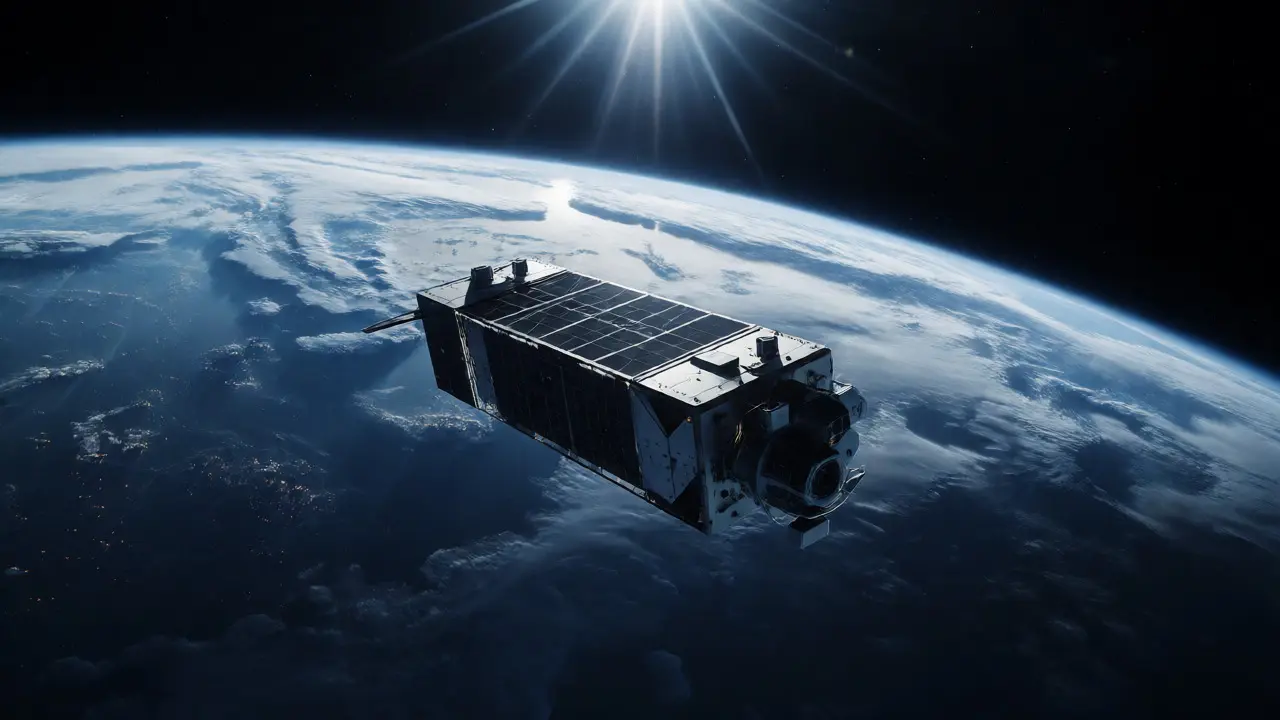
In September 2026, the Pentagon publicly admitted something many analysts had long suspected but few officials would say out loud: the United States operates weapons systems in Earth's orbit. This admission didn't just change headlines; it shattered the fragile illusion that space remains a purely peaceful domain. While we often hear about "militarization" of space through reconnaissance satellites and GPS, actual weapons in space represent a different beast entirely. For decades, international law has tried to keep the final frontier free from an arms race, but the rules are old, vague, and increasingly challenged by modern technology.
The core problem is simple yet terrifying: current treaties ban nuclear bombs in orbit, but they say almost nothing about lasers, kinetic interceptors, or robotic arms that can grab your satellite and drag it into a graveyard orbit. If you think space law is just about who owns the Moon, you're missing the bigger fight happening right now over whether Earth's orbit becomes a battlefield or stays a shared utility for global communications and navigation.
What Is Actually Banned in Orbit?
To understand where we stand, you have to look at the foundation of space law: the Outer Space Treaty (OST), which entered into force on October 10, 1967. Signed by the US, Soviet Union, and UK during the height of the Cold War, this treaty was designed to prevent nuclear war from spilling into the heavens. Article IV is the heart of the matter. It explicitly forbids placing objects carrying nuclear weapons or any other kinds of weapons of mass destruction (WMD) in orbit around the Earth. It also bans installing such weapons on celestial bodies like the Moon.
But here’s the catch that keeps legal scholars up at night: the OST does not ban conventional weapons. It doesn’t mention anti-satellite missiles, directed-energy beams, or co-orbital killers. As long as a weapon isn’t nuclear, chemical, biological, or radiological, the 1967 treaty technically allows it. This loophole has turned the OST into a shield against nuclear escalation, but a sieve against conventional military buildup. With over 110 states currently parties to the OST, it enjoys near-universal acceptance, yet its silence on non-WMD systems creates a dangerous gray zone where nations test the limits of what constitutes a "weapon."
The Rise of Anti-Satellite (ASAT) Testing
If the law is quiet, action speaks loudly. Since the late 1950s, major powers have tested their ability to destroy satellites. These aren't hypothetical scenarios; they are historical facts with lasting consequences. Five notable destructive tests highlight the trajectory of this arms race:
- 1985 (USA): The ASM-135 missile destroyed the Solwind P78-1 satellite at 555 km altitude.
- 2007 (China): An SC-19 interceptor hit the FY-1C weather satellite at 865 km, creating thousands of pieces of debris.
- 2008 (USA): A Standard Missile-3 intercepted the malfunctioning USA-193 satellite at 247 km.
- 2019 (India): The PDV Mark-II missile destroyed Microsat-R at 283 km.
- 2021 (Russia): The Nudol missile destroyed Kosmos-1408 at 465 km, generating debris that threatened the International Space Station.
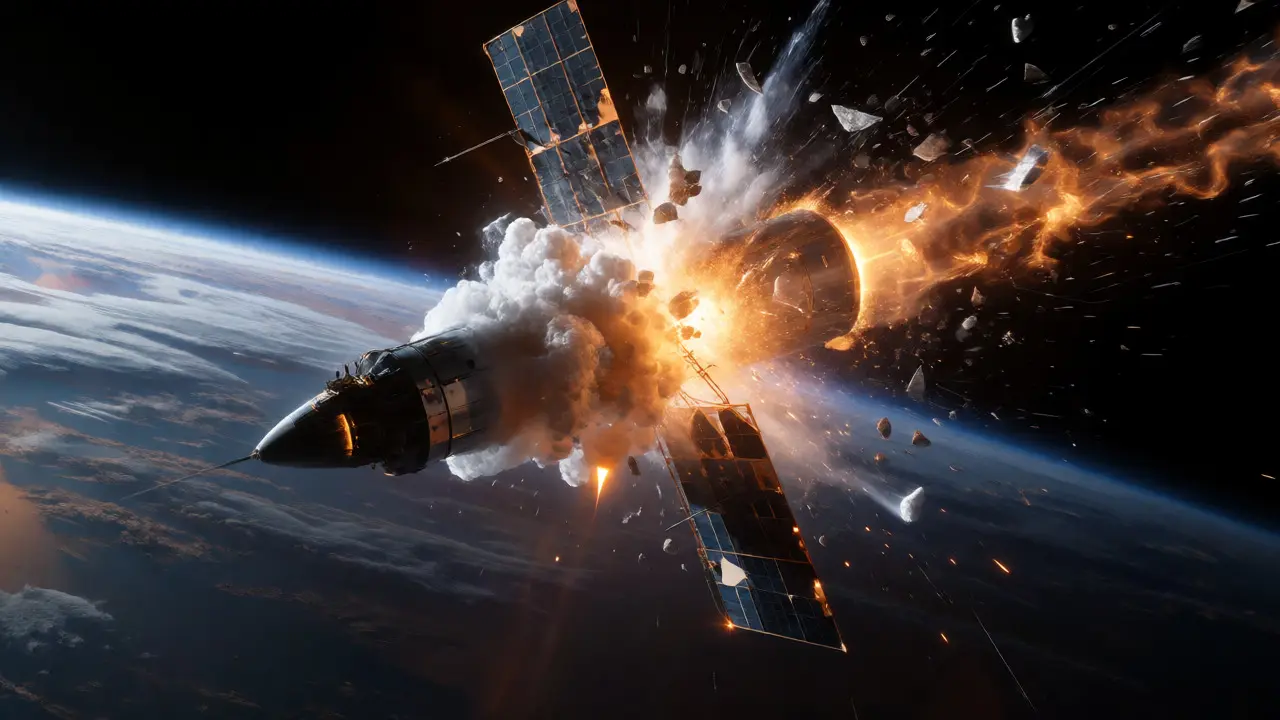
None of these tests violated the Outer Space Treaty because none used WMDs. However, each one generated orbital debris that endangers all space users, including commercial operators and scientific missions. The Arms Control Association and various NGOs argue that while these tests might be legally permissible under the OST, they are environmentally and strategically reckless. They create a cloud of shrapnel moving at thousands of miles per hour, turning low Earth orbit into a minefield.
The Push for New Treaties: PAROS and PPWT
Recognizing the gaps in the OST, the international community launched the Prevention of an Arms Race in Outer Space (PAROS) initiative in 1981. For over four decades, PAROS resolutions have been adopted annually by the UN General Assembly, calling for negotiations to ban weapons in space. But resolutions are political statements, not binding laws. The real attempt to codify new rules came in 2008 when Russia and China tabled the Treaty on the Prevention of the Placement of Weapons in Outer Space (PPWT). Updated in 2014, this draft goes further than the OST by proposing a ban on *any* weapons placed in outer space, not just WMDs.
| Feature | Outer Space Treaty (1967) | Draft PPWT (2014) |
|---|---|---|
| Scope of Prohibition | Nuclear and WMDs only | All types of weapons (kinetic, directed-energy, etc.) |
| Location Covered | Orbit and Celestial Bodies | Outer Space (defined by orbit/stationing) |
| Terrestrial ASATs | Not explicitly banned | Not explicitly banned (focuses on space-based) |
| Verification Mechanism | Weak (reporting based) | Minimal (criticized as unverifiable) |
| Status | Binding Law (110+ parties) | Draft Proposal (No consensus) |
The West, particularly the United States, has resisted the PPWT. Critics argue it is unverifiable and asymmetric. Because Russia and China already possess robust ground-based anti-satellite capabilities, banning only space-based weapons locks in their advantage while restricting the US from developing potential orbital defense systems. This deadlock explains why no comprehensive treaty exists today.
Defining a Weapon: The Dual-Use Dilemma
One of the biggest hurdles in prohibiting military systems is defining what counts as a weapon. Is a satellite that uses a robotic arm to refuel another satellite a weapon? What if it uses that same arm to push a rival satellite out of position? This is the dual-use dilemma. Technologies like rendezvous and proximity operations (RPO) are essential for servicing and inspection but can easily be repurposed for attack.
Experts propose technical measures to manage this ambiguity. For instance, the Hybrid Space Arms Control approach suggests setting strict distance thresholds. If a satellite approaches another nation’s asset closer than a specified limit without prior notification, it could be considered a hostile act. Such norms don't require banning technology outright but regulate behavior. Without these clear operational rules, every close encounter between satellites risks being interpreted as an act of aggression, raising the temperature in orbit even without a single shot fired.

Why Commercial Space Cares About War
You might think space weapons are a concern only for generals and diplomats. But consider this: your internet connection, your bank transactions, and your weather forecasts depend on stable orbits. The rapid growth of commercial constellations means that thousands of private satellites share the same lanes as military assets. Debris from a conflict or a test doesn't distinguish between a spy satellite and a Starlink terminal.
Insurance companies and investors are increasingly factoring space security risks into their models. If major powers start deploying offensive systems, the risk of collision or intentional damage rises, potentially driving up costs for everyone. Global South nations and non-spacefaring states worry most about this. They rely on space services but lack the capability to defend their assets, making them vulnerable to coercion if space becomes a contested domain. This economic reality adds pressure on policymakers to find practical prohibitions rather than just engaging in abstract legal debates.
The Road Ahead: Norms Before Treaties
Given the political gridlock, a full-blown treaty banning all space weapons seems unlikely in the immediate future. Instead, momentum is shifting toward Transparency and Confidence-Building Measures (TCBMs). These include pre-launch notifications, sharing orbital data, and commitments to avoid debris-generating tests. In May 2024, discussions in the UN highlighted a split: some nations pushed for a total ban on all weapons, while others favored incremental steps.
The public acknowledgment of US orbital weapons in 2026 marks a turning point. It forces the world to move beyond the pretense that space is untouched. The choice now is between escalating competition-where every new laser or interceptor triggers a counter-measure-or establishing new norms that define acceptable behavior. Whether through updated treaties or strict codes of conduct, the goal remains the same: ensuring that the sky above us doesn't become the next battlefield.
Does the Outer Space Treaty ban all weapons?
No. The Outer Space Treaty specifically prohibits nuclear weapons and other weapons of mass destruction (WMD) in orbit. It does not explicitly ban conventional weapons like kinetic interceptors, lasers, or electronic warfare systems, leaving a significant legal gap.
What is the difference between militarization and weaponization of space?
Militarization refers to using space for support functions like communication, navigation, and reconnaissance, which has been standard since the 1960s. Weaponization involves deploying active offensive systems, such as anti-satellite missiles or orbital strike platforms, capable of destroying targets in space or on Earth.
Why do countries conduct anti-satellite tests if they create debris?
Countries conduct these tests to demonstrate strategic deterrence and technological capability. By showing they can destroy a satellite, they signal to adversaries that their own space assets are protected by the threat of retaliation, even if the tests generate hazardous orbital debris.
What is the PPWT?
The PPWT (Treaty on the Prevention of the Placement of Weapons in Outer Space) is a draft treaty proposed by Russia and China. It seeks to ban the placement of any type of weapon in outer space and prohibit the use of force against space objects, going beyond the WMD-only restrictions of the Outer Space Treaty.
How does space debris affect commercial satellites?
Debris travels at high velocities, posing a collision risk to all satellites regardless of ownership. Increased debris density raises the cost of insurance and operations for commercial providers, as more frequent avoidance maneuvers may be required to protect valuable assets like internet constellations.
10 Responses
oh please another article pretending we care about international law when literally everyone knows its just a suggestion box for countries with big missiles
the us admits weapons now because they finally caught up to china and russia not because of some moral awakening
its always the same story until someone actually shoots something down in orbit then suddenly everyone remembers the treaties they ignored for decades
we are all just waiting for the first kessler syndrome event to force our hand on this stuff
until then its just expensive toys floating around threatening each other
hey good point about the delay in admission it really does feel like catching up rather than leading
i think its cool that we are finally talking about it openly though transparency is step one right
lets hope the norms start forming before things get too heated up there
Technically, the distinction between militarization and weaponization is crucial here. Militarization has existed since Sputnik launched in 1957 with reconnaissance capabilities being the primary driver. Weaponization implies active offensive capability which is what the PPWT attempts to address but fails due to verification issues.
The US resistance to the PPWT is not merely political posturing but stems from genuine asymmetry concerns regarding ground-based ASATs versus space-based interceptors.
If you read the 2014 updated draft closely you will see that it bans placement but not necessarily use of terrestrial systems against orbital assets which creates a massive loophole.
China's 2007 test generated over 3000 trackable pieces of debris which still pose risks today proving that legal permissibility does not equate to strategic wisdom.
India's recent tests show that middle powers are also entering this domain complicating any bilateral arms control framework.
The definition of dual-use technology remains the biggest hurdle for any future treaty negotiations.
Verification is impossible without intrusive inspections which no major power will allow so forget it
it feels sad really
like we are watching a slow motion car crash in the sky
and everyone is just arguing about who broke the speed limit while the road gets covered in glass shards
my heart hurts for the satellites that have no say in any of this
omg yes!! 😭😭
it makes me wonder if we are even ready for this kind of responsibility 🤔
if we cant agree on climate change how can we agree on space rules 🌍💫
maybe we need to teach empathy in schools starting with robots 🤖❤️
or maybe its too late and we are already doomed to fight over the stars ⭐⚔️
I believe it is important to acknowledge the valid concerns raised by both sides of this debate. We must strive for a balanced approach that respects national security needs while protecting the commons.
It is encouraging to see dialogue continuing despite the disagreements.
We should support efforts that promote stability and reduce uncertainty in the orbital environment.
Every small step towards confidence building measures counts in the long run.
THE SKY IS FALLING AND NOBODY CARES EXCEPT ME!!!
Do you realize that a single collision could trigger a cascade effect that locks us out of space for generations???
We are playing Russian Roulette with the entire global economy every time a missile flies upward!!!
My anxiety levels are off the charts thinking about Starlink terminals getting shredded by shrapnel!!!
Why is nobody panicking enough??? This is the end of civilization as we know it!!!
I am literally shaking writing this comment right now!!!
lol calm down tiger 😂
but seriously the debris thing is kinda gnarly
its like throwing rocks at your neighbor's house but the house is made of wifi signals
hope they figure it out before my netflix buffers forever
I love seeing more awareness on this topic! It is great that people are engaging with these complex legal issues.
Optimistically, I think commercial pressure might actually help drive regulation faster than governments alone.
Companies hate uncertainty so they will lobby for clear rules to protect their investments.
This could be the silver lining we need to push for better norms!