
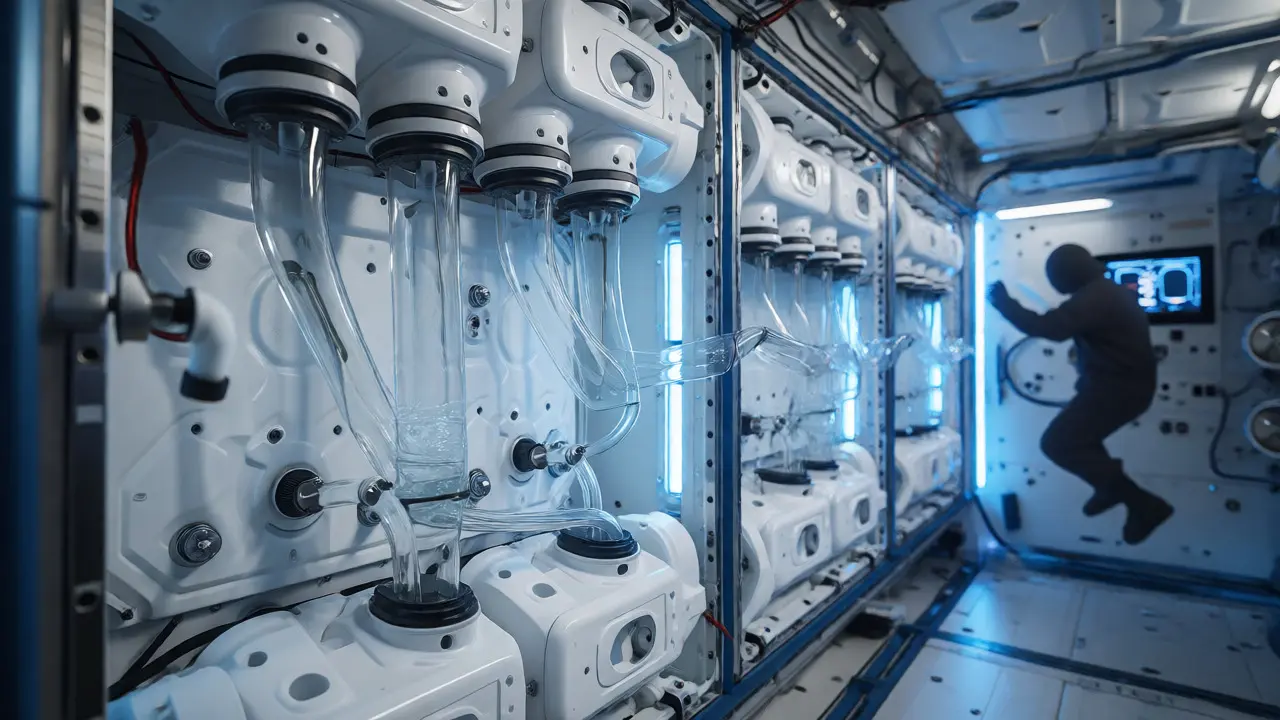
Imagine drinking a glass of water that started its journey as someone else’s sweat, breath, or urine. Sounds unappealing? On the International Space Station (ISS), this is daily reality. For astronauts living hundreds of kilometers above Earth, water isn’t just a commodity; it’s a critical, recycled resource that keeps them alive. With resupply missions costing millions per kilogram, wasting a single drop is not an option. The challenge isn't just about making water drinkable-it's about managing hygiene and cooling electronics in an environment where gravity doesn't exist to help liquids settle or flow.
The core problem is simple logistics masked by extreme engineering constraints. A six-person crew on the ISS needs roughly 15,960 pounds (about 7 metric tons) of water annually for drinking, food prep, hygiene, and oxygen generation. Launching that much mass from Earth is prohibitively expensive. Enter regenerative life support. Since the late 1990s, and significantly upgraded in 2008, NASA has deployed sophisticated hardware to close the water loop. Today, the station recovers nearly 98% of all water used aboard, turning waste streams into potable supplies and keeping thermal systems running cool.
How the ISS Turns Waste Into Drinking Water
At the heart of the U.S. segment’s capability is the Water Recovery System (WRS). This isn't some sci-fi magic; it’s a series of miniaturized, microgravity-adapted industrial processes packed into two standard equipment racks. The system takes four main inputs: crew urine, humidity condensate (water vapor from breathing and sweating), hygiene wastewater (from brushing teeth or washing hands), and product water from chemical reactions like the Sabatier process.
The process begins with the Urine Processor Assembly (UPA). In zero gravity, you can’t just boil urine and catch the steam easily because bubbles don’t rise. Instead, the UPA uses a rotating distillation unit. By spinning the liquid, centrifugal force separates solids and gases, effectively mimicking gravity to create a clean distillate. This distillate is then mixed with other reclaimed water streams and sent to the Water Processor Assembly (WPA).
The WPA acts as the final polish. It employs a multi-barrier approach: filtration removes particulates, ion exchange strips out dissolved salts and metals, and catalytic oxidation destroys organic contaminants and odors. Finally, iodine is injected as a disinfectant to keep bacteria at bay in the storage tanks. The result? Water that often exceeds terrestrial drinking standards. Astronauts routinely test the output, confirming it tastes no different from tap water on Earth, despite its origins.
| Water Source | Processing Method | Primary Use | Recovery Rate |
|---|---|---|---|
| Crew Urine | Rotating Distillation (UPA) | Potable water, Oxygen generation | ~87% (via UPA + BPA) |
| Humidity Condensate | Filtration & Ion Exchange (WPA) | Potable water, Hygiene | ~100% |
| Hygiene Wastewater | Filtration & Catalytic Oxidation | Potable water (after treatment) | ~100% |
| Sabatier Product Water | Direct Routing to WPA | Potable water | ~100% |
Hygiene in Microgravity: More Than Just a Sponge Bath
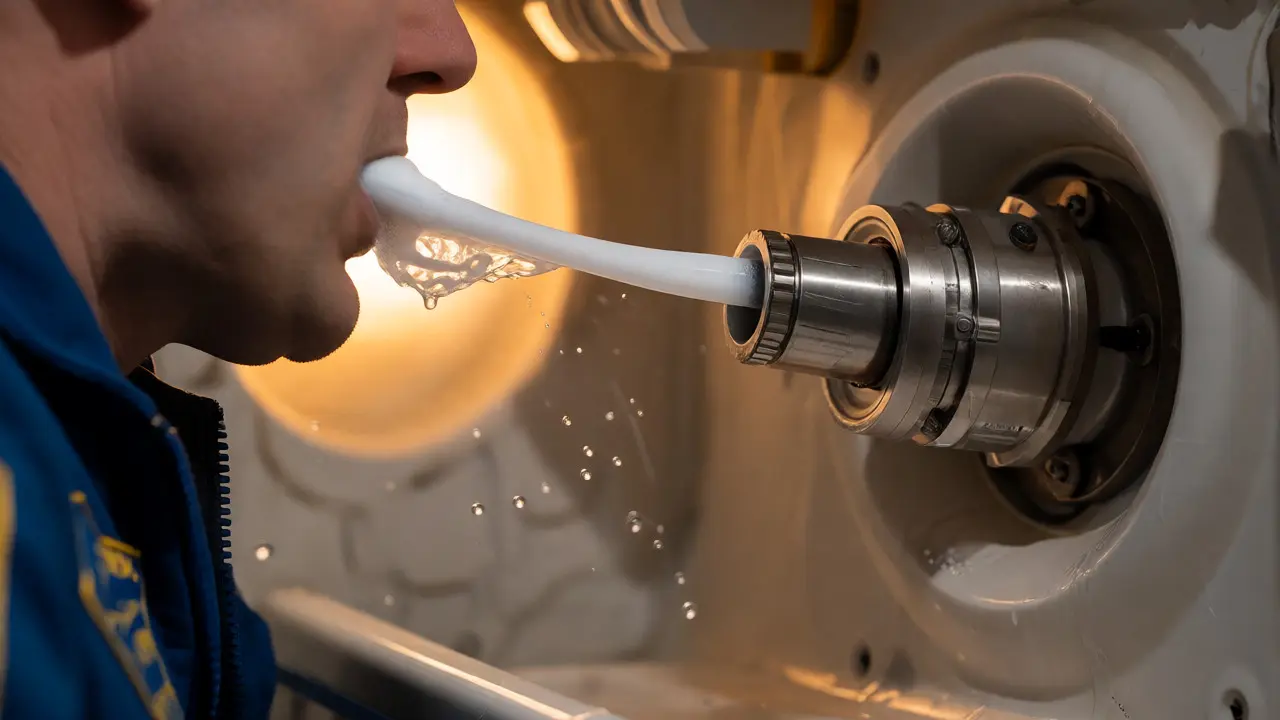
You might think hygiene in space is limited to wet wipes and dry shampoo. While true to an extent, modern hygiene on the ISS involves active water use. Crew members brush their teeth, wash their hands, and occasionally engage in more thorough cleaning using controlled spray systems. The tricky part is handling free-floating liquids. Without gravity, water forms persistent droplets and films that can drift into sensitive electronics or harbor microbes if not captured quickly.
To manage this, the ISS features specialized collection points. When an astronaut brushes their teeth, they spit into a drain connected to the hygiene wastewater tank. Similarly, handwashing effluent is sucked away rather than allowed to drip. These greywater streams are not discarded; they are pumped back into the WRS. Even the moisture from skin evaporation and exhaled breath is captured by condensing heat exchangers, which pull humidity from the cabin air. This comprehensive capture ensures that almost every molecule of water introduced into the human body or environment is accounted for and eventually reused.
There is also the issue of personal comfort. Long-duration missions require psychological well-being, and maintaining hygiene routines helps preserve a sense of normalcy. The ability to wash hands properly or rinse one’s mouth provides a small but significant morale boost. However, these activities must be meticulously planned to avoid contaminating the closed-loop system with excessive soap residues or biological matter that could overwhelm the filters.
Thermal Control: Water as a Coolant
Beyond drinking and cleaning, water plays a vital role in keeping the spacecraft from overheating. Electronics, life support machinery, and even the human body generate significant heat. In the vacuum of space, radiating this heat away is difficult because there is no air for convection. Water serves as an efficient working fluid for internal thermal management.
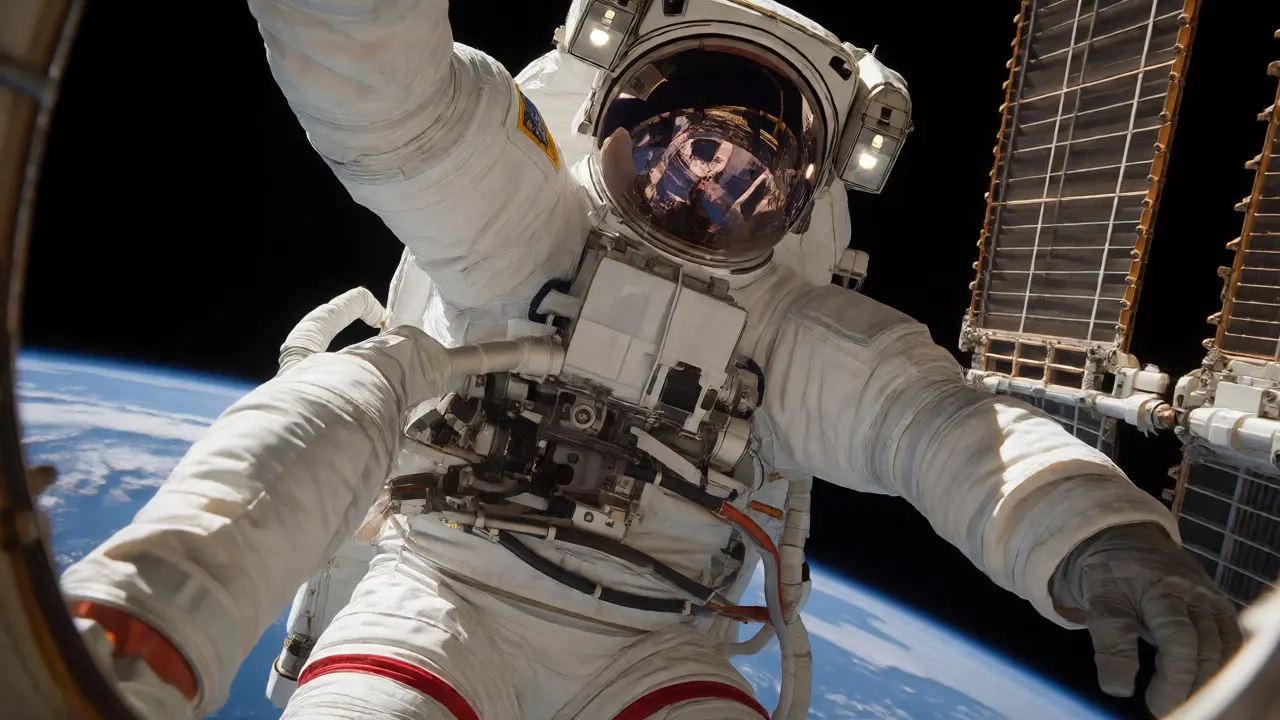
Inside the ISS, water loops pump coolant around hot subsystems to absorb heat. This heated water then transfers its energy to external ammonia-based radiator loops via heat exchangers. Ammonia is used externally because it remains liquid at lower temperatures than water, allowing for effective heat rejection in the cold of space. However, water remains integral to internal systems, including the liquid-cooled garments worn during spacewalks (EVAs). These suits circulate chilled water through tubes embedded in fabric, pulling heat away from the astronaut’s body to prevent overheating while working in direct sunlight.
Future concepts, such as the Space Evaporator Absorber Radiator (SEAR), aim to integrate water more directly into thermal storage. SEAR uses water evaporation and absorption in lithium chloride solutions to store thermal energy and reject heat at higher efficiencies. This could allow future deep-space vehicles to use a unified water inventory for both crew consumption and thermal regulation, reducing the total mass of consumables needed for Mars missions.
The Evolution of Water Recovery Efficiency
Efficiency hasn't always been near-perfect. Early versions of the ISS water system recovered about 93.5% of available water. The remaining 6.5% was lost primarily in the form of brine-a concentrated salt solution left over after distilling urine. This brine contained residual water that was previously discarded overboard or stored as waste.
In 2021, NASA installed the Brine Processor Assembly (BPA) to tackle this inefficiency. The BPA accepts the brine from the UPA and extracts additional water through further processing, sending it back to the WPA for purification. This upgrade pushed the overall water recovery rate toward 98%, a critical milestone for long-duration missions. According to Layne Carter, ISS Water Subsystem Manager at NASA Marshall, this improvement significantly reduces the frequency and volume of resupply missions required to keep the crew hydrated.
The journey to 98% closure wasn't just about adding hardware; it involved refining operational procedures and addressing fouling issues. Distillation units and filters are prone to scaling and clogging due to the high concentration of salts and organics in urine. Regular maintenance, including the replacement of sorbent beds and filters, is essential to maintain performance. Despite these challenges, the system has produced over 21,000 liters of potable water in its early years alone, demonstrating robust reliability under continuous operation.
Why This Matters for Future Exploration
If you’re planning a trip to Mars, you can’t rely on supply ships arriving every few months. The transit time is too long, and the distance too great. Regenerative water systems are non-negotiable for any mission beyond low Earth orbit lasting more than a few weeks. The technology developed for the ISS serves as the foundational reference for next-generation habitats, including commercial space stations and lunar bases.
Moreover, the benefits extend back to Earth. Technologies derived from space water systems have found applications in disaster relief and remote communities where access to clean water is scarce. Compact, high-recovery water processors adapted from ISS designs offer portable solutions for purifying contaminated sources without heavy infrastructure. As we push further into space, the line between orbital life support and terrestrial sustainability continues to blur, proving that solving problems for astronauts often leads to better solutions for everyone.
Does recycled space water taste different from regular water?
No, most astronauts report that it tastes identical to fresh water. The rigorous filtration, ion exchange, and catalytic oxidation processes remove impurities and odors effectively. Additionally, iodine is added to prevent bacterial growth, which may impart a very slight taste similar to municipal tap water, but generally, it is indistinguishable from bottled water.
What happens if the water recovery system fails?
If the primary system fails, the crew relies on contingency water supplies delivered by cargo spacecraft. These are stored in soft bags or tanks. While sufficient for short-term emergencies, prolonged failure would limit mission duration and increase logistical pressure, as resupply missions would need to carry more water instead of scientific experiments or spare parts.
Can astronauts shower normally in space?
Traditional showers are impractical due to floating water droplets. Instead, astronauts use sponge baths with damp cloths or specialized spray-and-suction systems. Some newer concepts involve enclosed shower stalls with airflow controls to contain water, but full-body immersion showers remain rare due to complexity and water conservation needs.
How much water does an astronaut use per day?
On average, an astronaut uses about 2.7 gallons (approximately 10 liters) of water per day. This includes drinking, food reconstitution, hygiene, and waste flushing. The Water Recovery System is designed to reclaim nearly all of this usage, minimizing the need for new water imports.
Is the water safe to drink immediately after production?
Yes, the water meets or exceeds strict safety guidelines set by organizations like the National Academies. It undergoes multiple testing phases onboard, including checks for microbial contamination and chemical residues, before being distributed for consumption.
15 Responses
Finally, some good news for the American taxpayer. We are finally getting our money's worth from NASA instead of funding endless bureaucratic bloat. This recycling tech proves that American engineering still dominates the world stage. Other countries can keep their fancy new rockets while we perfect the life support systems that actually keep people alive in the void.
You're missing the point entirely. It's not about national pride; it's about the thermodynamics. The efficiency drop from 93% to 98% isn't just a number, it's a massive reduction in launch mass. People ignore that the Sabatier process is what makes this possible by turning CO2 back into water. Without that chemical loop, you'd be dumping tons of waste every year. Simple vocabulary doesn't excuse ignorance of basic chemistry here.
Hey folks, great discussion so far. I think it's important to remember that this technology isn't just for astronauts. The filtration methods used on the ISS are being adapted for disaster relief zones right now. If you want to understand why this matters, look at how these compact units provide clean water in places with no infrastructure. It's a win-win for space exploration and Earth sustainability. Let's keep the conversation constructive and focused on the benefits.
Boring. Read the title again. "Water Systems." Not rocket science, just plumbing. Most of this article is filler about hygiene routines that nobody cares about. They could have said "we recycle pee" and saved us all time. The technical details on the rotating distillation are interesting but poorly explained. Lazy writing.
Bro, do they really drink the recycled urine? 🤢 Like, does it taste like anything? I heard rumors that the filters sometimes fail and you get a weird metallic aftertaste. Also, who controls the data on the water quality? Is it just NASA or are there private contractors messing with the sensors? Seems fishy that they claim 98% recovery when real-world industrial plants struggle to hit 90%. Maybe they are hiding something about the long-term health effects of drinking iodine-treated recycled fluids?
We are all merely vessels for the eternal cycle of matter. The astronaut becomes the water, the water becomes the breath, the breath becomes the condensation. It is a beautiful, terrifying dance of entropy reversed by human will. To drink one's own essence is to accept the ultimate truth of existence: we are nothing but fluid dynamics in a vacuum. 🌌💧
US tech rules! 🇺🇸 But honestly, the article glosses over the maintenance nightmare. You think those filters change themselves? No way. Astronauts spend hours cleaning them. If the Chinese or Russians had done this, we'd call it inefficient. Here, we call it 'robust.' Whatever. Just glad it works. 😎
The assertion that the system achieves near-perfect closure requires rigorous scrutiny. One must consider the potential for biofilm accumulation within the microgravity environment, which may introduce pathogenic risks not fully accounted for in current operational protocols. Furthermore, the reliance on iodine disinfection raises questions regarding long-term thyroid function in crew members exposed to elevated concentrations over extended missions. A more conservative approach would involve independent verification of water quality metrics rather than accepting agency-reported figures at face value.
It’s truly poetic, isn’t it? The idea that our very sweat becomes the next sip of tea. I love how the article highlights the psychological aspect of hygiene too. Maintaining those small rituals, like brushing teeth, keeps us human when everything else feels alien. It’s a testament to human ingenuity that we can turn waste into wonder, preserving both life and dignity in the stars. ✨
Stop complaining about the cost. Water is life. If we don't recycle it, we die. Simple as that. Don't let the cynics distract you from the miracle of survival up there. Respect the crew and the engineers who made it happen. 🙏
Wait, wait, wait!!! Did you see the table?? 📊 The recovery rate for humidity condensate is 100%?! That is ABSOLUTELY insane!! And yet, the brine processor only came online in 2021?? Why did we wait SO LONG?? 🤯 My mind is blown by the inefficiency of the early years. It’s like leaving money on the floor for two decades! Who was making these decisions?? Was it budget cuts?? Or pure negligence?? This changes EVERYTHING for Mars missions!! 🚀🔥
I appreciate the focus on mental health here. Hygiene is dignity. For families watching from home, knowing their loved ones can wash their hands brings peace. ❤️
Hi everyone! 👋 Just wanted to add that the catalytic oxidation step is crucial for removing volatile organic compounds (VOCs) that might otherwise cause headaches or nausea in a closed environment. 🧪 It’s not just about killing bacteria; it’s about air quality too. The integration of thermal control loops with water management is also a smart design choice to reduce redundancy. Great read! 💧🛠️
Let's go team!! This is exactly the kind of innovation that gets me hyped!! 🚀 We are literally solving the problem of scarcity by looking at waste differently!! Imagine applying this mindset to our cities!! Clean water for everyone!! No more excuses!! Keep pushing forward!! We got this!! 💪✨
They tell us it's safe... but what if the sensors are calibrated by AI that doesn't understand 'human' taste?? 🤖 What if the 'recycled' water has trace amounts of pharmaceuticals that aren't filtered out?? I bet the government knows and stays quiet because admitting it would stop the space program!! They are hiding the truth about the long-term effects!! Wake up!! 👁️👄👁️