
The Burning Solution: How We Get Rid of Station Trash
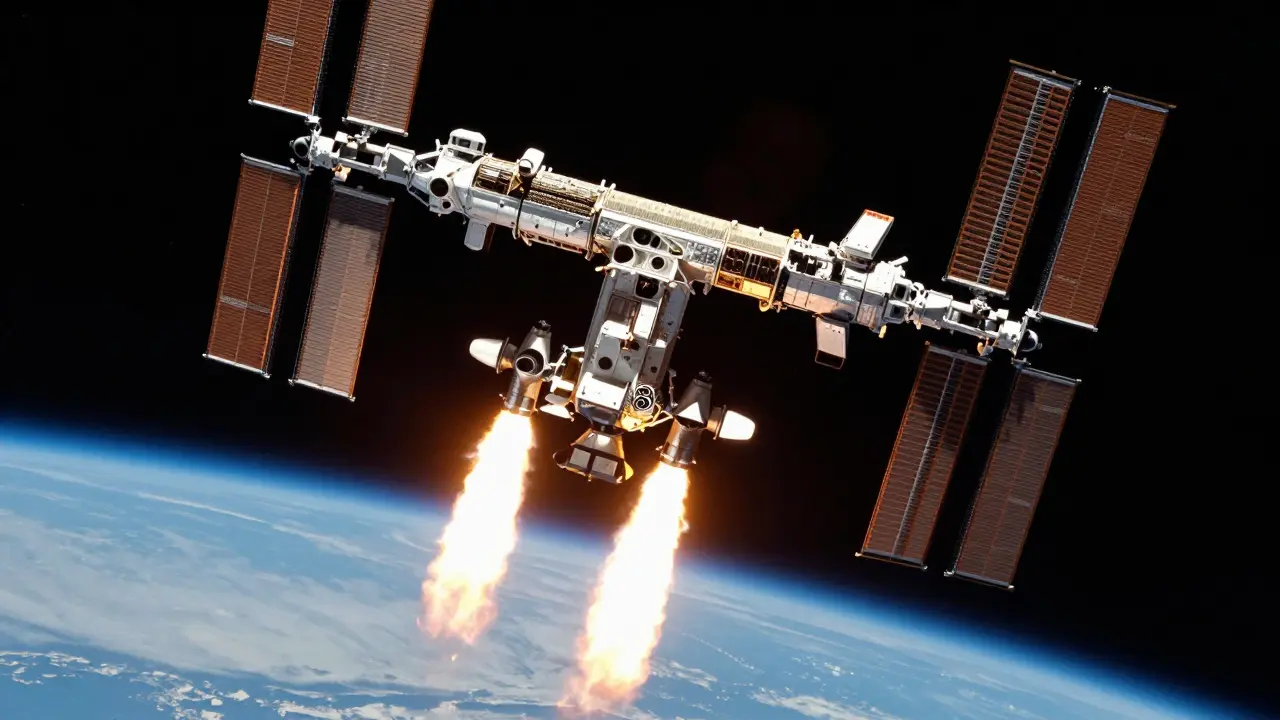
Imagine living on a cramped apartment where every wrapper, wipe, and used towel has to stay with you for months. That is the reality for astronauts aboard the International Space Station (ISS). Since the first module launched in November 1998, managing waste has been a daily operational headache. The good news? We have a very effective, if slightly dramatic, way to handle it: we burn it up.
On the ISS, solid trash-food packaging, clothing, experiment leftovers-is stuffed into bags and stored away for three or four months. Why so long? Because cargo vehicles like Northrop Grumman’s Cygnus or Russia’s Progress only visit on that schedule. When these ships arrive, they are full of supplies. When they leave, they are packed tight with several hundred kilograms of station garbage. Astronauts close the hatch, release the ship, and command it to deorbit. The vehicle plunges into Earth’s atmosphere, burning completely and taking all that waste with it. No debris, no mess, just ash scattered over the ocean.
A New Way Out: The Bishop Airlock Innovation
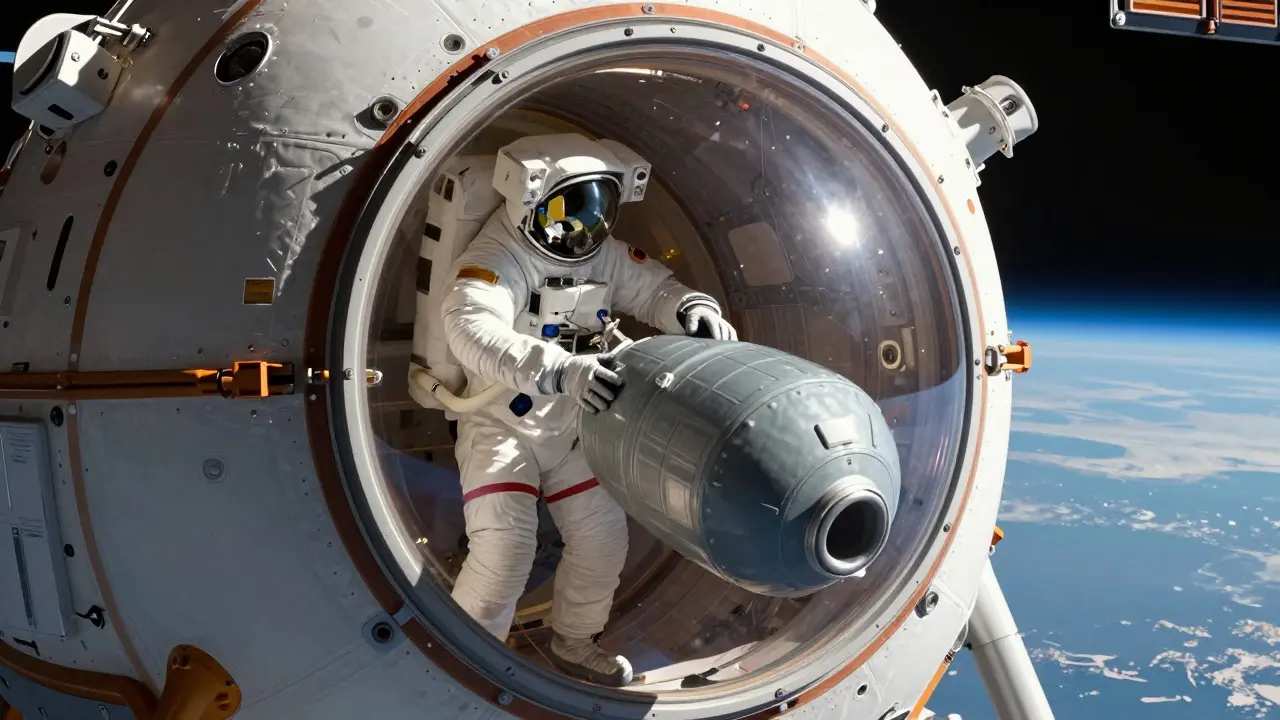
Relying entirely on cargo ships means waiting months to throw out the trash. In July 2022, this changed with the debut of the Bishop Airlock, operated by Voyager Space’s Nanoracks division. This commercial airlock allows the crew to jettison waste much more frequently. Instead of filling a whole spacecraft, astronauts load a specialized container inside the airlock. On that first test, they ejected about 78 kilograms (172 pounds) of mixed garbage, including soiled clothes and office materials.
The container is designed to be aerodynamically stable. Once released, it drifts down into the denser parts of the atmosphere and incinerates harmlessly. The system can hold up to 600 pounds (272 kilograms) per cycle. This flexibility is huge for station operations. It keeps the crew quarters cleaner and reduces the risk of running out of storage space between resupply missions.
Human Waste: Not Just "Space Poop"
Human waste is handled separately from general trash. The toilets on the ISS use fan-driven suction because gravity doesn't pull liquids down. Urine goes into tanks where it is processed back into drinking water-a closed-loop system that saves precious mass. Solid feces, however, is sealed in micro-perforated bags and placed in aluminum containers. These are swapped out roughly every week and eventually loaded onto Progress cargo craft to be burned up during reentry.
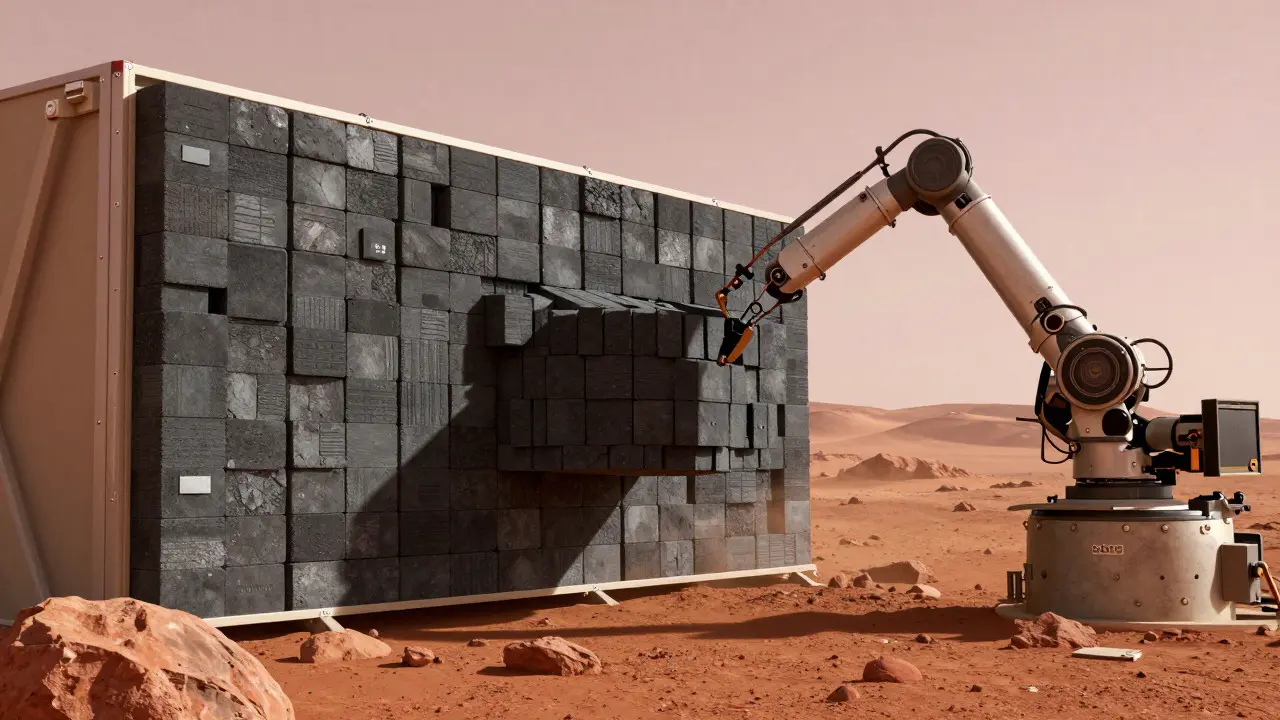
You might hear jokes about "shooting poop stars," but the science is serious. As NASA looks toward Mars missions lasting 500+ days, simply burning everything up won't work forever. Engineers at NASA Ames are developing the Trash Compaction Processing System (TCPS) and the Heat Melt Compactor (HMC). These machines compress trash into dense, sterile tiles or bricks. On a mission to Mars, where there is no atmosphere to burn waste in, these compacted blocks could potentially be repurposed as radiation shielding for the crew habitat, turning a nuisance into a survival tool.
Satellite Deorbiting: Keeping Orbit Clean
While station trash burns up, dead satellites pose a different threat. If left alone, they become space junk, drifting at thousands of miles per hour and risking collisions that create even more debris. This is where satellite deorbiting comes in. The goal is to remove objects from orbit within 25 years of their end-of-life, a rule set by international guidelines to prevent long-term pollution.
| Technology Type | How It Works | Best For | Limitations |
|---|---|---|---|
| Passive Drag Devices | Deploys sails or balloons to increase atmospheric drag | Small satellites in Low Earth Orbit (LEO) | Deployment failure leaves object stranded |
| Electrodynamic Tethers | Uses long cables interacting with Earth's magnetic field | Propellant-free decay for medium-sized objects | Complex electrical systems; potential interference |
| Active Propulsion | Burns fuel to lower orbit for controlled reentry | Large satellites with remaining fuel | Requires reserved propellant; expensive |
| Graveyard Orbits | Moves object to a higher, unused orbit | Geostationary (GEO) satellites | Object remains in space indefinitely |
For small satellites, passive drag devices are the most common solution. They deploy large surfaces that catch the thin upper atmosphere, slowing the satellite down until it falls. Electrodynamic tethers offer another passive option, using Earth’s magnetic field to create drag without any fuel. However, for larger satellites, engineers often rely on active propulsion. If a satellite has enough fuel left, it performs a deorbit burn to steer its reentry path over uninhabited areas like the South Pacific Ocean.
Active Debris Removal: The Cleanup Crew
What about the junk already out there? This is the realm of Active Debris Removal (ADR). Missions like ESA’s ClearSpace-1 aim to rendezvous with defunct satellites, capture them, and drag them down to burn up. ClearSpace-1 targets the Proba-1 satellite, a 95-kilogram object launched decades ago. While still in development, such missions prove that we can clean up legacy debris.
Other players include Astroscale, which tested docking technologies with its ELSA-d mission, and the RemoveDebris project, which demonstrated net and harpoon capture methods. These efforts are critical. Without removing large, tumbling objects, the risk of a cascade effect-where one collision creates thousands of new fragments-grows exponentially. By the 2030s, experts expect "design for removal" to be standard practice, meaning every new satellite will be built with an easy way to take it out when its job is done.
Where does the trash from the ISS go?
Most ISS trash is loaded into departing cargo vehicles like Cygnus or Progress. These vehicles are commanded to deorbit, causing them to burn up completely in Earth's atmosphere. Some waste is also jettisoned directly via the Bishop Airlock in sealed containers that also incinerate upon reentry.
Is human waste recycled on the space station?
Urine is recycled into drinking water through advanced filtration systems. Solid feces is currently bagged, sterilized, and disposed of by being burned up in the atmosphere during cargo vehicle reentries. Future missions may compact solid waste for use as radiation shielding.
What is the 25-year rule for satellites?
International guidelines recommend that satellites in Low Earth Orbit must be removed from their operational orbit within 25 years after their mission ends. This prevents them from becoming long-term hazards that could collide with other spacecraft.
How do drag sails help deorbit satellites?
Drag sails are large, lightweight surfaces deployed at the end of a satellite's life. They increase the satellite's exposure to the thin upper atmosphere, creating drag that slows it down and causes it to spiral into the atmosphere for burn-up without using fuel.
What is Active Debris Removal (ADR)?
ADR involves sending dedicated spacecraft to capture existing space debris or defunct satellites and move them to a safe disposal orbit or reentry trajectory. Missions like ClearSpace-1 and RemoveDebris are testing these technologies to clean up high-risk objects.