
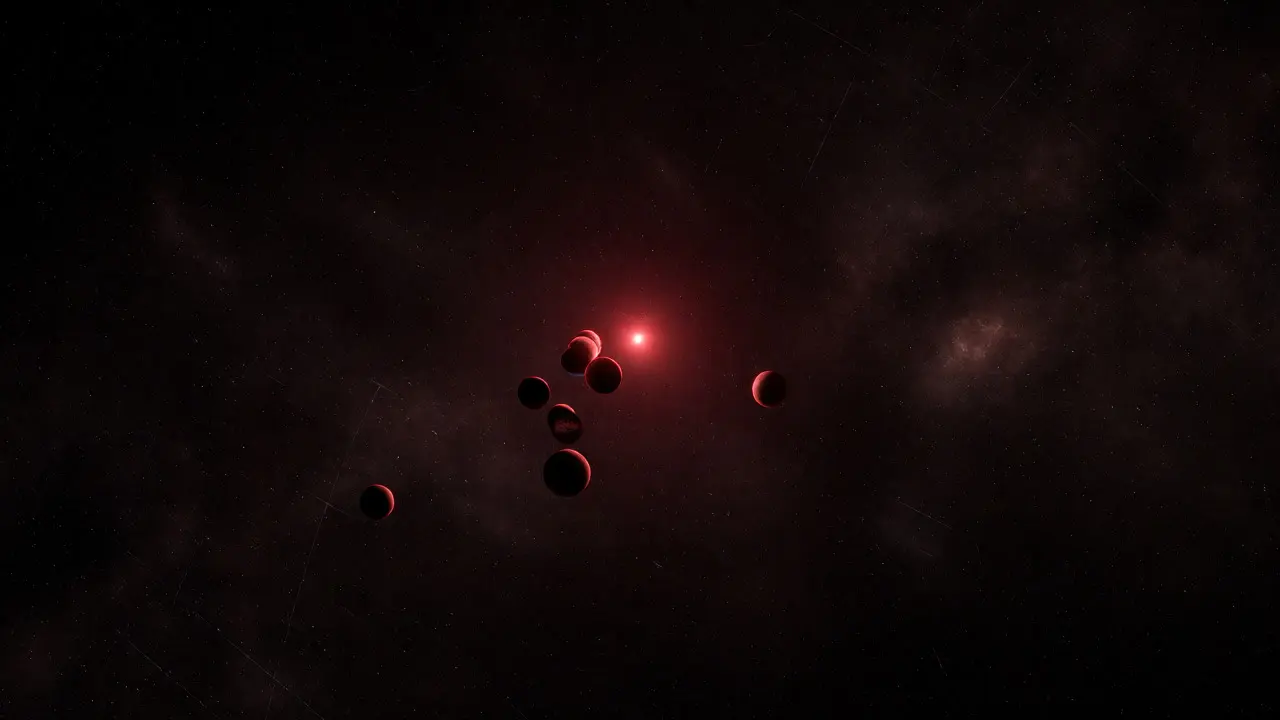
Imagine looking up at the night sky and spotting a system where seven planets orbit a single star, all roughly the size of our own Earth. That’s not science fiction; it’s TRAPPIST-1, an ultracool dwarf star located about 40 light-years away in the constellation Aquarius. Since its discovery, this system has become the most studied planetary neighborhood outside our Solar System. But here is the catch that headlines often miss: "Earth-sized" does not mean "Earth-like." As of late 2026, we know these are rocky worlds, but we still don’t know if any of them have breathable air or liquid water on their surfaces. If you’ve been wondering whether we’ve finally found another home for humanity, or just a fascinating cosmic laboratory, this guide breaks down exactly what we know, what we’ve ruled out, and why the story is far from over.
The Discovery That Changed Everything
In May 2016, astronomers announced they had found three Earth-sized planets around a previously unremarkable star. By February 2017, that number grew to seven. The team, led by Michaël Gillon at the University of Liège, used a modest 0.6-meter telescope in Chile called TRAPPIST-South. Why was this such a big deal? Most exoplanets discovered before then were either gas giants like Jupiter or scorching hot "super-Earths" orbiting too close to their stars. TRAPPIST-1 offered something unique: a compact family of terrestrial planets, some potentially sitting in the "Goldilocks zone" where temperatures allow for liquid water.
The host star itself is tiny. It’s an M8V red dwarf, meaning it’s only about 9% as massive as our Sun and barely larger than Jupiter. Because the star is so dim, its habitable zone-where water can exist as liquid-is incredibly close in. All seven planets orbit within the distance Mercury takes to circle the Sun. This tight packing allows scientists to use a technique called Transit Timing Variations (TTVs). When planets pass in front of the star, their gravity slightly tugs on each other, changing the timing of their transits. By measuring these tiny delays, researchers can calculate the planets' masses and densities without ever seeing them directly.
A Closer Look at the Seven Worlds
Not all seven planets are created equal. Their proximity to the star dictates their fate. The innermost planets, b and c, are likely baked rocks, while the outer ones, f, g, and h, might be frozen wastelands. The middle ground, specifically planet e, holds the most promise for habitability.
| Planet | Orbital Period | Size Relative to Earth | Habitability Status (2026) |
|---|---|---|---|
| TRAPPIST-1b | ~1.5 days | ~1.1x Earth radius | Too hot; likely bare rock |
| TRAPPIST-1c | ~2.4 days | ~1.1x Earth radius | Too hot; thin or no atmosphere |
| TRAPPIST-1d | ~4.0 days | ~0.79x Earth radius | Inner HZ; no thick atmosphere detected |
| TRAPPIST-1e | ~6.1 days | ~0.92x Earth radius | Prime candidate; atmosphere unknown |
| TRAPPIST-1f | ~9.2 days | ~1.05x Earth radius | Outer HZ; possibly icy/water-rich |
| TRAPPIST-1g | ~12.4 days | ~1.13x Earth radius | Outer HZ; data pending |
| TRAPPIST-1h | ~18.8 days | ~0.76x Earth radius | Cold; likely ice-covered |
The density data suggests these are rocky planets, similar to Earth, Venus, Mars, or Mercury. They aren't mini-Neptunes wrapped in thick hydrogen envelopes. However, density alone doesn't tell us about the surface. A planet could be dense and rocky but covered in a global ocean, or dry and barren. This ambiguity is exactly why the James Webb Space Telescope (JWST) is critical for this mission.
What JWST Has Revealed So Far
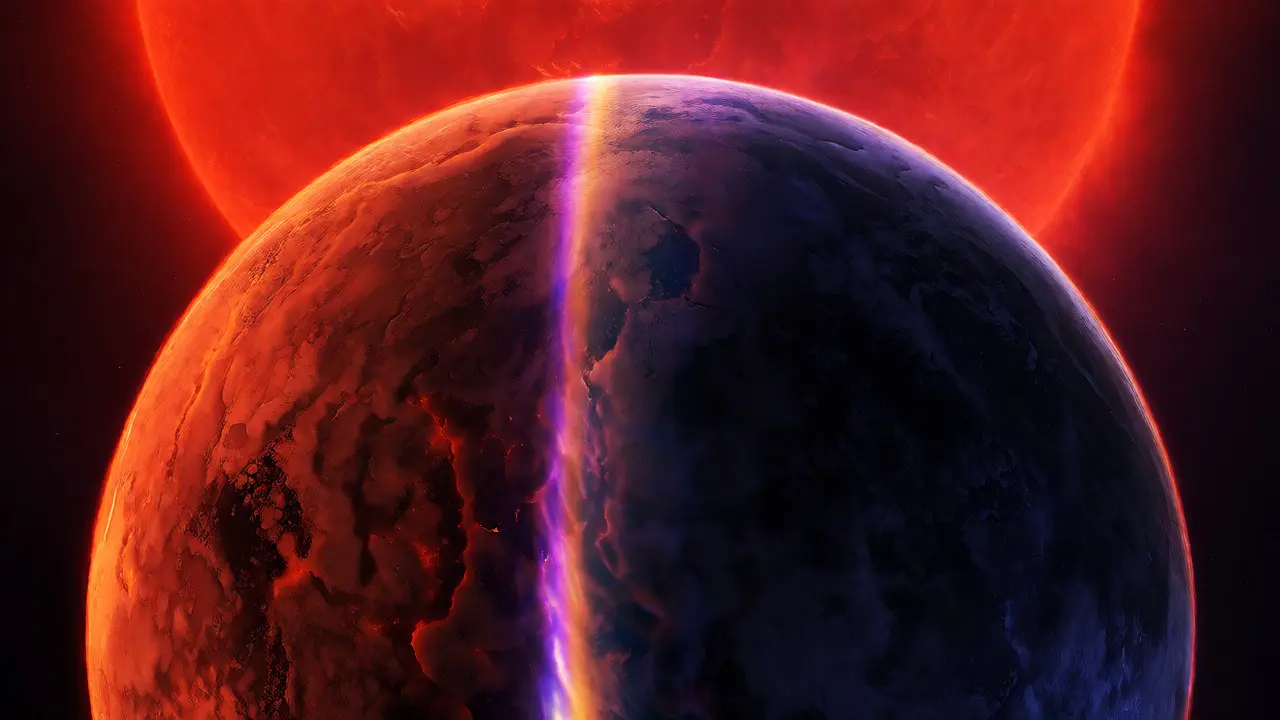
Since its launch, the James Webb Space Telescope has shifted the conversation from speculation to hard data. Before JWST, we hoped for lush oceans. Now, we’re dealing with harsher realities. In 2025 and 2026, NASA released results analyzing the thermal emissions of the inner planets. For TRAPPIST-1b, the dayside temperature hits nearly 200°C (490 Kelvin). The data strongly suggests b has no significant atmosphere. It’s essentially a glowing, molten rock facing its star.
TRAPPIST-1c is cooler but still hostile. JWST observations rule out a thick atmosphere for c. It might have a very thin layer of gas, but nothing comparable to Earth’s pressure. Then there is TRAPPIST-1d. Spectroscopic analysis failed to detect water vapor, methane, or carbon dioxide signatures typical of an Earth-like biosphere. This doesn't mean d is uninhabitable-it could have high clouds masking the surface or a thin CO2 atmosphere-but it definitely isn't a second Earth in terms of atmospheric composition.
The most exciting target remains TRAPPIST-1e. It sits squarely in the conservative habitable zone. Its size and irradiation levels are the closest match to Earth among the seven. As of October 2026, JWST has analyzed four transits of planet e. The results are inconclusive but promising. We haven't seen a clear signature of life, but we also haven't ruled out a secondary atmosphere. Thick hydrogen atmospheres are out, which is good news because those would make the surface inhospitable. What remains possible is a nitrogen-rich atmosphere, perhaps with trace gases, or a bare rock. Distinguishing between a cloudy greenhouse world and a dry rock requires more observation time.
The Red Dwarf Problem: Flares and Tidal Locking
Living around a red dwarf comes with specific challenges that don't apply to our Sun. First, tidal locking. Because the planets orbit so closely, their rotation is synchronized with their orbit. One side always faces the star (eternal day), and the other faces deep space (eternal night). On Earth, we have day-night cycles that help regulate temperature. On TRAPPIST-1e, the heat transfer depends entirely on the atmosphere. If the atmosphere is thin, the nightside could freeze solid while the dayside boils. If it's thick enough, winds could distribute heat, creating a temperate ring around the terminator line-the boundary between day and night.
Then there’s stellar activity. While TRAPPIST-1 is old (estimated between 5.4 and 9.8 billion years), it still flares. Recent studies identified dozens of flares in K2 light curves, suggesting bursts of radiation every few days. High-energy UV and X-rays from these flares can strip away atmospheres over billions of years. This raises a tough question: Did the planets start with oceans and lose them due to stellar erosion? Or did they form with less water? Some models suggest the inner planets could have lost vast amounts of water early in their history, leaving them dry today.
Why This System Matters More Than Finding Life
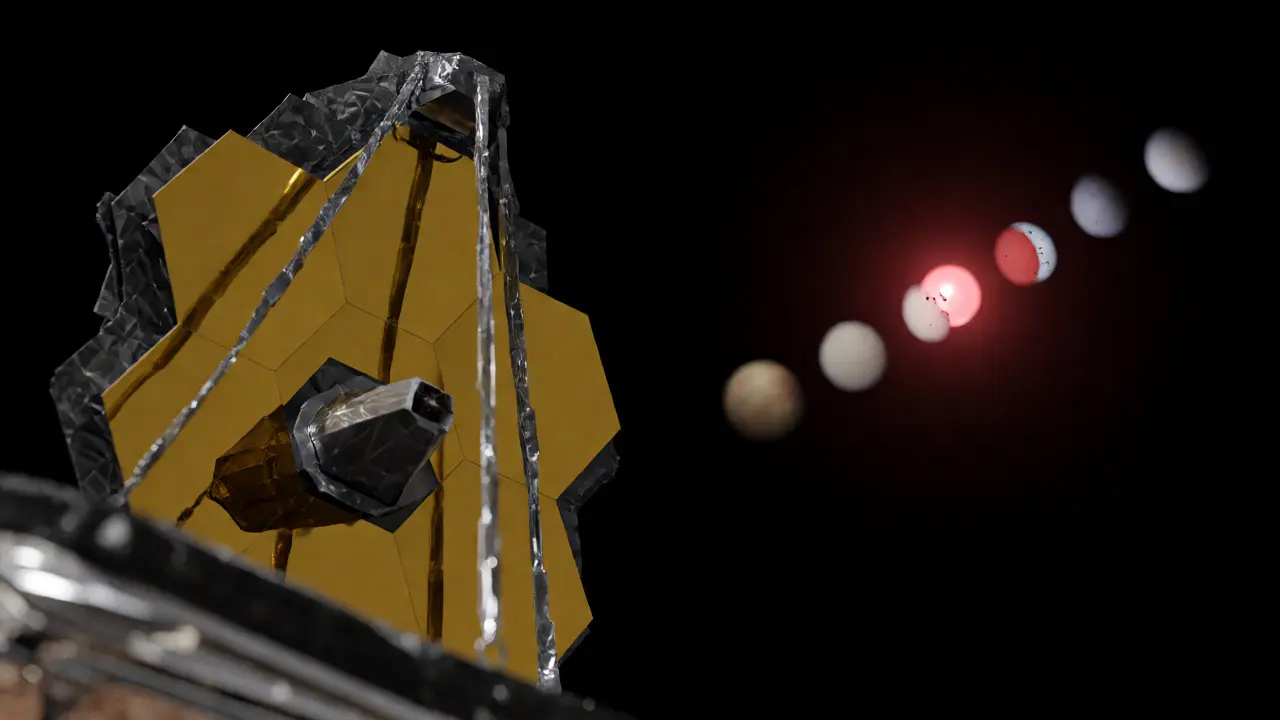
You might ask, if we haven't found life, why care? Here is the value proposition: TRAPPIST-1 is a natural experiment. In our Solar System, we have one Earth, one Venus, and one Mars. We can compare them, but they formed under different conditions around a G-type star. TRAPPIST-1 offers seven planets around the same star, with the same age and chemical starting point. This allows scientists to isolate variables. If planet b is dry and planet f is wet, we learn how orbital distance affects water retention. If planet e has an atmosphere and d doesn't, we learn about atmospheric stability thresholds.
This comparative planetology helps us interpret future discoveries. When we look at distant systems with single planets, we won't know if they are outliers or common. TRAPPIST-1 gives us a baseline for what "typical" looks like around the most common type of star in the galaxy-red dwarfs. Understanding whether these worlds retain atmospheres determines the true potential for life in the universe, since red dwarfs make up about 70% of the stars in our galactic neighborhood.
What Comes Next?
The research isn't stopping. JWST is currently targeting planets f, g, and h. Early indications suggest these outer worlds might be colder and potentially richer in volatiles like water ice. If we find evidence of steam atmospheres or water clouds on f or g, it would shift the focus outward. Meanwhile, continued monitoring of planet e is essential. We need more transit spectra to build statistical confidence. Is that dip in the spectrum noise, or is it ozone? Is the lack of signal a sign of a bare rock, or just bad luck with cloud cover?
For now, keep your expectations grounded. TRAPPIST-1 is a triumph of engineering and astronomy. We have mapped seven rocky worlds in exquisite detail. But claiming we've found a new Earth is premature. We have found candidates. The search for definitive proof of habitability continues, one photon at a time.
How far is TRAPPIST-1 from Earth?
TRAPPIST-1 is approximately 40 light-years away, or about 12 parsecs. In practical terms, if we traveled at the speed of Voyager 1, it would take roughly 700,000 years to reach it. This makes physical exploration impossible with current technology, limiting us to remote observation via telescopes.
Can humans live on TRAPPIST-1e?
We don't know yet. TRAPPIST-1e is the best candidate because it receives similar energy to Earth and has a rocky composition. However, we haven't confirmed it has a breathable atmosphere or liquid water. It might be tidally locked, meaning extreme temperature differences between day and night sides. Until we detect specific atmospheric gases like oxygen or methane in stable ratios, human habitation is purely theoretical.
Are the planets in TRAPPIST-1 visible from Earth?
The star TRAPPIST-1 is too faint to be seen with the naked eye. You need a moderate-sized amateur telescope to see the star itself. The planets are invisible even to large telescopes because they are too close to the star and too small. Astronomers detect them indirectly by watching the star's brightness dip as the planets pass in front of it (transit method).
Why are the planets called "Earth-sized" if they aren't Earth-like?
"Earth-sized" refers strictly to diameter and mass. Five of the seven planets are within 15% of Earth's diameter. This distinguishes them from gas giants like Neptune or Jupiter. However, size doesn't guarantee habitability. Factors like atmospheric composition, magnetic field strength, and stellar radiation determine if a planet is actually like Earth. Currently, none of the TRAPPIST-1 planets show confirmed signs of being "Earth-like" in terms of climate and biology.
Has the James Webb Space Telescope found life on TRAPPIST-1?
No. As of October 2026, JWST has not detected definitive biosignatures (like simultaneous oxygen and methane) on any of the observed planets. It has ruled out thick hydrogen atmospheres on several worlds, which narrows down the possibilities. The absence of detection isn't proof of absence, especially given the difficulty of observing through potential cloud layers, but there is no positive confirmation of life yet.
15 Responses
they hiding the real data from us i swear
why would a dwarf star have seven planets all lined up like that? it’s too perfect. NASA is just trying to distract us from the fact that they’ve already found life and are keeping it secret because of the religious implications.
i read somewhere that the flares are actually artificial signals being blocked by some kind of shield.
Stop spreading fear mongering nonsense about aliens.
We need to focus on fixing our own planet first before worrying about rocks 40 light years away.
It is morally wrong to spend billions on telescopes when people are starving here.
Shame on those who prioritize space over earth.
Actually, if you bothered to read the article properly, you'd know that TRAPPIST-1 is in Aquarius, not anywhere near 'us' in a way that affects morality!!
The James Webb Space Telescope is an American engineering marvel, funded largely by US taxpayers, so we deserve the credit for this discovery!!!
While Europe helped with the initial discovery, the detailed atmospheric analysis is happening NOW thanks to JWST!!!
You're ignoring the geopolitical importance of leading in astrophysics!!!
I appreciate your passion, but let's remember that science belongs to everyone 🌍❤️
It’s beautiful that different countries collaborate to understand our universe together.
Every bit of knowledge helps us feel less alone in the cosmos.
To add to the discussion: The distinction between "Earth-sized" and "Earth-like" is crucial here! 📏🌎
Size refers to radius/mass, while habitability depends on atmosphere, magnetic field, and stellar radiation exposure. 😮💨
JWST has ruled out thick hydrogen atmospheres on b and c, which is a huge step forward! 🚀
For planet e, we are looking for secondary atmospheres (N2, CO2) rather than primordial ones. 🔬
Tidal locking is a major factor; without a thick atmosphere to distribute heat, the terminator zone might be the only habitable strip. 🌗
Keep expectations grounded but hopeful! ✨
woah this is awesome news keep pushing the boundaries guys
we are finally getting real data on these worlds and its exciting
dont let the skeptics hold you back science is moving fast
lets go team astronomy
Good. Finally some useful information instead of Hollywood garbage.
Red dwarfs are common. Most stars are red dwarfs. This confirms what I said years ago.
If there is no oxygen signature, stop calling it a second Earth.
Be precise or don't speak.
Everyone is missing the point again.
The article clearly states that density doesn't equal surface conditions.
A dense rock can still be a global ocean or a barren desert.
We need spectroscopic evidence, not just transit timing variations.
Until then, it's just speculation.
Learn to read tables properly.
hey i get where u r coming from but ur tone is kinda harsh lol
the table is pretty clear imo and most ppl understand size vs hab
no need to gatekeep astronomy knowledge
be nice or dont comment at all :(
Is existence even meaningful if we are trapped on one rock?
The idea that we could look up and see seven potential homes changes the philosophical weight of solitude.
We are projecting our desire for connection onto cold gas and rock.
Perhaps the search itself is the answer, not the destination.
The silence of the universe is louder than any flare.
That’s a really deep thought! 💭 It’s okay to feel overwhelmed by the scale of it all.
Remember that every small discovery brings us closer to understanding our place.
You’re doing great by thinking about these big questions!
Stay curious and kind to yourself as you process this info. 🌟
man i feel so drained reading this stuff sometimes
like why do they make it so complicated?
they probably know more than they tell us
i feel like the government is watching me just for asking about space
anyway good post i guess
The methodology described is standard, yet the public interpretation remains flawed.
Transit Timing Variations provide mass estimates, but composition requires transmission spectroscopy.
The absence of water vapor signatures on Planet D does not confirm dryness due to cloud masking possibilities.
This nuance is frequently lost in popular media coverage.
One must consider the signal-to-noise ratio in JWST observations carefully.
Passive acceptance of headlines leads to scientific illiteracy.
Oh please, another article explaining basic facts to people who think they know everything?
You sound so condescending with your "learn to read tables" attitude.
Maybe if you weren't so busy judging others you'd realize how hard it is to explain this simply.
I'm sure you think you're so smart sitting in your ivory tower.
Go ahead, correct my grammar next, I dare you.
this is fascinating perspective on comparative planetology
it reminds me that science is iterative and full of unknowns
the value lies in the process of elimination not just the final answer
what do you think about the impact of tidal locking on biological evolution?
does it limit complexity or encourage adaptation?