
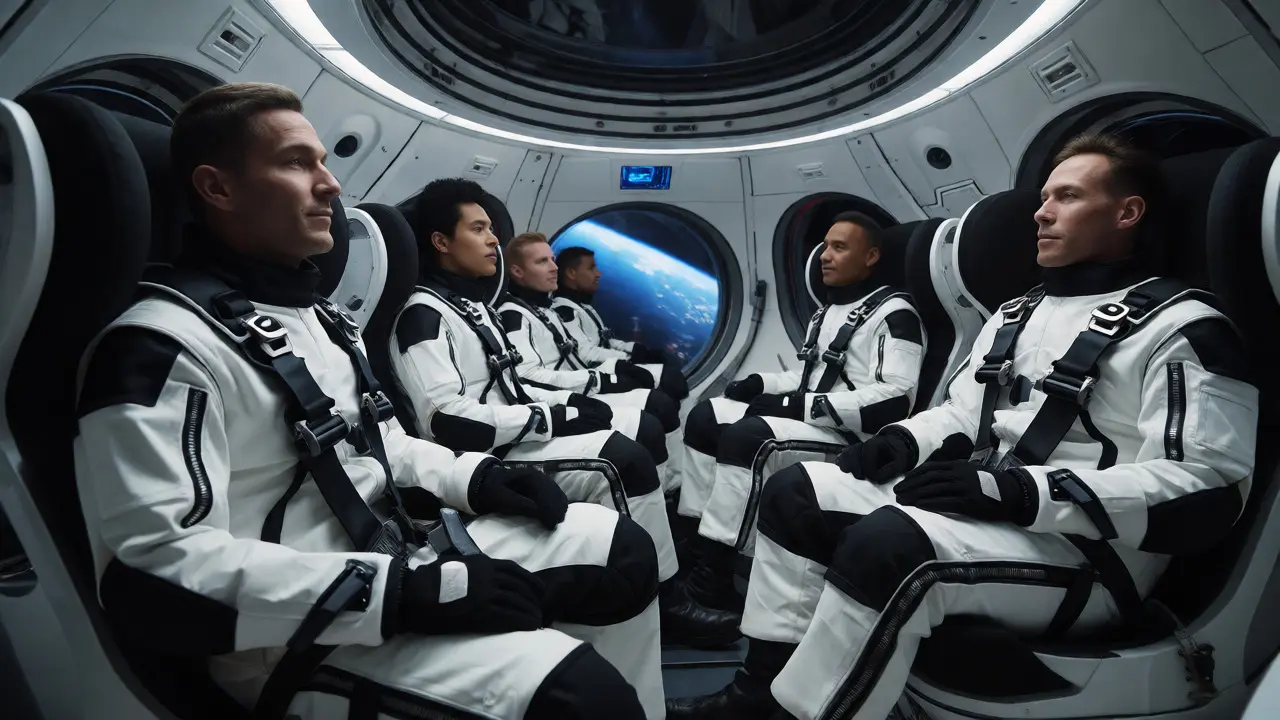
You’re about to leave Earth. You strap into a capsule or a winged vehicle, the engines roar, and you feel that familiar squeeze of acceleration. But what are you actually wearing? If you picture a bulky, white NASA spacesuit like the ones from Apollo missions, think again. Today’s commercial space tourists rarely wear full pressure suits for extravehicular activity. Instead, they wear specialized tourist flight suits designed for a very specific job: keeping you safe during launch and entry while letting you enjoy the view without feeling like you’re encased in armor.
The reality of space tourism gear is far more nuanced than Hollywood suggests. Whether you’re hopping on Blue Origin’s New Shepard for a few minutes of weightlessness or riding SpaceX’s Crew Dragon to the International Space Station, your clothing plays a critical role. It’s not just about looking cool for Instagram; it’s about fit, emergency protection, and thermal comfort. Let’s break down exactly what these suits do, how they differ, and why getting the right fit matters more than you might think.
The Two Worlds of Tourist Attire
First, we need to clear up a major misconception. Not all space tourists wear the same thing. There are two main categories of attire depending on the mission profile: non-pressurized flight suits for suborbital hops and partial-pressure Intravehicular Activity (IVA) suits for orbital flights.
If you’re flying with Virgin Galactic or Blue Origin, you’ll likely receive a branded jumpsuit. These aren’t spacesuits in the traditional sense. They don’t inflate if the cabin loses pressure. The cabin itself is doing the heavy lifting for life support. These garments are closer to high-end aviation coveralls. They prioritize freedom of movement, branding, and modesty. They’re designed to be worn over your own base layers, making them comfortable for the hours of pre-flight training and the brief moments of weightlessness.
On the other hand, if you’re booking a seat on a SpaceX Crew Dragon mission, such as those operated by Axiom Space or private entities like Inspiration4, you’ll wear something much more technical. This is the SpaceX IVA suit. It’s a sleek, black-and-white garment that looks futuristic but functions as a critical safety layer. Unlike the suborbital jumpsuits, this suit can hold pressure. If the cabin depressurizes unexpectedly, this suit becomes your personal bubble of air. It’s a partial-pressure suit, meaning it doesn’t protect you from the vacuum of space for long periods, but it buys you enough time to fix the problem or return to Earth.
Fit Is Everything: Why Custom Tailoring Matters
You might assume that space agencies just hand out small, medium, and large sizes. For suborbital tourists, that’s often true. But for orbital passengers wearing the SpaceX IVA suit, fit is a matter of life and death. A loose suit won’t seal properly under pressure. A tight suit restricts blood flow and causes pain during high-G maneuvers.
SpaceX has moved away from generic sizing. Each IVA suit is custom-tailored to the individual wearer. This process involves precise measurements taken weeks before the flight. The goal is to eliminate dead space where air could pool or where the fabric could bunch up against your skin. According to recent updates from October 2026, the latest iteration of the suit features a spiral torso zipper instead of the old inseam zipper. This allows the suit to split into upper and lower halves, making it easier to put on and take off while seated in the cramped capsule.
| Feature | Suborbital Jumpsuit (e.g., Blue Origin) | Orbital IVA Suit (e.g., SpaceX Crew Dragon) |
|---|---|---|
| Primary Function | Comfort, branding, minor thermal regulation | Emergency pressurization, fire resistance, comms |
| Pressure Capability | None (Cabin dependent) | Partial Pressure (Backup for cabin failure) |
| Fitting Process | Standard S-XL ranges | Custom tailoring, leak checks |
| Integration | Worn over personal clothes | Connected to seat via umbilical (air/comms) |
| Weight | Lightweight (<1 kg) | Approx. 12 kg |
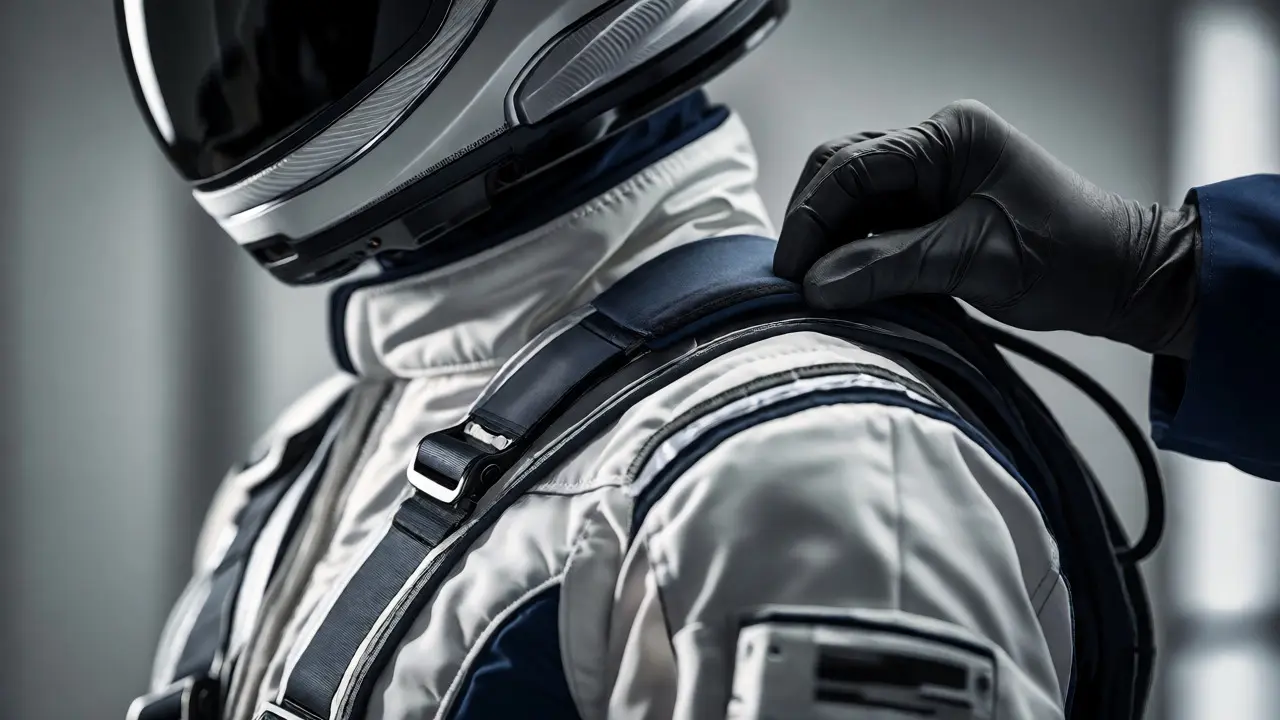
This attention to detail extends to the helmet and gloves. The helmet is 3D-printed polycarbonate, fitted specifically to your head shape to ensure the visor aligns correctly with your eyes. The gloves are engineered for dexterity. You need to be able to touch the screens in the Dragon capsule. If your gloves are too thick or ill-fitting, you can’t operate the controls. This isn’t just about convenience; it’s about being able to react if an alarm goes off.
Safety Features Hidden in Plain Sight
When you look at a SpaceX IVA suit, you see style. Elon Musk’s design team wanted to move away from the bulky, orange "pumpkin" suits of the Shuttle era. But beneath that sleek exterior lies serious engineering. The suit is part of a "suit-seat system." When you sit in the capsule, you plug an umbilical line from your seat into a port on the suit’s thigh. This connection supplies cooling air, communications, and electrical power.
Why does this matter? Launch is loud. Noise levels inside the cabin can exceed 100 decibels. The suit provides hearing protection through integrated earpieces. More importantly, if the cabin leaks, the suit inflates. It uses open-loop, air-cooled technology, meaning fresh air flows through the suit to keep you cool. Without this, you’d overheat quickly in a sealed environment.
Fire resistance is another key attribute. The outer layer of the IVA suit is made from flame-retardant materials. During ascent and reentry, when friction heats the hull, fire is a real risk. The suit works in tandem with the capsule’s interior materials to prevent burns. In contrast, suborbital jumpsuits may have flame-resistant fabrics, but they lack the internal bladder system to maintain pressure. They rely entirely on the redundancy of the vehicle’s cabin systems.
Comfort: The Invisible Design Goal
Here’s the paradox of modern spaceflight suits: they are designed to be invisible. Chris Trigg, SpaceX’s Space Suits and Crew Equipment Manager, has described the suit as a component that should "take care of itself." During nominal operations-when everything is going right-you shouldn’t notice you’re wearing it. You shouldn’t feel hot, restricted, or uncomfortable.
Thermal regulation is a huge factor. Even though space is cold, the sun hitting the capsule window can heat the cabin significantly. Your body generates heat, too. The suit’s ventilation system routes conditioned air directly to your skin. This prevents sweat buildup, which is dangerous in microgravity because floating droplets can short-circuit electronics or get into your eyes.
Ergonomics also play a role. The seats in Crew Dragon are molded foam tailored to each passenger. The suit works with this seat to distribute G-forces evenly across your body. If the fit is wrong, you might feel pressure points on your shoulders or hips during the several minutes of high-G acceleration. The new spiral-zipper design helps here, allowing technicians to adjust the fit even after you’re strapped in, ensuring that the suit doesn’t bunch up under your arms or behind your knees.

Training and Practical Use
How hard is it to put these things on? For suborbital tourists, it’s like putting on a wetsuit or a ski suit. You zip it up, maybe secure some Velcro straps, and you’re done. Training focuses on basic safety procedures and enjoying the experience.
For orbital tourists, the learning curve is steeper. You’ll spend days practicing donning and doffing the suit. You’ll learn how to connect the umbilical lines without fumbling. You’ll undergo leak checks where technicians pump air into the suit to ensure there are no holes. This process can take hours. You’re essentially becoming a piece of hardware for a few days. The goal is to make the actions automatic so that if you’re stressed or tired, you can still operate your equipment safely.
It’s worth noting that these suits are not meant for walking outside. They are "Intravehicular" suits. If you want to go on a spacewalk, you need a different, much bulkier Extravehicular Mobility Unit (EMU). No tourist currently flies with an EMU unless they are a professional astronaut conducting repairs. So, don’t worry about mastering the complex lock mechanisms of older NASA suits. The current tech is streamlined for simplicity.
The Future of Space Fashion
We are only a few years into commercial human spaceflight. As of late 2026, the industry is stabilizing. SpaceX continues to refine its IVA suit, focusing on lighter materials and better mobility. We saw improvements in the Crew-11 and Crew-13 missions, with expanded size ranges to accommodate a wider variety of body types. This inclusivity is vital. Space tourism isn’t just for elite athletes anymore; it’s for everyone who can afford the ticket.
Meanwhile, suborbital operators are treating their suits as marketing tools. They collaborate with fashion designers to create garments that look good in photos. After all, for many tourists, the photo op is half the value. Expect to see more customization options, perhaps even personalized patches or colors, as the market matures.
The trend is clear: safety is becoming more robust but less obtrusive. Cabin systems are getting more reliable, reducing the need for heavy individual life support. But until we have perfect reliability, the flight suit remains our last line of defense. It’s a blend of aerospace engineering and high-performance sportswear, designed to let you focus on the wonder of seeing Earth from above, rather than worrying about whether your clothes will fail.
Do space tourists wear full spacesuits?
Generally, no. Most tourists wear flight suits. On suborbital flights (like Blue Origin), they wear non-pressurized jumpsuits. On orbital flights (like SpaceX Crew Dragon), they wear partial-pressure IVA suits that provide emergency backup but are not full EVA suits capable of long-term vacuum exposure.
Can I choose my own clothes under a tourist flight suit?
For suborbital flights, yes, you typically wear your own base layers under the provided jumpsuit. For orbital flights with custom-tailored IVA suits, you usually wear specific undergarments provided by the operator to ensure proper fit and hygiene, as the suit is sealed tightly against the body.
What happens if the cabin loses pressure?
If you are on a spacecraft equipped with IVA suits (like Crew Dragon), your suit automatically or manually seals and inflates to maintain pressure around your body, providing oxygen and preventing ebullism. If you are on a suborbital vehicle without pressure suits, you rely on the cabin's redundant systems and rapid descent capabilities.
Are tourist flight suits heavy?
Suborbital jumpsuits are lightweight, similar to standard workwear. SpaceX IVA suits weigh approximately 12 kg (26 lbs). While this sounds heavy, much of the weight is supported by the seat structure during launch, so you don't carry it yourself throughout the flight.
Can I use touchscreen devices while wearing the suit?
Yes, particularly with the SpaceX IVA suit. The gloves are specifically designed with conductive fingertips to allow interaction with the glass cockpit displays and tablets used in the Crew Dragon capsule.