
When you’re orbiting Earth at 17,500 miles per hour, there’s no running to the store for a bottle of water. That’s why water recovery in space, the process of recycling wastewater into drinkable water aboard spacecraft. Also known as closed-loop life support, it’s not a luxury—it’s the difference between survival and failure. On the International Space Station, astronauts don’t just drink water—they drink their own sweat, urine, and even the moisture from their breath. At 98% efficiency, the system pulls every possible drop out of waste and turns it into clean, safe water. No other system on Earth comes close to this level of reuse.
This isn’t just about saving weight on launch. Every pound of water sent to orbit costs thousands of dollars. If you brought all the water needed for a six-month mission from Earth, you’d need over 1,200 pounds. With water recovery in space, that drops to under 50 pounds. The system uses filters, chemical processors, and distillation to remove everything from salts to viruses. It’s the same tech being tested for future Mars missions, where resupply isn’t an option. ISS water system, the most advanced recycling setup ever built in orbit has been running nonstop since 2008. It’s not perfect—sometimes it breaks down, and astronauts have to fix it with tools they brought from Earth—but it’s reliable enough to trust your life to.
Behind the scenes, space life support, the network of systems keeping astronauts alive in vacuum conditions depends on water recovery like a heart depends on blood. It connects to air purification, temperature control, and even plant growth experiments. If the water system fails, the air system fails. If the air system fails, the mission fails. That’s why NASA and its partners treat this like a sacred system. The tech is so critical, it’s being adapted for remote bases on Earth—Antarctic stations, underwater labs, and disaster zones. And now, the same machines are being redesigned for Mars. NASA water recovery, a set of technologies that turn waste into resources in zero gravity is evolving. New systems aim for 99% efficiency, handle more waste types, and need less maintenance. The goal? Make water recovery so simple, even a non-engineer can keep it running during a 3-year trip to Mars.
What you’ll find in this collection aren’t just technical manuals or press releases. These are real stories from engineers who fixed a broken recycler mid-mission, astronauts who drank their own urine without hesitation, and scientists who designed a system that works when nothing else does. You’ll see how a single piece of tubing can make or break a mission, how a tiny sensor keeps the whole system alive, and why the next leap in space survival isn’t about rockets—it’s about reusing what you already have.
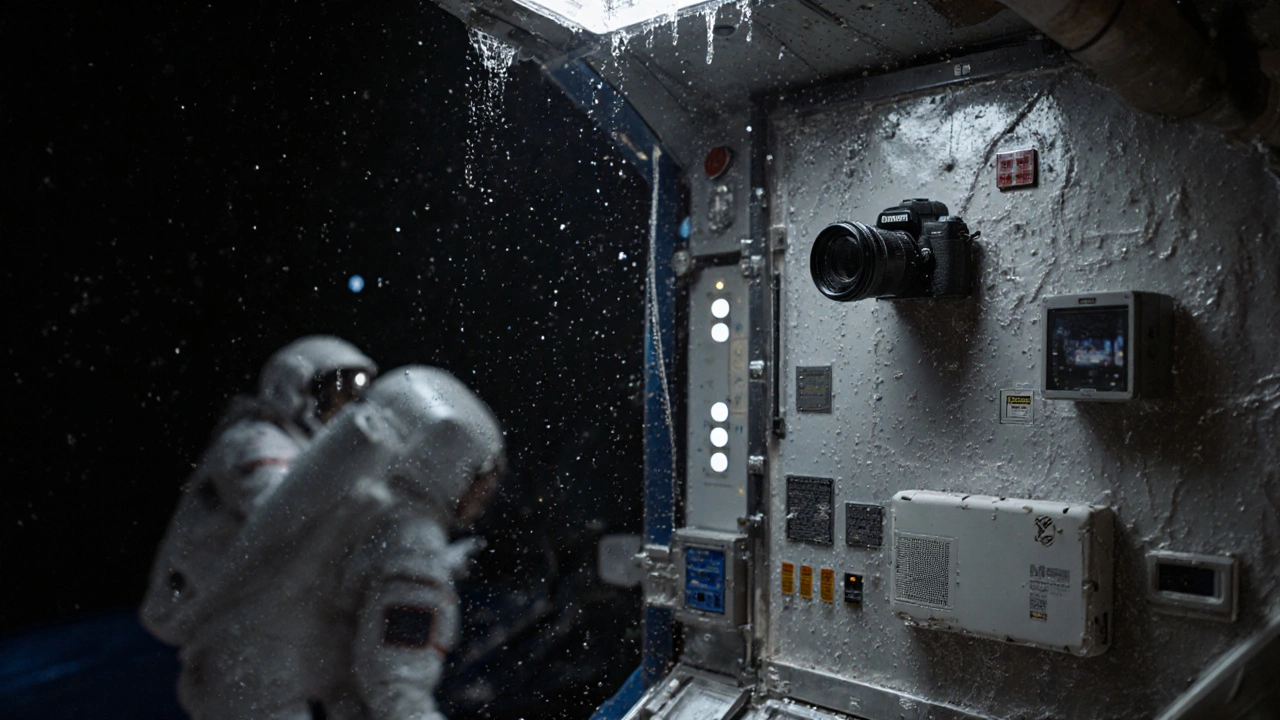
Spacecraft humidity control keeps astronauts safe by preventing condensation, protecting electronics, and recycling sweat into drinking water. Learn how NASA and private companies are making life support systems smarter and more efficient.
Learn More