
When we think of space stations, we picture floating labs or giant metal homes in orbit—but what keeps them alive? Station sensors, tiny electronic devices that measure temperature, pressure, gas levels, radiation, and more inside and outside spacecraft. These aren’t just gadgets—they’re the nervous system of any orbiting habitat, constantly feeding data to ground teams and crew members to prevent disasters before they happen. Without them, a small leak, a spike in CO2, or a solar flare could go unnoticed until it’s too late.
These sensors don’t work alone. They’re part of a network that includes life support systems, the engineered environments that recycle air and water for long-term human survival in space, and orbital health monitoring, the continuous tracking of spacecraft integrity under extreme conditions like radiation, micrometeoroid impacts, and thermal stress. On the ISS, over 1,500 sensors track everything from humidity levels in the crew quarters to the vibration of solar array motors. Some measure trace gases like methane or ammonia—subtle signs of equipment failure or even crew health issues. Others watch for sudden drops in cabin pressure, triggering alarms and automatic seals within seconds.
It’s not just about keeping people alive. Station sensors help scientists understand how materials degrade in space, how fluids behave without gravity, and how solar storms disrupt electronics. That data doesn’t just help the ISS—it’s used to design future lunar bases and Mars ships. For example, sensors on the ISS helped engineers develop better radiation shielding for Artemis missions. And because space is unforgiving, these sensors have to be built to last for years without maintenance, hardened against extreme cold, heat, and cosmic rays.
What you’ll find in this collection are real stories behind those silent watchers: how NASA and its partners design sensors that survive launch and years in orbit, how astronauts respond when a sensor goes rogue, and how new tech like AI-driven anomaly detection is making stations smarter. From cryogenic cooling systems that keep infrared detectors cold enough to see distant stars, to systems that track water recycling efficiency down to the last drop—these posts show you how the smallest devices make the biggest difference.
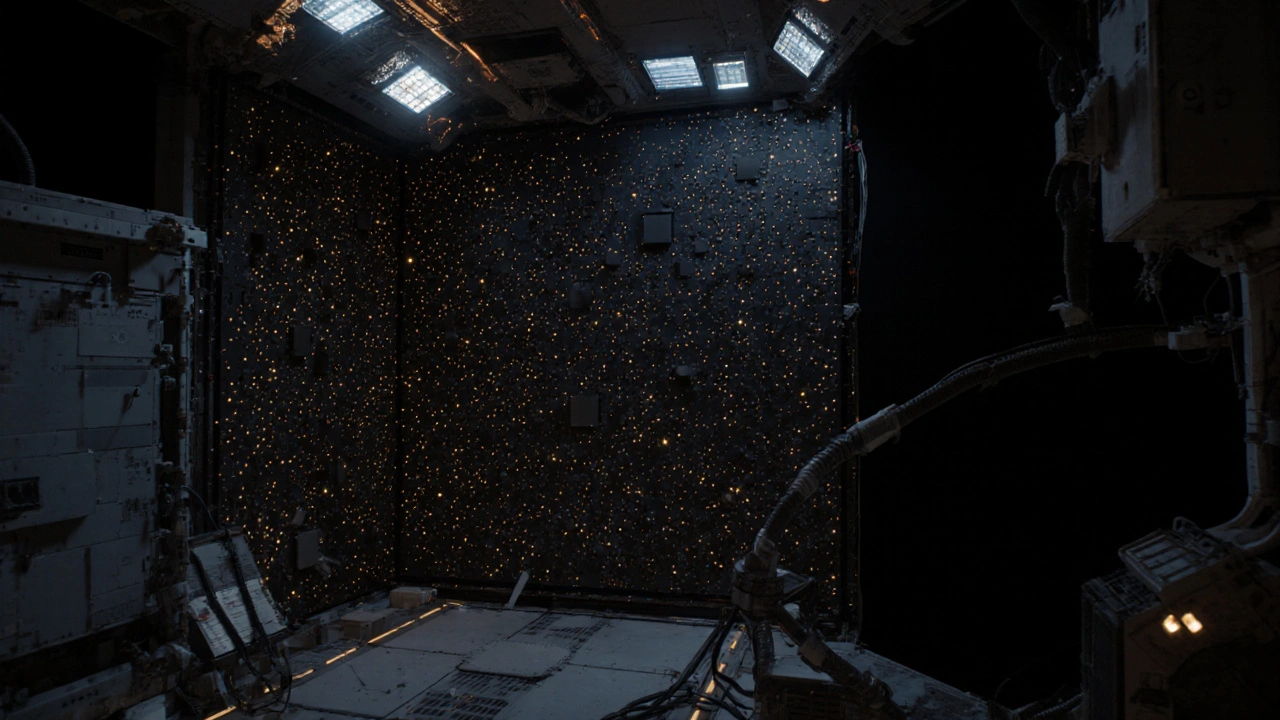
Real-time structural health monitoring uses advanced sensors to detect cracks, leaks, and strain in space stations and critical infrastructure. Learn how piezo, fiber optic, and vibrating wire sensors work, and why they're replacing manual inspections.
Learn More