
When you’re floating in a metal tube 250 miles above Earth, every drop of water matters. Spacecraft humidity control, the system that manages moisture levels inside crewed spacecraft to prevent condensation, mold, and equipment damage isn’t just about comfort—it’s a life-or-death engineering challenge. Without it, moisture from breathing, sweating, and even cooking can build up, fogging windows, shorting electronics, and creating a breeding ground for harmful microbes. On the International Space Station, a habitable orbital laboratory where astronauts live for months at a time, humidity levels are kept between 30% and 70% at all times. That’s not luck. It’s a tightly controlled system that pulls water out of the air and turns it back into drinking water.
How does it work? Air flows over cold surfaces, causing moisture to condense like dew on a glass. That water is then collected, filtered, and reused. The same system that pulls humidity out of the air also recovers water from urine and sweat. In fact, the water recovery system, a closed-loop technology that recycles over 98% of onboard water on the ISS is one of the most advanced pieces of life support ever built. This isn’t just about saving weight on launch—it’s about survival. On a mission to Mars, where resupply is impossible, every drop of water you exhale could become your next drink. That’s why humidity control isn’t a side feature. It’s part of the same system that keeps you alive.
It’s not just about water. Too much humidity makes it harder to cool the ship. Electronics overheat faster in damp air. Tools and instruments corrode. Even the astronauts’ skin and lungs suffer. That’s why engineers don’t just monitor humidity—they tweak airflow, adjust temperature, and use desiccants like lithium chloride to grab extra moisture. And it’s not just the ISS. Every crewed capsule, from SpaceX’s Dragon to NASA’s Orion, has its own version of this system. The next generation, designed for lunar bases and deep space, will need to be even smarter, quieter, and more reliable. What you’ll find in the posts below are real stories from the front lines: how humidity sensors detect leaks, how condensation nearly caused a system failure on a shuttle mission, and why the same tech that keeps the ISS dry is now being tested for growing food in space. This isn’t science fiction. It’s the quiet, essential engineering that lets humans live where no one has before.
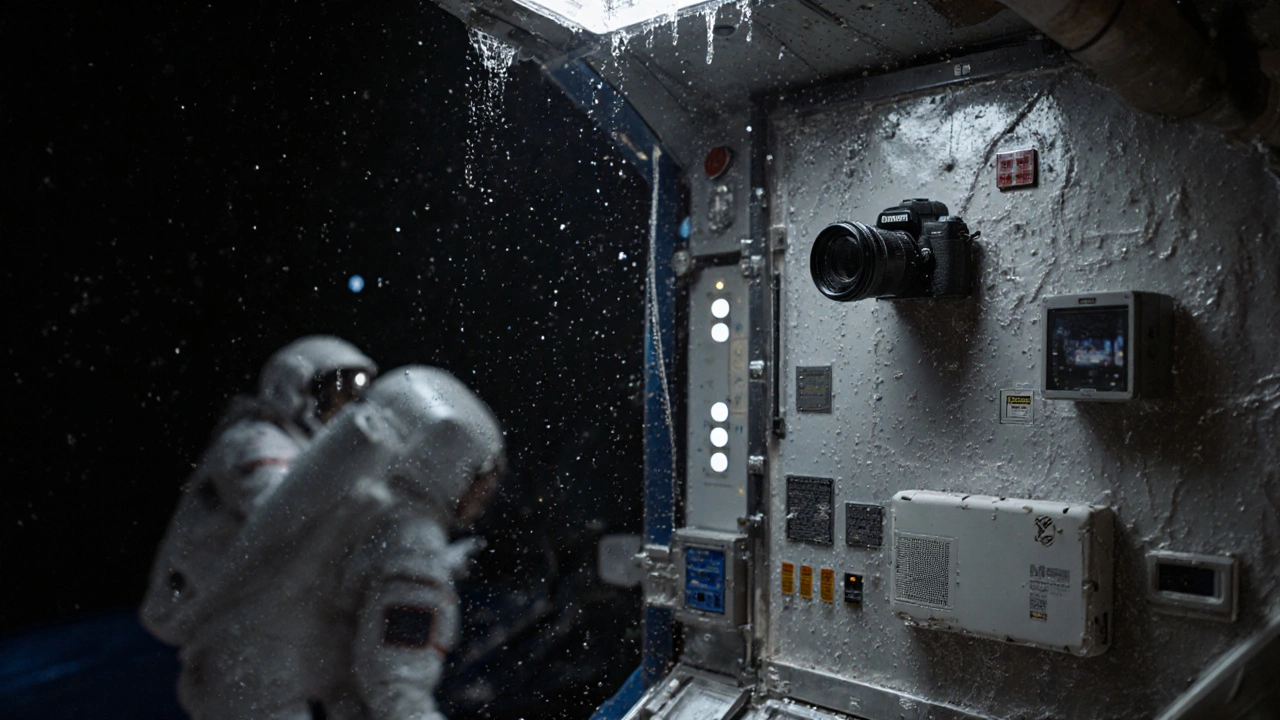
Spacecraft humidity control keeps astronauts safe by preventing condensation, protecting electronics, and recycling sweat into drinking water. Learn how NASA and private companies are making life support systems smarter and more efficient.
Learn More